

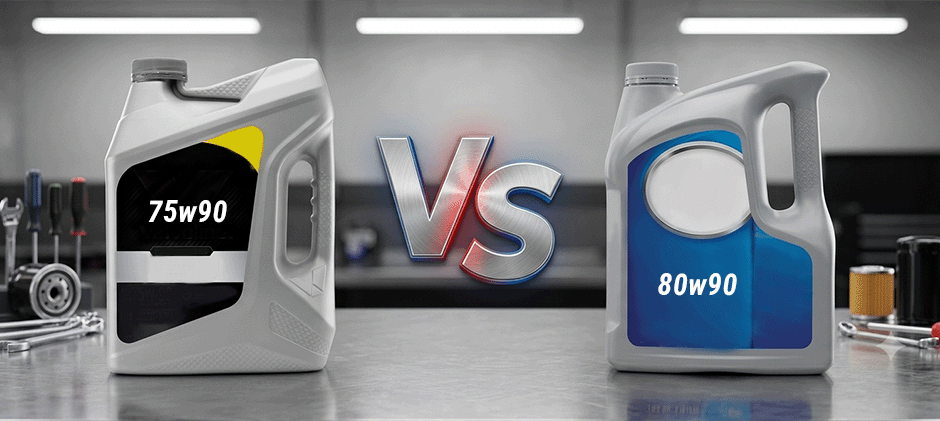
75W90 VS 80W90 are both SAE 90 gear oils at operating temperature, but 75W-90 flows better in cold weather. The first number indicates low-temperature performance, while the second number represents viscosity at high operating temperatures.
SAE Viscosity Grades Explained
The SAE J306 rating system uses these numbers to show how well gear oil flows in different temperatures. The letter “W” means Winter — not weight. It tells you how thick or thin the oil is when your machine is cold, which is the viscosity you see during startup. The second number, like 90, shows how the oil’s kinematic viscosity at normal working temperature, tested at 100°C (212°F).
- The Winter Rating (75W vs. 80W): This is where these two oils are different. 75W oil has much stricter low-temperature flow requirements than 80W. It stays fluid and easy to pump even in much colder weather.
- The Operating Grade (90): This is where they’re same. Once your machine warms up after about an hour of running, both 75W90 and 80W90 act like standard 90-grade gear oil. At full operating temperature, they form the same protective oil film and offer the same load-bearing protection for your gears.
Both oils protect your gears equally well when the machine is hot and working hard. But they perform completely differently during those critical cold morning starts.
What Is 75W-90 Gear Oil?
75W-90 gear oil is the go-to pick for all modern off-road equipment. Most of this oil is fully synthetic. Regular gear oil is just processed crude oil, but synthetic oil is built from scratch at a molecular level. That makes its Viscosity Index (VI) way higher right out of the factory.
What does this mean for your work? This oil won’t get too runny in extreme heat. Even better, it won’t thicken into thick syrup when the temperature drops below freezing. Lots of parts on off-road machines use splash lubrication — gears spin around, scoop up oil, and fling it onto the top bearings. If the oil turns thick and slushy in freezing weather, those parts won’t get greased properly. So you absolutely need gear oil that stays liquid in subzero cold.
Understanding 80W-90 Gear Oil
80W-90 regular gear oil has been standard for heavy equipment for decades. It’s listed as the factory-recommended oil in manuals for tons of old tractors, manual transmissions and heavy-duty axles.
People still stick with 80W-90 mostly because it’s affordable and it’s a trusted old option. If you work in warm areas or store your machines in heated workshops, the oil’s thick texture when cold won’t cause major problems. It creates a thick protective oil coating, and most older machinery was actually engineered to run on this oil. But it gets really thick and flows slowly once the temperature dips below freezing.
If you operate a fleet of older machines only in consistent mild weather, 80W-90 works just fine and keeps costs low. But if you deal with shifting temperatures or push your equipment hard, the weaknesses of this traditional mineral oil start to stand out.
What Is the Difference Between 75w90 And 80w90?
All equipment operators should know what windage loss means. It’s wasted power created when gears spin through thick, cold oil.
If you run thick regular 80W-90 oil in winter inside big Cummins diesel drivetrains or tractor transmissions, it creates a ton of extra drag. I’ve heard lots of operators say their machines feel slow and draggy. Even when coasting in neutral, the rig slows down much quicker until the axles and gearboxes heat up. This isn’t just a vague feeling. The thick oil physically pushes back against spinning gears. That burns extra fuel and builds up extra heat inside your components.
| Metric | 75W-90 Gear Oil | 80W-90 Gear Oil |
|---|---|---|
| Base Oil Type | Synthetic Gear Oil | Conventional Gear Oil |
| Cold Start Flow | Excellent (Flows down to -39°C) | Poor (Thickens significantly in cold) |
| Operating Temp Protection | Equivalent 90-grade | Equivalent 90-grade |
| Resistance to Shear | High (Maintains grade longer) | Moderate (Can thin out over time) |
| Service Interval | Longer (High oxidation stability) | Shorter (Standard “dino” intervals) |
| Typical Pour Point | Approximately -39°C to -45°C | Approximately -20°C to -25°C |
| Climate Suitability | Freezing, Variable, or Extreme | Warm, Stable, or Mild |
Off-Road Equipment Use Cases
- Rotary Cutters: Most cutter gearboxes have looser internal clearances. Synthetic 75W-90 works well in a much wider range of outside temperatures. You won’t need to switch oil between spring cleanup and fall brush cutting jobs.
- Excavators & Wheel Loaders: These machines get extremely hot during operation. Synthetic 75W-90 resists oxidation far better than regular 80W-90. If you run your machine at full power for 12 hours straight, this oil won’t break down or build up sludge nearly as fast.
- Transfer Cases: Transfer cases have tiny bearings and narrow oil channels, so smooth, fast oil flow is critical here.
Can I Use 75W-90 Instead of 80W-90?
Yes. This works for almost every differential and axle out there. 75W-90 is basically an upgraded 90-weight gear oil that stays thin when it’s cold, so it’s a reliable, better replacement. Once the parts heat up to working temp, it protects gears just as well, but it shields components way better while the machine warms up.
Don’t try swapping it the other way around, though. Think twice before pouring 80W-90 into machines that call for 75W-90, especially newer equipment. This thicker regular oil takes way longer to flow to all parts in cold weather. Extra friction also ramps up running heat and wears down bearings faster. Always double-check the API grade first (GL-4 or GL-5) before you even consider switching viscosity.
Conclusion
In the comparison between 75W-90 and 80W-90, 75W-90 is generally the more advanced choice. It offers better cold-weather protection, improved fuel efficiency, and greater thermal stability. 80W-90 remains a reliable and economical option for older machines operating in warm climates.
If your equipment needs replacement drivetrain, axle, or transmission parts, FridayParts provides high-quality aftermarket parts for a wide range of heavy equipment brands.
