

The correct 3-blade mower orientation on a John Deere mower depends on the deck design. Most standard belt-driven decks do not require the blades to stop in a specific clock position, but installing them the wrong way can ruin your cut. So, how can you tell whether your blades need alignment and make sure they’re installed correctly? Let’s take a closer look.
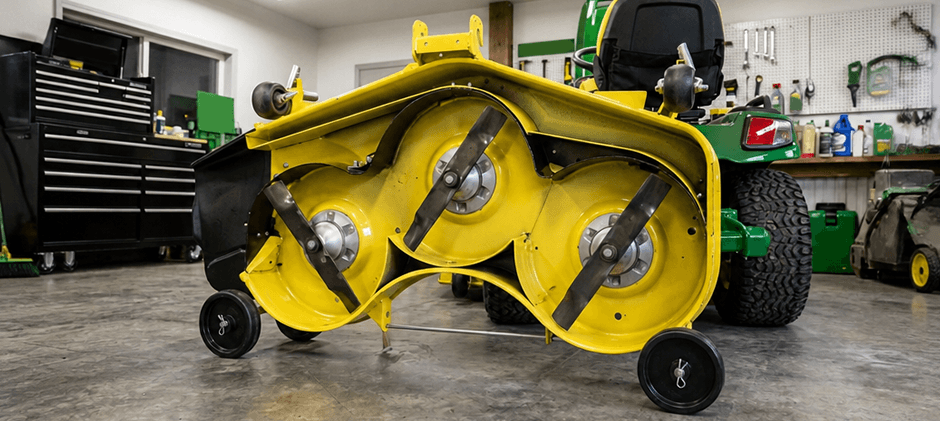
How Should 3 Mower Blades Be Positioned on a John Deere Deck?
When replacing or sharpening blades, many owners ask if the 3-blade mower orientation John Deere uses needs to be perfectly aligned. For example, you might wonder if the outer blades should sit at the 12 and 6 o’clock positions while the center blade sits at 3 and 9 o’clock. For the vast majority of standard mower decks, the answer is no. You do not need to align the blades in any specific pattern. Here is why:
- Standard Belt-Driven Decks: Most 3-blade decks use a standard V-belt system to transfer power from the engine to the spindles. When you engage the electric PTO (Power Take-Off) or manual clutch, the sudden force causes the drive belt to slip slightly on the pulleys before reaching full speed. Because of this normal slipping, any perfect alignment you create while the engine is off will instantly change the moment you turn the blades on.
- The Center Blade Dynamics: On many 3-blade setups, the center blade connects directly to the main drive sheave. It often takes the initial force of the PTO engagement, causing it to move a fraction of a second before the outer blades catch up.
- Timed Decks: The only exception to this rule is a “timed deck.” Timed decks use a special cogged timing belt (similar to a car engine’s timing belt) to keep the blades in a strict, unchangeable phase. This is done so the blade tips can overlap without hitting each other. If you have a timed deck, you must follow the exact positioning outlined in your manual. However, almost all standard 3-blade decks are not timed.
“On standard belt-driven decks, the exact clock position of the blades is irrelevant because the spindles operate independently and will naturally shift as the belts slip during engagement.”
If you stop your mower and look underneath, the blades will stop in completely random positions. This is completely normal and does not cause any weird vibrations or balance issues.
How to Install Blades on a John Deere 3-Blade Mower Deck?
Installing blades the right way keeps you safe and gives you a clean cut. Follow these steps:
- Stay safe first: Park your mower on flat, solid ground. Shut the engine off, take out the key, and disconnect the spark plug wires so it can’t start by accident. Wear thick leather gloves — the blades are sharp.
- Get to the mower deck: Depending on your machine, you can pull the whole deck off, or drive the front tires onto sturdy mower ramps. Never trust just a hydraulic jack to hold the mower up while you work under it.
- Lock the blade in place: Stick a solid block of wood between the blade tip and the inside of the deck. That stops the blade from spinning when you loosen the bolt.
- Take off the old parts: Grab a breaker bar and the right socket. Turn the bolt counterclockwise to loosen it. Pull off the bolt, cup washer and old blade.
- Check the spindle and hardware: Look for string or wire wrapped around the spindle shaft. Check the splines too, if yours has them, to make sure they’re not stripped.
- Fit the new blade: Slide the new blade onto the spindle. Make sure it sits flat against the mount. If your spindle is star-shaped, line up the star cutout on the blade perfectly.
- Torque it down: Put the cup washer back on — the curved side goes toward the blade. Thread the bolt on by hand first so you don’t strip the threads. Use a torque wrench and tighten it to the number from your manual. It’s often around 50 lb-ft, but always double-check.
Does Blade Orientation Affect John Deere Mower Cutting Quality?
Like we talked about earlier, lining blades up by clock positions won’t change how your lawn turns out. But other blade and deck settings make a huge difference to your cut. If your grass looks ragged, patchy, or leaves uncut strips, don’t worry about blade timing — check these things instead:
- Blade Sharpness: Dull blades rip grass instead of slicing it clean. Those torn grass tips turn brown and make your yard look bad. Sharpen or swap out blades at least once every mowing season. Do it more if you mow over sandy ground or small sticks.
- Deck Level and Pitch: The deck has to sit level side to side. Even more important is the front-to-back tilt. The front edge of the blade should sit 1/8 to 1/4 inch lower than the back edge. This angle lets the blade cut grass up front and toss clippings out the back or side without jamming.
- Engine Speed: Always mow with the throttle all the way open. The deck needs fast blade tips to make suction. That suction stands grass straight up for a clean cut. If you slow the engine down, you lose that pull and end up with messy cuts.
- Ground Speed: If you drive too fast, you bend grass over before the blades can cut it. Slow down in thick or wet grass, and keep the engine running full speed.
The center blade usually takes the most work. It cuts the full width every single pass. The left and right blades only overlap a little with the center one, so they do less cutting. That’s why the middle blade often wears out faster than the outer two.
How to Tell If a John Deere Mower Blade Is Installed Upside Down?
A common mistake when swapping blades is flipping them backwards. This ruins your cut and can hurt your lawn. Here’s how to make sure your blades face the right way:
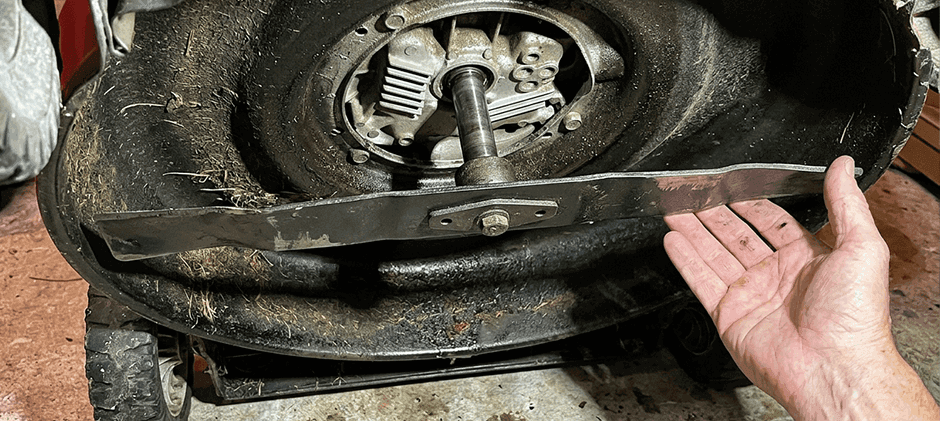
- First, check the cutting edge. The sharp side needs to lead as the blade spins. Blades turn clockwise if you look down at the deck from above. If you lie on your back and look up, they spin counterclockwise.
- Second, look at the curved lift wings on the back of the blade. These work just like fan blades, and they have to point up toward the deck. When they spin, those upward wings pull grass up and blow clippings out the discharge chute. If the wings point down toward the ground, they press grass flat into the dirt. Then the dull side just crushes the grass instead of cutting it clean.
- Last, check the markings. Lots of blades have stamped text like “Bottom”, “Grass Side”, or “This Side Down”. Always go by those marks instead of guessing.
Conclusion
For standard belt‑driven John Deere 3‑blade decks, blade clock alignment doesn’t matter. Belts slip a little when you engage the PTO, so your aligned position won’t stay. Skip trying to line the blades up. Just make sure each blade faces the correct way, torque bolts to spec, and keep edges sharp. Need quality replacement parts for your John Deere mower? FridayParts has reliable aftermarket mower components ready for your repair.
