

Choosing the right shaft couplings is an important part of keeping your machine’s power system healthy. Every coupling needs to match the torque, speed, and alignment of the connected shafts. Whether your engine drives a hydraulic pump or a generator, knowing the strengths of different coupling types helps prevent vibration, wear, and system failure. This simple guide walks you through ten of the most common coupling designs used in off-road and industrial equipment, so you can choose confidently.
How to Choose Shaft Couplings: 3 Key Factors
Before picking a coupling, think about three important things:
1. Torque: How much rotational force does your system produce?
Heavy-duty equipment needs stronger couplings.
2. Shaft Misalignment: Are your shafts perfectly lined up or slightly off?
Misaligned shafts need flexible couplings.
3. Operating Environment: Is your machine working in hot, wet, or vibrating conditions?
Choose materials that handle your environment safely.
A Guide to Rigid Couplings
Rigid couplings are simple and strong. They only work when shafts are perfectly aligned.
1. Sleeve Couplings
A straight metal tube fits over both shafts and is locked with screws.
Great for light-duty, low-speed jobs.
2. Clamped or Split-Muff Couplings
Made of two halves that clamp around the shafts.
Easy to install or remove, even without shifting connected parts.
A Guide to Flexible Couplings
Flexible couplings are the most common in off-road equipment. They handle vibration and misalignment well. They are generally divided into two sub-categories: elastomeric and metallic.
Elastomeric Couplings (Using Rubber or Plastic)
3. Jaw Couplings
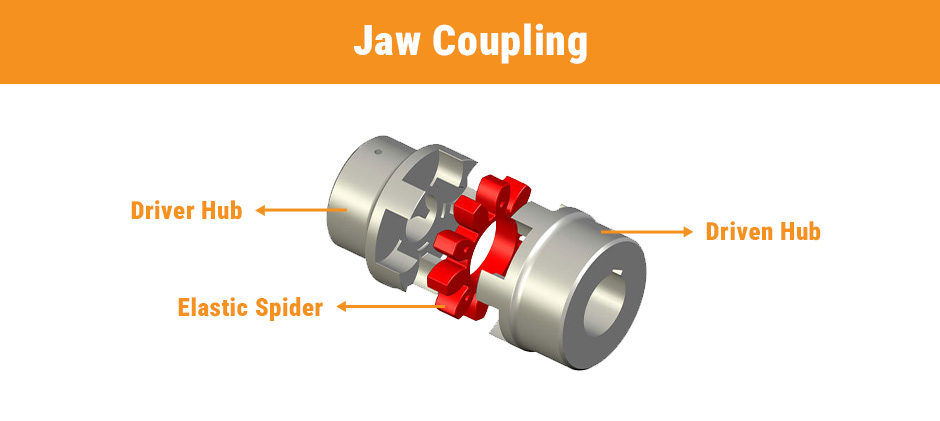
Have two hubs with a rubber or plastic “spider” in between.
The spider cushions shock and reduces vibration.
4. Tire Couplings
A highly flexible rubber or polyurethane element is bolted between two hubs.
Great at absorbing shock and vibration.
Metallic Couplings (Using Metal Components for Flexibility)
5. Gear Couplings
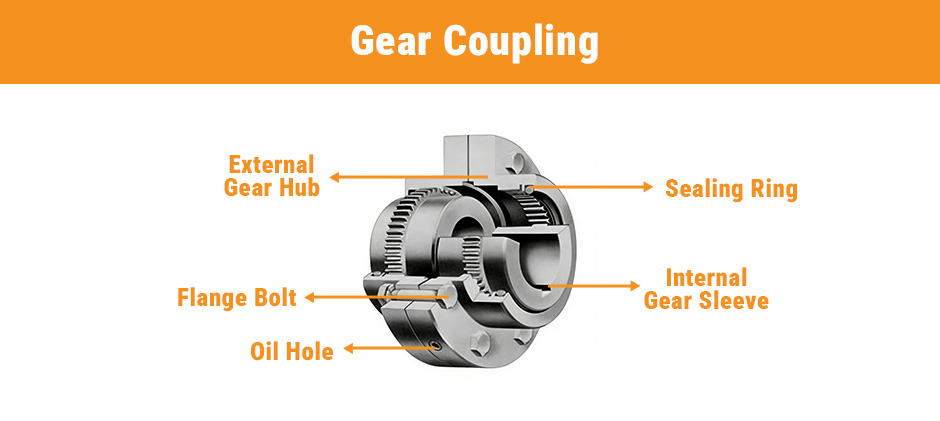
Strong and durable. Two toothed hubs connect through a mating toothed sleeve.
Perfect for high torque and speed.
6. Oldham Couplings
Have three pieces with a sliding center disc.
Excellent for large parallel misalignments.
7. Beam Couplings
A single piece of metal machined with spiral cuts, allowing slight flexibility.
Ideal for precision tasks like sensors or encoders.
8. Disc Coupling
Use thin metal discs bolted between hubs to transmit torque and allow misalignment.
High-speed and precise, often with zero backlash.
9. Diaphragm Couplings
Similar to disc couplings, but use one or more flexible metal diaphragms.
Work without lubrication and are ideal for high-speed, high-performance applications.
10. Chain Couplings (An additional common type)
Consists of two sprockets connected by a double-strand roller chain. They are simple, handle moderate shock, and allow for small misalignments.
Summary
Here’s a quick overview:
| Coupling Type | Torque | Misalignment Tolerance | Key Feature |
|---|---|---|---|
| Sleeve | Low | None | Simple & Cheap |
| Jaw | Medium | Good | Vibration Damping |
| Gear | Very High | Good | Handles Heavy Loads |
| Oldham | Medium | Excellent (Parallel) | Great for Offset Shafts |
| Beam | Low | Good | Zero Backlash |
| Tire | Medium-High | Excellent | Superior Shock Damping |
| Disc | High | Good | High Speed, No Lube |
Selecting the right coupling means smooth power, longer part life, and fewer repairs. If you’re comparing real-world options, explore the coupling catalog at FridayParts — where you can browse different categories and specs to match your exact application.
