

Signs of a Lawn Mower Leaking Oil
Oil leaks don’t always show up as a puddle under the machine. On commercial or property equipment that runs hot and works in dust, the first clue can be a change in smell, smoke, or how the engine behaves.
Look for these common signs on a lawn mower used for off-road work:
- Fresh oil on the frame, deck, or engine shrouds (wet and shiny, not just dark grime).
- Burnt-oil smell after mowing—often oil dripping onto a hot muffler or heat shield.
- Blue/white smoke (especially right after startup or on slopes).
- Oil streaks in airflow paths (around cooling fins, blower housing, or near the air filter area).
- Hard starting or rough idle if the oil has contaminated the intake or air filter.
- Oil level dropping between checks—the most important “silent” sign.
A quick reality check: oil mixed with dust can look like a thick paste. If you wipe a spot with a white rag and it comes back amber/brown and slippery, it’s an active oil leak, not just old buildup.
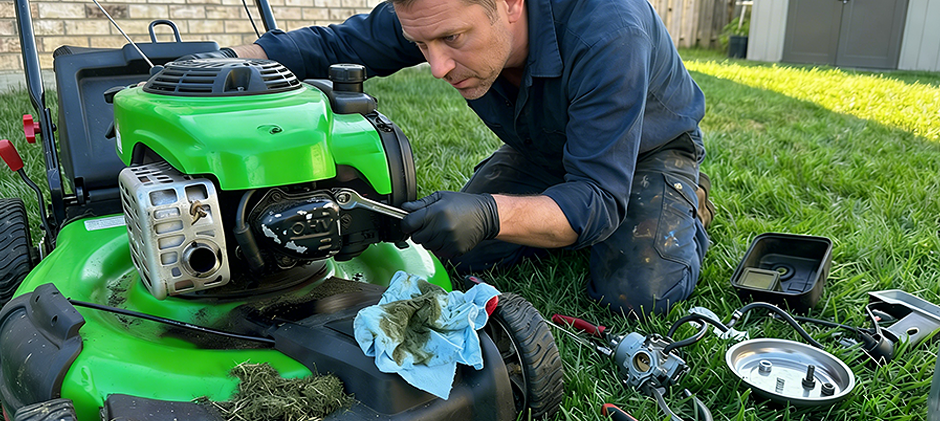
Common Reasons for a Lawn Mower Leaking Oil
Most leaks come from simple problems: too much oil, loose fasteners, worn seals, or aged gaskets. Off-road mowing adds vibration, heat cycling, and tilt angles that make these issues show up sooner.
Here are the most common reasons, from easiest to check to more serious:
1. Overfilled oil
Too much oil can push out through vents and seals, or get into places it shouldn’t (intake/exhaust paths).
2. Loose or damaged drain plug/drain valve/sealing washer
A small seep here becomes a steady drip under load and heat.
3. Worn gaskets
Heat cycles harden gasket material over time; vibration finishes the job.
4. Crankshaft seal wear
A common leak point on machines that run deck loads, belts, and high hours.
5. Breather/PCV system restriction
When the engine can’t vent normally, pressure forces oil past gaskets and seals.
6. Incorrect tipping or storage position
Transporting or tipping with the wrong side down can send oil into the intake, filter housing, or breather.
7. Internal wear
Blow-by raises crankcase pressure and increases oil carryover—often paired with smoke and power loss.
8. Cracked housing
Usually from impact, freeze damage, or severe overheating.
Transition tip: if you’re not sure which one applies, don’t guess—use location-based checks next.
Why is My Lawn Mower Leaking Oil?
Instead of chasing parts, start by locating where the oil appears first. Many leaks spread with airflow and vibration, so the lowest wet spot isn’t always the source.
1: Make the leak “visible.”
- Let the engine cool.
- Clean the oily area with a degreaser and a rag.
- Run the engine briefly (just long enough to see fresh oil appear).
- Shut it down and inspect it immediately with a flashlight.
2: Use the “zone” method
- Top/near intake side: often breather, valve cover area, fill tube/dipstick seal, or spilled oil.
- Side near belt-driven loads: commonly crankshaft seals, sump seam, or gasket edges.
- Bottom/base: often a drain plug, sump gasket, or crankcase seam.
3: Match the leak behavior to the cause
- Leak only when running: pressure-related (breather restriction, crankcase pressure, seal blowout).
- Leak only after shutdown: oil pooling and dripping from a gasket seam or drain point.
- Leak after mowing slopes: overfill or tipping-related migration into the breather/intake.
If oil appears near the intake side, check the breather path and air filter area. If it’s near the base, check drain sealing surfaces and sump/crankcase joints first—these are quick wins before deeper teardown.
Lawn Mower Oil Leaks: Common Faulty Components
Below is a practical list of the parts most often responsible for oil leaks on a lawn mower used in off-road conditions, plus what you typically see.
| Component/area | What you’ll notice | Fast check |
|---|---|---|
| Drain plug/drain valve/washer | Drip under the engine, worse when hot | Confirm tightness and sealing surface; look for cracks/stripped threads |
| Oil fill cap/dipstick seal | Wetness around the fill tube; splatter nearby | Inspect O-ring/grommet; check for overfill |
| Valve cover gasket | Oil film on the top side of the engine; oily dust line | Wipe clean, run briefly, re-check edge for fresh seep |
| Crankcase/sump gasket (seam) | Oil line along the seam; pooling at the lowest bolt | Look for a wet seam; verify bolt torque pattern |
| Crankshaft seals | Oil thrown outward; oily belt area or pulley face | Inspect behind the pulley/flywheel area for fresh oil |
| Breather assembly/breather gasket | Oil near the intake side; sometimes an oily air filter | Check for blockage, a damaged gasket, or poor sealing |
| Head gasket (less common) | Smoke + power loss; persistent leak | Compression/leak-down testing is ideal |
| Worn rings/cylinder | Oily smoke + rising oil use | Check crankcase venting; look for blow-by symptoms |
Important detail for heavy-duty use: belt-driven mower decks and hydro drives put extra load and vibration on the engine. That makes crankshaft seal leaks more common on high-hour riding and zero-turn machines.
How To Repair Lawn Mower Oil Leak
Repairs should follow a “least invasive first” approach. Many oil leaks are fixed without opening the engine—especially on equipment that’s otherwise running well.
1) Start with the oil level and correct fill practices
- Check oil on level ground (cold engine is best for a stable reading).
- If oil is overfilled, drain to the correct level. Overfill can cause leaks and smoke.
- If you recently changed oil, confirm you didn’t add extra “to be safe.” With small engines, a few ounces matter.
2) Fix the obvious external leak points
- Drain plug/washer: replace the sealing washer if it’s flattened, hardened, or cracked. If threads are damaged, address them before they become a bigger repair.
- Fill cap/dipstick seal: replace worn grommets or O-rings that allow oil mist to escape.
- Valve cover gasket: replace if seepage returns immediately after cleaning and re-checking.
3) Deal with crankcase pressure
Oil can be forced out when crankcase pressure is high. Common causes:
- Restricted breather passage
- Oil-soaked air filter
- Internal blow-by on high-hour engines
A quick check: if you see oil around the breather area repeatedly, don’t just replace the gasket—make sure the vent path is clean, and the mower isn’t running overfull.
4) Replace worn seals and gaskets the right way
When replacing seals/gaskets:
- Clean mating surfaces fully (oil film prevents sealing).
- Avoid over-tightening—crushed gaskets and warped covers leak again.
- Tighten in an even pattern, not “one bolt all the way.”
5) If the engine is already apart, do a smart service bundle
If the leak repair involves downtime, it’s often worth doing basic tune-up items at the same time—especially for off-road equipment that runs long sessions.
Here are common pairings that reduce repeat visits:
- Browse replacement categories in one place: mower parts
- If belt oil contamination caused slipping or squealing, replace the belt (oil ruins rubber): lawn mower belt
- If mowing quality has dropped while you’re servicing the machine: lawn mower blade
- If the engine has been hard starting or idling rough after leak issues, a fresh plug often helps restore ignition: lawn mower spark plug
This isn’t about replacing parts “just because.” It’s about avoiding a second teardown when the machine is already on the bench.
6) When to stop DIY and escalate
Escalate to a qualified shop if you see:
- Oil is leaking heavily, and the engine oil level is dropping quickly
- Persistent smoke after correcting the oil level and cleaning the intake side
- Suspected head gasket issues or internal wear (compression test recommended)
- Cracks in the crankcase or major sealing surfaces
Conclusion
Oil leaks on a lawn mower usually come down to level, sealing, or pressure—problems that are fixable when caught early. At FridayParts, we’re an aftermarket parts supplier with high-quality products at affordable prices, a vast inventory, and wide compatibility across many heavy equipment brands. If you’re tracking down a leak or planning a tune-up, start with the right-fit parts and keep your off-road equipment ready for the next job.
