

When a truck overheats—a site truck, service truck, heavy hauler on a mine road, oryard truck moving loads all day—it’s more than an annoying warning light. It can stop a job, cook hoses and seals, and turn a small leak into major engine damage. In this guide, we’ll break down the 10 most common overheating causes on off-road trucks, how to spot each one fast, and what we can do to fix it and keep it from coming back
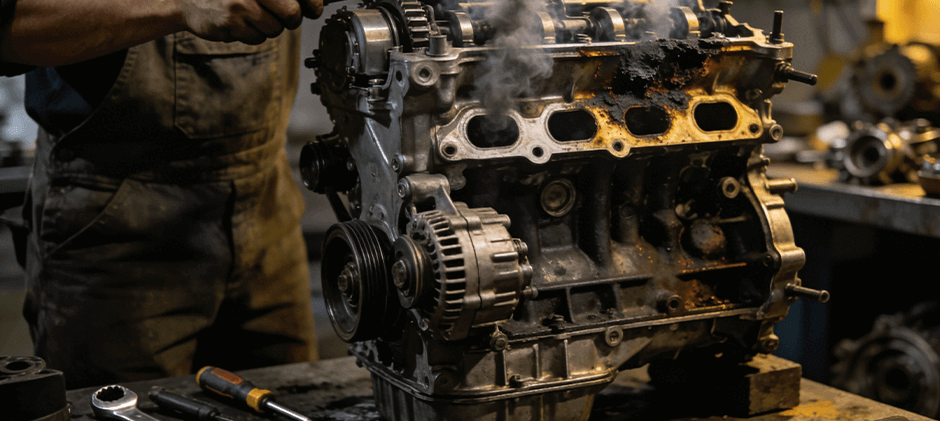
What are the 10 Common Causes of Overheating?
Cooling systems fail in patterns. The trick is to connect when the temperature rises (idle vs. load vs. uphill) with what is happening (coolant loss, airflow loss, or poor circulation). Here are the big ten.
1) Low coolant level (often from a leak)
Coolant carries heat out of the engine. If the level drops, heat spikes fast—especially under load.
What you may notice
- Temperature climbs on climbs or heavy pulls
- Sweet smell, wet spots, or dried residue around hoses and joints
- The reservoir level keeps dropping
Quick checks
- Check the reservoir level (only when cool)
- Look for wetness at the hose ends, the radiator seams, and the pump area
Parts involved: hoses, clamps, radiator, pump seals, and gaskets.
2) External radiator blockage (dirt, chaff, mud packed into fins)
Off-road environments plug fins from the outside. Air can’t pass through, so the coolant can’t dump heat.
What you may notice
- Overheats mainly at low speed or during high load
- The fan is roaring, but the temp still rises
- Visible debris mat on the core and coolers
Quick checks
- Shine a light through the radiator stack; if light doesn’t pass, airflow is blocked
- Inspect the full cooling pack (radiator + oil cooler + charge air cooler if equipped)
Common fix
- Clean the cooling pack correctly (low-pressure water/air from the right direction per the manual). Bent fins reduce airflow, too.
3) Internal radiator restriction (clogged tubes/scale/contamination)
Even if the outside is clean, the inside can be restricted by scale, rust, or mixed coolant types.
What you may notice
- Temp creeps up on long pulls
- Some radiator areas stay cooler than others (uneven heat pattern)
- Coolant looks rusty or has debris
Quick checks
- Check coolant condition and service history
- IR temp check across radiator face (uneven pattern suggests restriction)
Common fix
- Flush per spec if appropriate; replace the core/assembly if the restriction is severe.
4) Faulty radiator cap (can’t hold pressure or won’t vent/return correctly)
A radiator cap controls system pressure. Wrong pressure rating or a worn seal lowers the boiling point and can cause overflow or air entry.
What you may notice
- Coolant pushed into overflow/recovery tank
- Random overheating after shutdown/heat soak
- Hoses collapsing or staying soft when they shouldn’t
Quick checks
- Inspect the seal and spring
- Verify the cap pressure rating matches the machine spec
5) Thermostat stuck closed (or opening late)
A stuck thermostat can block the flow to the radiator. This often causes a fast temperature rise after warm-up.
What you may notice
- Temp spikes quickly
- The upper hose stays cooler longer than expected
- Heater performance (if equipped) may be weak because the flow is limited
Quick checks
- Compare hose temps; a stuck-closed thermostat often keeps the radiator cooler while the engine overheats
Common fix
- Replace thermostat and gasket; verify correct temperature rating.
6) Water pump failing (poor circulation or leaks)
The water pump is the coolant mover. Bearing wear, seal failure, or impeller issues reduce flow.
What you may notice
- Coolant leak near the pump weep hole
- Whining/grinding noise from the pump bearing
- Overheats under load even with coolant “full.”
Quick checks
- Look fora wobble at the pulley
- Check for seepage trails around the pump housing
Common fix
- Replace the pump (and often the gasket), then refill/bleed the cooling system properly.
7) Belt slip or wrong tension
Many off-road engines rely on belt-driven accessories. If the belt slips, the pump and/or fan speed drops when we need it most.
What you may notice
- Overheating is worse at high RPM/load
- Belt squeal, glazing, cracking
- Charging issues (if the alternator is on the same belt) can appear too
Quick checks
- Inspect belt condition and alignment
- Check the belt tensioner for weak spring force or rough pulley bearings
8) Cooling fan problems
Airflow is half the cooling equation. Fans fail mechanically, electrically, or through the fan drive circuit.
What you may notice
- Overheats mainly at idle/slow travel
- The fan never “locks in,” or the fan speed is clearly low
- Missing/damaged shroud reduces pull through the core
Off-road note: Many machines use hydraulic fan drives, where a leak or restriction can reduce fan performance.
Quick checks
- Inspect fan blades and shroud fitment
- If hydraulic fan drive: check for leaks, kinked lines, and hot hydraulic oil conditions
9) Airlocks in the cooling system (trapped air pockets)
Air pockets block flow and create hot spots. This is common after coolant service or a slow leak that lets air in.
What you may notice
- Temperature swings up and down
- Coolant level changes suddenly after a heat cycle
- Gurgling sound in the coolant tank
Quick checks
- Verify correct fill/bleed procedure for your machine (some require vacuum fill or bleed screws)
Common fix
- Properly bleed and recheck after a full cool-down cycle.
10) Combustion gas leak (head gasket/cracked head/liner issues)
This is the “serious” category. Combustion pressure enters the cooling system, pushing coolant out and causing rapid overheating.
What you may notice
- Sudden overheating with steam
- Coolant pushed out repeatedly
- Bubbles in the reservoir (when cold start warms up), coolant smell in the exhaust, or milky oil (not always)
What you should do
- Shut down to prevent warped heads and worse damage
- Pressure test/block test by a qualified tech is usually the right move
Quick Summary Table
| Cause | Common symptoms | What to check first | Parts often involved |
|---|---|---|---|
| Low coolant/leak | Overheats under load, low reservoir | Visual leak check, level check | Hoses, clamps, gaskets |
| Radiator fins blocked | Overheats at low speed/load | Light-through-core test | Radiator, shrouds |
| Radiator internally restricted | Slow temp creep | Coolant condition, IR scan | Radiator core |
| Bad cap | Overflow, boiling early | Cap seal/spring, rating | Radiator cap |
| Stuck thermostat | Fast spike | Hose temp comparison | Thermostat |
| Water pump failure | Leak/noise/overheat | Pulley wobble, weep hole | Water pump |
| Belt/tension issue | Worse at load/RPM | Belt glazing, tensioner play | Belt tensioner, belts |
| Fan system issue | Idle/slow overheat | Fan speed, shroud | Fan, clutch/drive |
| Airlocks | Temp swings | Proper bleed steps | Bleed points, cap |
| Combustion gas leak | Sudden spike, bubbling | Pressure/block test | Head gasket, head |
How do I fix the truck from Overheating?
We recommend handling overheating in two phases: protect the engine now, then find the root cause.
A) What to do right away (field-safe steps)
- Reduce load immediately: stop pushing, stop climbing, downshift if moving.
- Move to a safe spot and idle briefly (if temps are not already extreme). Idling can stabilize temps, but if the gauge is pegged, prepare to shut down.
- Shut down if the temperature keeps rising.
- Do not open the radiator cap when it is hot. Let the system cool fully first.
- After cooldown, inspect:
- Coolant reservoir level
- Visible leaks (hoses, pump, radiator seams)
- Belt condition and fan operation
- Radiator face for debris blockage
B) Root-cause repair checklist (shop-level)
- Pressure-test the cooling system to detect slow leaks.
- Test the cap (correct pressure rating and sealing).
- Verify thermostat operation (replace if in doubt—cheaper than engine repairs).
- Inspect pump and belt drive: replace worn belts, weak tensioners, and noisy pulleys.
- Confirm airflow: clean radiator stack, fix missing shrouds, verify fan drive works under heat/load.
- Bleed air correctly and recheck after the first heat cycle.
- If symptoms point to combustion gas intrusion, stop and test before further operation.
Tips to Prevent Truck Overheating
Prevention is mostly about airflow, coolant health, and inspection discipline—all harder on off-road machines because of dust, vibration, and long idle hours.
1) Clean the cooling pack on a schedule (not just when it overheats)
- Set intervals based on environment: demolition dust, chaff, mud, and snow all clog differently.
- Clean from the correct direction to push debris out, not deeper in.
2) Treat coolant like a service item
- Use the correct coolant type and mix ratio per machine spec.
- Don’t mix coolants unless approved; mixing can form deposits.
- Keep the water quality within spec.
3) Replace small “control parts” before they strand you
Caps and thermostats are cheap compared with downtime. If a cap seal looks tired or the thermostat is of unknown age, replacing them during
planned service is often the right call.
4) Watch belt drives health
- Inspect belts every PM: glazing, cracks, fraying, contamination.
- Spin idlers and tensioner pulleys for roughness.
5) Don’t ignore early warning signals
A few minutes of abnormal temp movement, a new smell, or a small drip often come before a full overheat event.
Simple operator checklist (daily/shift start)
- Reservoir level and visible leaks
- Radiator face condition
- Fan/shroud condition
- Belt condition and tensioner noise
- Any new alarms or gauge trends
Conclusion
Truck overheating in off-road work is usually caused by coolant loss, restricted airflow, poor circulation, or a control part like a cap or thermostat failing. The fastest path to a reliable fix is to protect the engine first, then test and repair the actual cause—leaks, radiator condition, fan performance, belt drive, and correct bleeding. With consistent cleaning and inspections, we can prevent most overheating events before they cost real downtime.
