

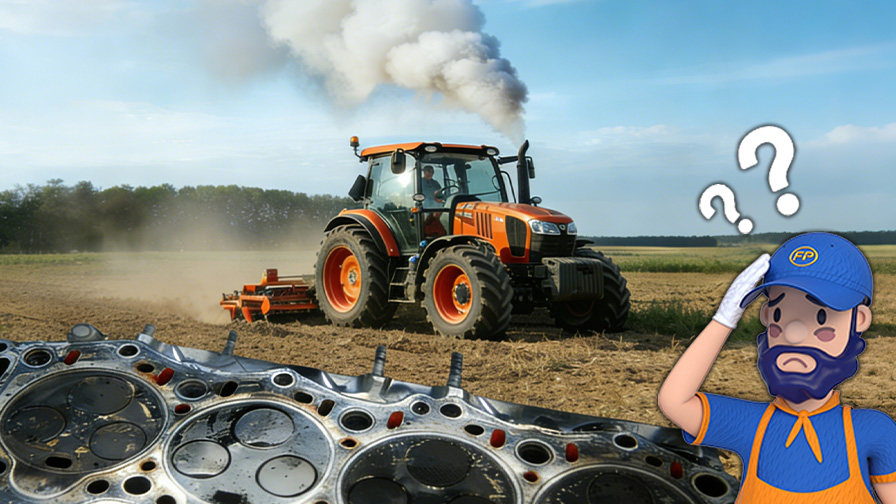
Noticing white smoke from your diesel engine? Don’t worry about a little smoke at the startup. But if white smoke persists during acceleration, it is telling something is wrong. It could be a simple problem with diesel fuel, or as serious as coolant leaks. In this article, we’ll dive into the most common causes and how to fix diesel white smoke, so you can avoid costly engine repairs.
What Does White Smoke Mean In A Diesel
Many heavy-duty equipment owners might have been thinking white smoke or black smoke as a sign of their machines running strong. But the picture is quite the opposite. It’s a warning sign telling you something is out of balance in your engine. In most cases, it means unburned fuel slipping through the exhaust, resulting from incomplete combustion caused by bad injectors, weak compression and cold starts. In serious situations, it means coolant is sneaking into the cylinders due to a leaky gasket or cracked cylinder head. Either way, persistent white smoke from a diesel when accelerating shouldn’t be neglected. Knowing white smoke on an engine and paying early attention can prevent a big repair, saving your engine, reducing downtime and avoiding costly repairs.
What Causes White Smoke From Diesel Engine When Accelerating
A great many factors can cause your diesel engine to produce white smoke. Let’s go through them one by one, from the easiest to the most serious.
Cold Starts
On cold mornings, a puff of white smoke from your diesel engine can be normal. A diesel engine needs heat to ignite fuel. When it is cold, fuel doesn’t fully burn or escape as white smoke. If the smoke disappears within a minute or two, it’s okay. If it lingers, something is wrong.
Common signs:
White smoke on startup that clears within a few minutes
More noticeable smoke on cold early mornings
How to fix: Here’s an easy fix for white smoke during cold start. Let the machine idle for 3 to 5 minutes before putting it under load, especially when the temperature is low. You can also check the glow plugs or the intake air heater. A faulty one is the most common reason for the white smoke to last longer than it should.
Bad Diesel Fuel
Contaminated or low-quality diesel fuel can disrupt combustion in the diesel engine. If there’s water in the fuel, it lowers the combustion temperature and produces steam that exits the exhaust as white smoke. Fuel contamination is more common on heavy-duty work site.
Common signs:
White smoke with a fully warmed-up engine
Rough idling & Loss of power
Engine hard starts
How to fix: Begin by draining the fuel tank and replacing it with high-quality diesel. Check the fuel filter for signs of water or contamination and replace it when necessary. Adding a fuel water separator or system cleaner can help prevent it from happening again.
Faulty Fuel Injectors
The function of fuel injectors is to deliver an exact amount of fuel into the combustion chamber. If they are clogged or malfunctioning, they may inject too much fuel or not atomize it properly, thus leading to incomplete combustion and white smoke.
Common signs:
Poor acceleration
Rough idling
Increased fuel consumption
How to fix: Start by inspecting the injectors for proper spraying patterns. Good injectors produce fine even mists. If your injectors are dribbling, clogged or spraying unevenly, you can clean or replace them. Always refer to the manufacturer’s manual for specific specifications and choose high-quality fuel injectors.
Worn Piston Rings
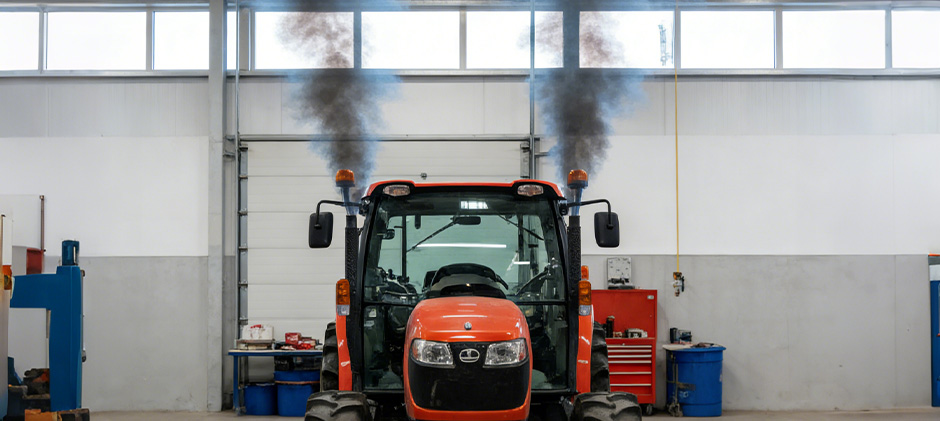
Piston rings act as a seal between the piston and the cylinder wall, keeping oil out of the combustion chamber. On heavy equipment like tractors or excavators, these rings take a beating from constant high-load operation. Over time, worn rings let oil sneak into the combustion chamber and mix with the fuel-air mixture. As a result, white smoke comes out of the exhaust stack.
Common signs:
Engine power loss
Excessive oil consumption
Blue or gray smoke along with white smoke
How to fix: Replacing the piston ring is more complex and may require professional assistance. To prevent this problem, you’d better check oil levels and engine performance regularly. At least once a month is a good idea for most equipment.
Coolant Leaks (Head Gasket Issues)
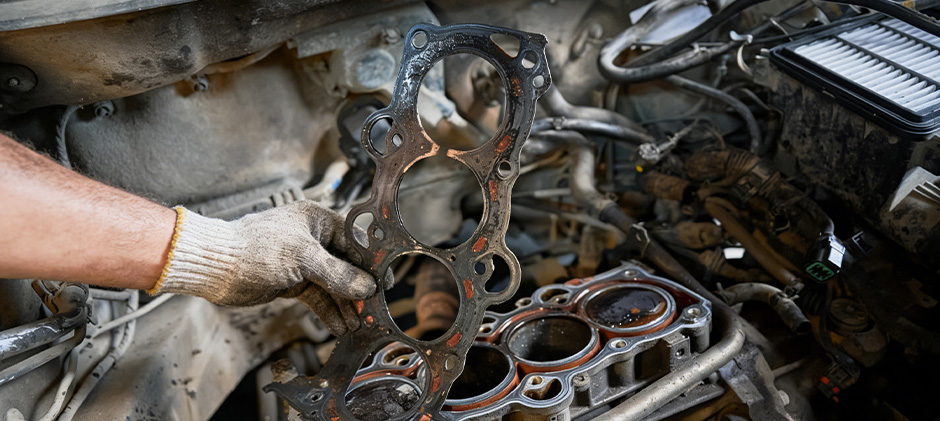
If you notice white smoke with a tinge of sweet odor, things are more serious. That signals coolant leaks into the combustion chamber. A blown head gasket or a cracked cylinder head are major culprits behind the leaks. Coolant can also leak into the internal part of the engine through a cracked cylinder head or engine block. Operating with a damaged gasket can lead to costly engine damage.
Common signs:
White smoke under load
Overheating engine
Loss of coolant without visible leaks
How to fix: Once that happens, stop your machines immediately. Continuing to run your equipment can lead to a complete engine rebuild. Check the coolant reservoir for a milky and foamy appearance. If so, your coolant mixes with oil. A cooling system pressure test can help identify whether it’s a problem with a blown head gasket or a cracked cylinder head. Either way, this is not an easy fix and may require professional help.
How to Diagnose White Smoke From Diesel Engine Yourself
If you want to diagnose the causes yourself, take the following steps.
Visual Inspection
Watch the smoke carefully. Is it thin and fades as the engine warms up? Or is it thick, persistent and getting worse when accelerating? That’s a sign of something wrong. A strong raw diesel smell means unburned fuel and a sweet smell with white smoke indicates coolant is involved.
Check Oil Condition
Take a look at your oil in the dipstick. If the oil looks milky, foamy or has a greyish color, coolant is mixing with your oil. This is usually a problem related to a blown head gasket or cracked cylinder head.
Examine Coolant Level
It’s simple to check coolant levels at home. After running your equipment, let the engine cool down for 1 or 2 hours. Then, pop the hood and locate the reservoir to check if the coolant looks milky, rusty or oily in texture. If so, your coolant is likely to have been contaminated from a leak in a major component and requires the eyes of a professional diesel mechanic.
Compression Test
A simple compression engine test can reveal the cause of the white smoke. Through the test, you can find the internal problems, such as a damaged valve, cylinder or gasket. It is a common practice for technicians to perform these tests when equipment has performance issues, especially a lack of acceleration. They will place a gauge on each cylinder to calculate the pressure produced during the compression test. When a cylinder is underperforming, they will look into internal damage.
Tips to Prevent Diesel White Smoke in the Future
- Always stick to quality diesel and change filters on schedule.
- Warm up your engine before heavy throttle, especially in cold weather.
- Inspect and replace faulty fuel injectors or glow plugs regularly to ensure clean combustion.
- Watch for coolant and oil levels to prevent any leaks.
Do not ignore the small lingering puffs. Performing regular maintenance can ensure the reliability of your diesel engine.
When to Turn to A Professional?
If the smoke hangs around after warming up, that means more serious issues like failed injectors, bad piston rings or coolant leaks. Sweet smells, overheating and power loss can be signals to call in a pro. A technician has specific tools to confirm what’s failing before it snowballs into cost engine damage.
Final Takeaways
White smoke from a diesel engine is not a sign your equipment is running strong. It is a sign telling you something is off. Sometimes, it is a simple issue like a cold start. But worse, it is the problem that will cost you big. You’d better know the difference. Notice the common signs and run a few quick checks and small fixes before it escalates into a bigger problem. When issues go beyond basic checks, don’t hesitate to go to a pro. Regular maintenance will repay you with power, reliability and smoke-free operation. FridayParts is a trustworthy one-stop shop that offers a comprehensive lineup of engine spare parts as well as professional expertise on engine rebuilding.
