

A new noise on an off-road machine can ruin a shift. One day it’s quiet, the next day there’s a hum at travel speed, and now every turn feels like a “test.” This guide helps you tell tire noise vs wheel bearing noise the practical way—by how the sound changes with speed, load, turning, and surface. You’ll also get quick checks that work in the field, plus a shortlist of other faults that can imitate tire noise or wheel bearing problems, so you don’t swap the wrong parts.
Is It Your Tires or Wheel Bearings?
Start with this simple idea: both tires and wheel bearings “sing” at wheel speed. That’s why the sound can feel identical at first. But the cause is different:
- Tires make noise when tread blocks hit the ground and the carcass flexes. Wear patterns (cupping, feathering) amplify that noise.
- Wheel bearings make noise when rolling elements and races wear, pit, or lose proper preload. That noise often changes when the load shifts side to side.
If the machine is a loader, skid steer, telehandler, excavator, lift, or other off-highway equipment, you also have extra variables: aggressive tread, rough jobsite surfaces, and frequent steering at low speed under heavy load. That can mask early bearing noise or make a noisy tire sound “mechanical.”
Why Do These Two Noises Get Mixed Up So Often?
They get mixed up because the symptoms overlap and the conditions are messy.
1. Same neighborhood, same rotation
Tires and wheel bearings are inches apart. Both rotate at wheel speed, so both can create:
- roaring
- humming
- droning
- growling
If you need a sound reference for heavy equipment-style roaring or humming, it helps to anchor what “humming” typically describes in diagnostics.
2. Speed makes everything louder
Both tire and bearing noises usually increase with travel speed. On machines that rarely hit road speeds, that means the noise may only appear when you move across a long haul road, hard-pack, or a smooth slab, where the cab is quieter.
3) Jobsite surfaces change the sound
A tire that seems fine on soft dirt can roar on hard concrete. Bearings don’t care much about surface texture—tires do.
4) One problem can cause the other
- Worn suspension/steering joints can lead to uneven tire wear → louder tire noise.
- Loose hub/bearing play can accelerate uneven wear → louder tire noise.
So you can have both, and the “loudest” sound may not be the root cause.
With the confusion caused, the next step is to compare how each noise behaves when you change one variable at a time.
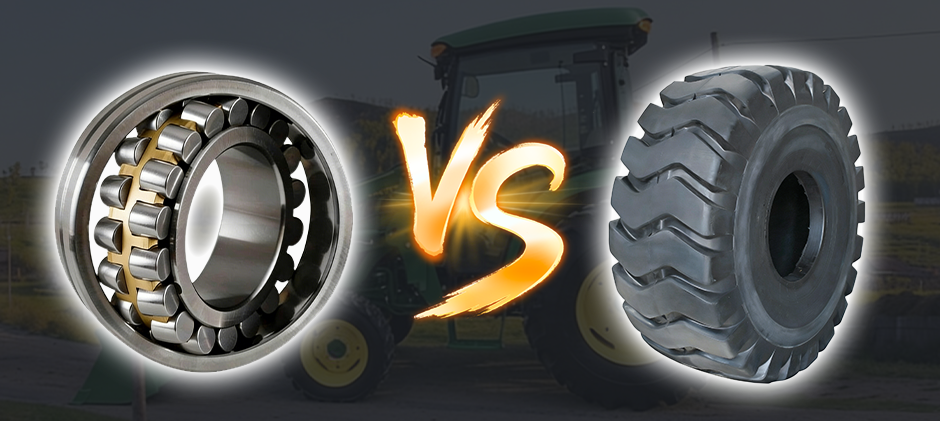
Wheel Bearing Noise Vs Tire Noise
What wheel bearing noise is usually like
A wheel bearing’s job is to support the load while allowing the hub/wheel to rotate smoothly. When it starts failing, noise tends to be:
- A steady hum/growl that rises with speed
- Often more consistent day-to-day once it starts
- Frequently load-sensitive (changes during turns)
Typical behavior clues:
- Gets louder when turning one direction and quieter when turning the other (because weight shifts onto/off the failing side).
- May come with heat at the hub area after travel.
- Later stages can add vibration, steering wander, or noticeable play.
What tire noise is usually like
Tire noise is shaped by tread pattern, wear pattern, inflation, and surface. It often is:
- A roar or droning that rises with speed
- Surface-sensitive (louder on some ground, quieter on others)
- Sometimes rhythmic (especially with cupping/scalloping)
Typical tire-noise triggers in off-highway machines:
- Cupping/scalloping from worn suspension/steering components
- Incorrect inflation for load conditions
- Aggressive tread patterns on hard surfaces
- Long storage causes flat spots (more common on some equipment than others)
How to Differentiate the Noises?
Below is a practical, off-road-friendly routine. Try to change only one variable at a time.
Step 1: Confirm it’s wheel-speed related
- Hold engine RPM steady (if possible) and vary travel speed.
- If noise follows travel speed, it’s more likely tires/bearings/driveline.
- If noise follows engine RPM even when speed doesn’t change, look elsewhere (fan, engine accessories, hydraulic pumps—depends on machine layout).
Step 2: Do a controlled steering “load shift” test
In a safe, open area at a steady speed:
- Make a gentle sweep left, then right (no sharp turns).
- Bearing clue: noise gets louder when weight transfers onto the bad side.
- Tire clue: noise may not change much, or changes are inconsistent and surface-dependent.
Step 3: Surface test
Run the same speed on:
- smooth slab / packed surface
- rougher surface
If the noise gets much louder on rough ground and quieter on smooth, that leans toward tire tread and wear pattern noise.
Step 4: Visual + touch inspection of tires
With the machine safely parked and secured:
- Look for cupping/scalloping: alternating high/low spots around the tread.
- Feel for feathering: run a hand across tread blocks; one direction feels sharper.
- Check for cuts, bulges, separations, and embedded debris.
If tires are suspect, it’s also the right time to plan replacement. For equipment wheels, tires, and industrial tire assemblies, you can source tires built for industrial equipment needs.
Step 5: Bearing play and roughness check
If safely liftable per the equipment’s service method (and using correct stands/blocks):
- Check for looseness at the wheel/hub (rock test).
- Spin and listen (note: some bearings only complain under load, so spinning in the air isn’t perfect).
Safety note: Use proper lifting points and procedures for off-road equipment. If you’re not equipped to lift safely, skip this step and focus on road test + inspection.
Step 6: Heat comparison
After travel, compare the hub area temperatures side to side.
- A hotter hub can support a bearing suspension.
- But dragging brakes also heats things—so don’t stop here.
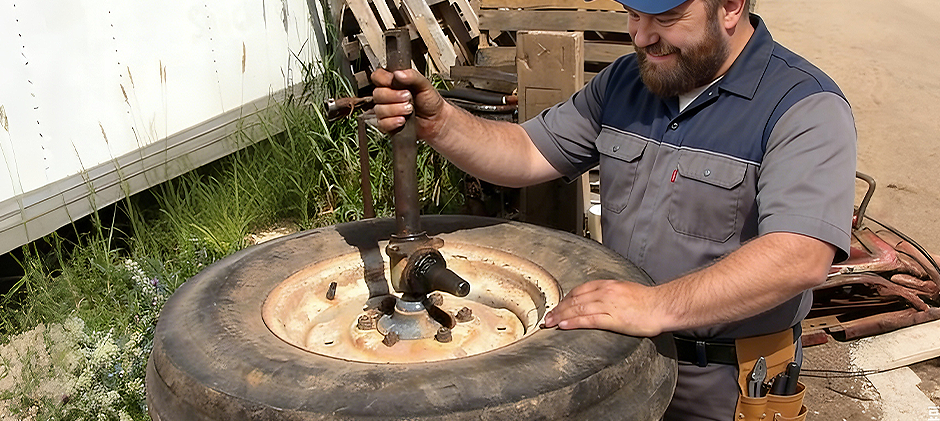
Other Problems That Can Sound Like Tires Or Bearings
Several issues imitate tire noise vs wheel bearing problems, especially in off-highway machines:
1. A dragging brake / stuck caliper
- Can create rubbing, scraping, or a dull growl.
- Often worsens as components heat up.
2. Damaged dust shield or contact point
- Light contact can make a steady metallic “hush” or scrape.
- Final drive / planetary / hub gear issues
3. Can create a howl or whine that changes with load and speed.
- Driveline or axle joint wear
- May growl under load or vibrate at certain speeds.
4. Suspension/steering wear is causing tire cupping
- The “real” fault is a worn joint; the symptom is noisy tires.
Because there are look-alikes, early diagnosis isn’t just about comfort—it’s about preventing cascading failures and wasted parts.
Why Early Diagnosis Is Crucial?
If it’s tires…
Early action can be inexpensive:
- Correct inflation
- Rotate
- Fix alignment/steering/suspension wear before it ruins the next tire
- Replace the tire before it damages other components
If it’s a bearing…
Waiting usually gets more expensive:
- A noisy bearing can become a loose bearing
- Heat and play can damage hub surfaces, seals, and adjacent parts
- In worst cases, loss of control or severe hub damage becomes a downtime event
Also, diagnosing early prevents “parts darts”—replacing tires when it’s a bearing, or replacing a bearing when the tire wear pattern is the real noise maker.
Relevant parts note: Bearings are not only wheel-end parts. In diesel engines, main and con rod bearings support the crankshaft and carry heavy loads. If you’re also planning an engine rebuild or internal service, you can source bearings (main & con rod bearings) as direct replacement options for many off-road engine applications.
FAQs
1) What does a bad wheel bearing usually sound like?
Most commonly, a hum, growl, or droning noise that rises with speed. A key clue is that it often changes when the machine’s weight shifts during gentle turns.
2) Can cupped tires sound like a wheel bearing?
Yes. Cupping/scalloping can make a humming or growling sound that is very close to bearing noise. The difference is that tire noise usually changes more with surface and can be confirmed by tread inspection.
3) If the noise gets louder on rough ground, is it definitely the tires?
Not “definitely,” but it strongly suggests tires. Bearings tend to be more consistent across surfaces. Use the steering load-shift test to confirm.
4) Will rotating tires help diagnose the problem?
On equipment where rotation is applicable and safe, a rotation can help: if the noise changes location or character afterward, tires move higher on the list. If nothing changes, bearings or other driveline issues become more likely.
5) Is it safe to keep working with a suspected bad wheel bearing?
It’s risky. If you suspect a bearing, reduce travel speed, avoid long hauls, and schedule an inspection soon. A bearing that progresses can damage the hub and create a major downtime event.
Conclusion
Tire noise vs wheel bearing noise can sound the same, but behavior gives it away. Tire noise changes with surface and tread wear patterns; bearing noise changes with side-to-side load during turns and tends to be more consistent. Use a controlled road test, inspect tread by hand and eye, and compare heat and play when safe. If parts are needed, we can help as an aftermarket parts supplier with high-quality products at affordable prices, a vast inventory, and wide compatibility across heavy equipment brands.
