

If your engine is idling and oil pressure is low, the lubrication system may not keep enough pressure to protect key parts. The metal parts rub directly, leading to more wear, noise, and higher temperatures. But oil pressure is naturally lower at idle than at working speed. The real question is: is this a normal drop, or is it below the safe limit? What should oil pressure be at idle?
What Is Oil Pressure?
A lot of people think the oil pump “creates pressure.” But that’s not really how it works. The oil pump is more like a delivery system. It keeps oil moving and circulating through the engine. What it actually produces is flow, not pressure.
So where does oil pressure come from? It’s created by resistance. As the oil flows through narrow passages and tight clearances inside the engine, it meets resistance—and that resistance is what we read as oil pressure.
Think of it like a garden hose: When water flows freely, you get plenty of flow but not much pressure. But if you put your thumb over the end, the water suddenly sprays out with force. That extra “kick” comes from the restriction you just created.
It works the same in an engine. Under normal conditions, tight clearances in bearings create just the right resistance, keeping oil pressure steady. But when parts wear out, clearances open up. Oil flows too easily, resistance drops, and oil pressure goes down.
What Is Normal Oil Pressure at Idle?
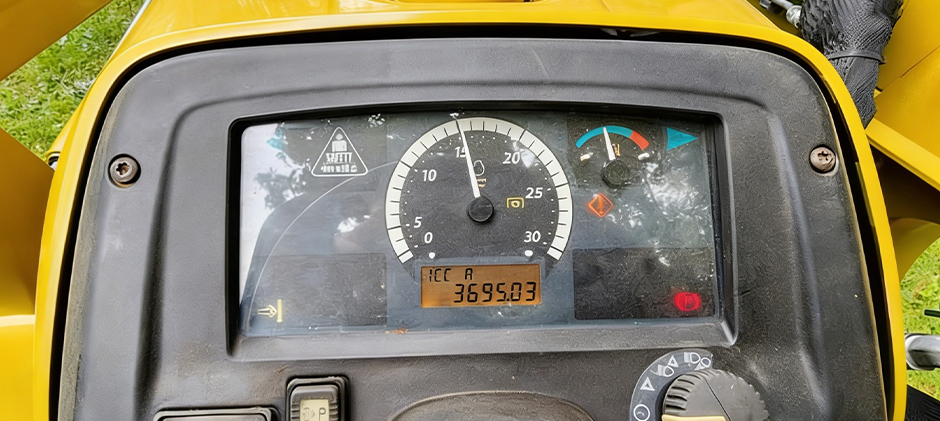
For most diesel engines, oil pressure of 20–30 PSI at hot idle is considered safe. These engines have large, heavy internal parts, so even at low RPMs, you need enough oil pressure to keep metal parts from rubbing directly against each other.
Tip for modern engines: Some newer engines use variable-displacement oil pumps to save fuel, which can let idle pressure drop to around 15 PSI under normal conditions. Don’t panic if you see 15 PSI — always check your equipment service manual first to find the normal range for your engine.
Quick Reference Chart for Engine Oil Pressure
| Engine State | Typical PSI Range | Action Required |
|---|---|---|
| Cold Start | 60 – 95+ PSI | Normal. Allow the engine to warm up before putting it under load. |
| Hot Idle (>180°F / 82°C) | 20 – 30 PSI | Optimal. Your system is healthy. Continue your work schedule. |
| Operating (High RPM) | 50 – 70 PSI | Optimal. The system is performing correctly under load. |
| Low Idle Caution | 15 – 19 PSI | Monitor Closely. Check your oil level and smell the oil for fuel. |
| Danger Zone | < 15 PSI | Immediate Shutdown! Unless your manual says this is normal for a variable pump. |
Why Pressure Changes?
Oil pressure and temperature change in reverse ——one goes up, the other goes down. When cold starting, the oil is thicker and flows slowly, so the pressure gauge will surge up all at once. That doesn’t mean the engine is stronger—it’s just how cold, thick oil behaves.
The only reading that really matters is the “hot idle pressure”. That’s after the engine warms up to its normal operating temperature (usually above 180°F / 82°C). As the engine heats up, the oil thins and flows more easily through the bearings, so the pressure drops.
If the pressure stays normal and steady once the engine is hot, it means the lubrication system is working properly.
What Causes Low Oil Pressure at Idle?
If the engine oil pressure is less than 20 PSI at hot idle, it is likely one of four problems:
- Low Oil Level: When the oil level is low, the oil pump may suck up air instead of oil, causing the oil pressure to drop sharply.
- The oil has deteriorated or been diluted: Pull out the dipstick and smell it. If there is a strong diesel smell, it means that fuel has run into the oil (fuel dilution). In this way, the oil becomes thinner and the oil pressure cannot be maintained. Usually caused by leaking fuel injectors.
- Engine bearing wear: If the bearing is badly worn and the gap becomes large, the oil will flow too easily through the gap, unable to form sufficient resistance, and the oil pressure will naturally drop.
- Pressure relief valve failure: Each oil pump has a spring-loaded safety valve (pressure relief valve). If the spring breaks or the valve is stuck open due to debris, the oil will return directly to the bottom casing and cannot be sent to various parts of the engine for lubrication.
The Danger of High Pressure at Idle
Don’t think high oil pressure is always good. If you see 50+ PSI at hot idle, there’s probably a blockage somewhere. Usually it’s a relief valve stuck closed or a clogged oil passage. Really high pressure will look for the weakest spot in the system and can blow out gaskets, seals, or even burst your oil filter.
How to Diagnose Low Oil Pressure?
When that oil warning light comes on, follow these steps:
- Stop the engine and check the dipstick: First, make sure there’s enough oil. While you’re at it, smell it for diesel and feel it between your fingers for any gritty or metallic bits.
- Look for leaks: Check around the oil pan, oil lines to the turbo, and the oil filter for any obvious leaks.
- Check the oil pressure mechanically: Don’t just trust the dashboard sensor—it can fail. Hook up a good mechanical gauge directly to the engine to see if the problem is real or just a bad sensor.
- Do the “glitter test”: Remove the oil filter and carefully cut it open. Spread out the filter paper and hold it in the light. If you see shiny metallic flakes (like glitter), it’s a sign the engine bearings are starting to wear badly.
Conclusion
Keeping an eye on your oil pressure is one of the easiest ways to protect your engine. If you catch a drop early, most of the time it’s just a simple part that needs replacing. Shop at FridayParts for high-quality, compatible parts and get your engine fixed fast.
Frequently Asked Questions
Can I fix low idle pressure by switching to a thicker oil?
This is just a band-aid solution. Going from 10W-30 to 15W-40 might bump up the pressure temporarily, but it won’t fix the real problem, like worn bearings or a bad oil pump. It only gives you a little more time before serious engine trouble.
Why does my oil light only flicker when the engine is hot?
Most oil warning lights kick in at a really low pressure, around 7–10 PSI. When your oil is hot and thin, the pressure often sits right on that edge. This is a big warning sign — you have no safety buffer left.
Is it safe to run my machine if idle pressure is 15 PSI?
Be extremely careful. 15 PSI might be enough at low idle, but you have to watch the gauge closely when you rev the engine. If pressure doesn’t jump right up to 40–50 PSI when you speed up the engine, shut it down and get it checked.
