

Off-road machines don’t get “easy” operating conditions: long idle time, heavy load spikes, dust, vibration, and fuel that isn’t always perfect. When power drops, black smoke appears, or the engine is hard to start, the fuel injection pump is one of the first components to get a serious check. In this guide, we’ll break down what the pump does, the main pump types you’ll see in off-highway equipment, the clearest failure symptoms, and maintenance steps that help you avoid downtime and repeat repairs.
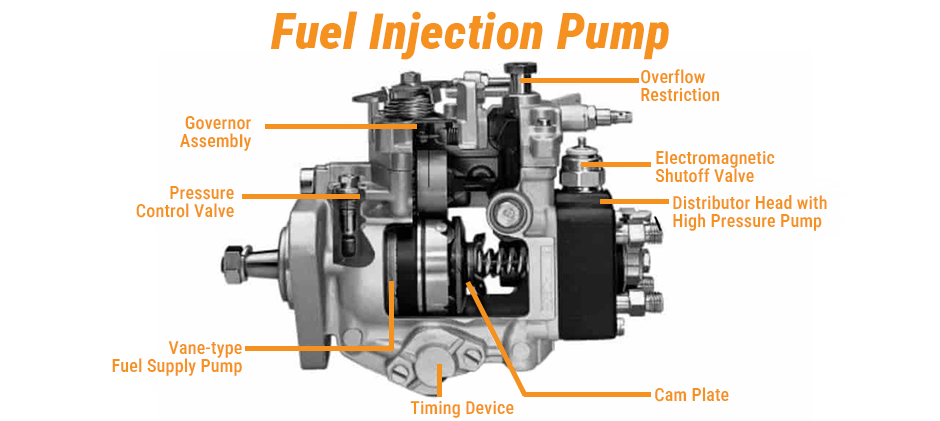 What Is the Function of a Fuel Injection Pump?
A fuel injection pump is a component of a diesel fuel system that meters fuel and delivers it at the pressure and timing the engine needs. In off-road machinery, that job is critical because engines often run at high load (digging, pushing, lifting), where small fuel-delivery errors quickly turn into big performance problems.
At a practical level, the pump’s function can be explained as four linked tasks:
1. Pressurized fuel for injection
The pump raises fuel pressure so injectors can atomize fuel into a fine spray. Better atomization supports smoother combustion and steadier power under load.
2. Measure fuel quantity
The pump must deliver enough fuel to make torque, but not so much that you get wasteful smoke, high exhaust temps, or diluted oil (in severe cases).
3. Control injection timing
Fuel has to enter the cylinder at the correct moment. Mechanical systems do this by pump position and internal mechanisms; electronic systems use sensors and control logic.
4. Feed cylinders correctly
Some pump designs distribute fuel to each cylinder directly (common in older mechanical systems). Others feed a high-pressure rail, and injectors do the final “per-cylinder” control.
Common Types of Fuel Injection Pumps
Off-road diesel equipment generally uses one of these fuel injection pump families:
- Inline (mechanical) injection pumps
- Rotary/distributor pumps
- Unit pump/unit injection systems
- High-pressure common rail pumps (electronic systems)
Below is a practical breakdown, not a textbook one—focused on what matters for heavy equipment owners: reliability traits, what typically goes wrong, and what service looks like.
1. Inline (mechanical) injection pump
An inline pump typically has pumping elements aligned in a row (often one per cylinder). It’s known for ruggedness and strong fuel delivery under load.
A well-known example in the field is the p7100 injection pump—often called a “P-pump.” In off-road applications, this pump family is valued for its durability and adjustability, and it appears across several equipment models and industrial engine setups.
Why are inline pumps popular in off-road work
- Strong mechanical durability for long-hour operation
- Straightforward mechanical timing concepts
- Often easier to tune when done by qualified technicians (governor springs, timing adjustments, and fuel delivery changes are commonly discussed)
Typical downsides
- Heavier and less “fine control” than modern electronic systems
- Wear is gradual, so problems can creep up as a slow power loss or an unstable idle
2. Rotary / distributor injection pump
Rotary/distributor pumps are compact and can be a fit for smaller engines or space-limited designs. Rather than having a dedicated pumping element for each cylinder in a row, the pump design distributes fuel in sequence.
Pros (off-road perspective)
- Compact packaging
- Often simpler external plumbing
- Common on certain older or smaller diesel platforms
Cons
- May not match inline systems for sustained heavy-load fueling
- Can be more sensitive to supply issues (air leaks, restrictions) because a consistent feed is critical
3. Unit pump/unit injection systems
Unit systems (depending on the engine family) place pumping and injection closer together than classic inline/rotary layouts. The big idea is tighter cylinder-level delivery control.
Why owners should care
- Troubleshooting often becomes more “cylinder-specific.”
- Service approach varies a lot by engine model (procedures matter)
4. High-pressure common rail (HPCR) pump
Common rail systems use a high-pressure pump to feed a shared rail. Electronic injectors then deliver fuel into each cylinder based on sensor inputs and control commands.
Pros
- Very precise fuel control (helps power, efficiency, and response)
- Better adjustment across load changes (useful for machines that jump from idle to hard load)
Cons
- More sensitive to contamination (water/dirt can cause expensive damage)
- More components involved: sensors, actuators, wiring, and pressure regulation parts
- Often needs correct priming and bleeding procedures to avoid “no-start” frustration after service
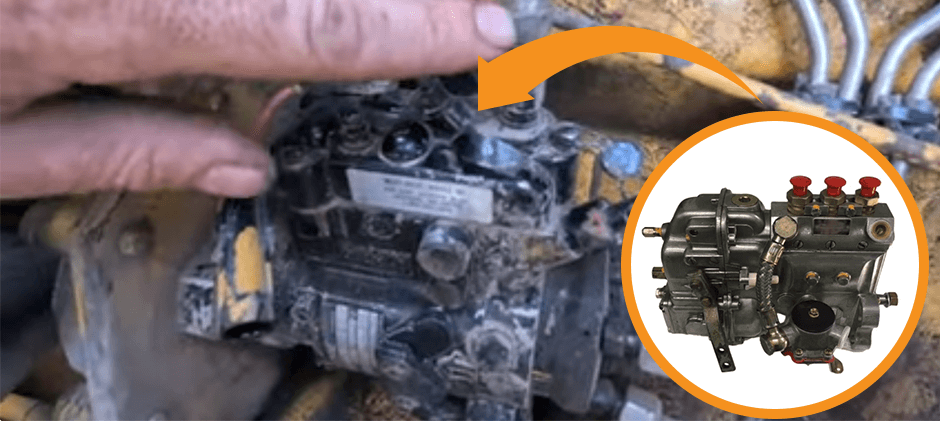
Bad Fuel Injection Pump Symptoms
A failing fuel injection pump can look like “just a filter issue” at first. The difference is that pump problems often show up under load and tend to affect overall engine behavior, not just one cylinder.
Core symptoms
- Difficulty starting or no-start
- Loss of power under load (weak digging, sluggish travel, poor push)
- Excessive black smoke
- Erratic idle or surging
- Poor fuel economy
- Sudden engine shutdown (in severe cases)
These are also consistent with what many parts catalogs and pump guides flag as common warning signs: starting trouble, smoke, power loss, unstable idle, and fuel economy decline.
“Installed a new pump, still no fuel” — what to check first
After installation, fuel may still not pump properly for a few practical reasons:
- Incorrect installation steps
- Airlocks in the fuel system
- Clogged or restricted fuel lines
- Connections/seals not tight (pulling air)
- Regulator valve or internal control issues
- Fuel contamination (dirty filter, water in fuel)
Before assuming the new pump is defective, bleeding/priming and line checks save time and prevent repeat tear-down.
Safety note for high-pressure systems
High-pressure diesel fuel can be dangerous. Avoid checking for leaks with your hands near pressurized lines. Use safe inspection methods and follow your equipment’s service procedures.
Once symptoms point toward fuel delivery, maintenance becomes the cheapest “repair.” It also prevents new pumps from failing early.
Injection Pump Maintenance Tips
Good maintenance for a fuel injection pump is about protecting precision parts from the three main killers: dirty fuel, air in the system, and poor supply conditions.
1. Keep fuel clean and dry
- Drain water separators as scheduled
- Use clean storage and transfer practices
- Don’t ignore “minor” water contamination—common rail systems in particular can be unforgiving
2. Replace fuel filters on time
Filters that look “not that old” can still be overloaded in dusty operations. Shortening filter intervals is often cheaper than injector or pump damage.
3. Bleed/prime correctly after any fuel-system service
Air in the fuel system can cause:
- hard starting
- surging
- misfires
- “No fuel” complaints after installation
If your equipment has a priming pump or specific bleed screws, follow the correct sequence. Excessive cranking is not a good substitute for proper bleeding.
4. Inspect supply-side restrictions and air leaks
A healthy injection pump still needs a steady feed:
- Check hoses, clamps, and fittings on the suction side
- Inspect for cracked lines or loose banjo bolts
- Verify the fuel pickup isn’t restricted
5. For common rail machines: consider “kit-level” repairs when appropriate
When a machine uses a common rail, and you’re addressing multiple related fuel components, a matched kit can reduce compatibility mistakes and cut repeat downtime.
For example, if you’re servicing certain Bobcat excavator/loader applications, it may make sense to review a common-rail injector kit option like the Fuel Injector Pump Common Rail Injector Kit during planning—especially when symptoms and inspection suggest more than one fuel-delivery component is involved.
6. Use the right source for correct-fit replacement parts
When replacement becomes the smart move, the key is getting the correct match for engine and equipment application. Browsing a dedicated injection pump catalog helps narrow the correct pump type and fitment across off-highway equipment.
If you already know the engine family, these pages can also speed up research:
- p7100 injection pump (mechanical inline “P-pump” style)
- 5 9 Cummins injection pump (covers the evolution from mechanical to electronic/common-rail style systems in that engine line)
- CAT 3208 injection pump (heavy equipment component focus)
Conclusion
A fuel injection pump controls pressure, timing, and fuel quantity—so when it’s weak, off-road machines lose power under load, smoke more, burn more fuel, and may end up with hard-start or shutdown issues. Identify your pump type, confirm basics like filters/air leaks, and follow strict fuel cleanliness and bleeding practices. When replacement is needed, we can help as an aftermarket parts supplier with high-quality products at affordable prices, a vast inventory, and wide compatibility across heavy equipment brands.
