

Why do we filter both fuel and engine oil? And what’s the difference between the two filters? Fuel filters clean up diesel before it goes into the engine, making sure no dirt or debris gets in. Engine oil filters trap gunk in the oil system, stopping it from wearing down engine parts. Both filters matter a lot for your engine’s health.
How Do Fuel Filters Work?
Fuel filters block dirt and debris before they can damage the delicate parts of your fuel injection system. Diesel’s thicker than gasoline, so it soaks up more gunk easily. And on a job site, contamination is everywhere—dirt and dust when refueling, water buildup inside the fuel tank, you name it.
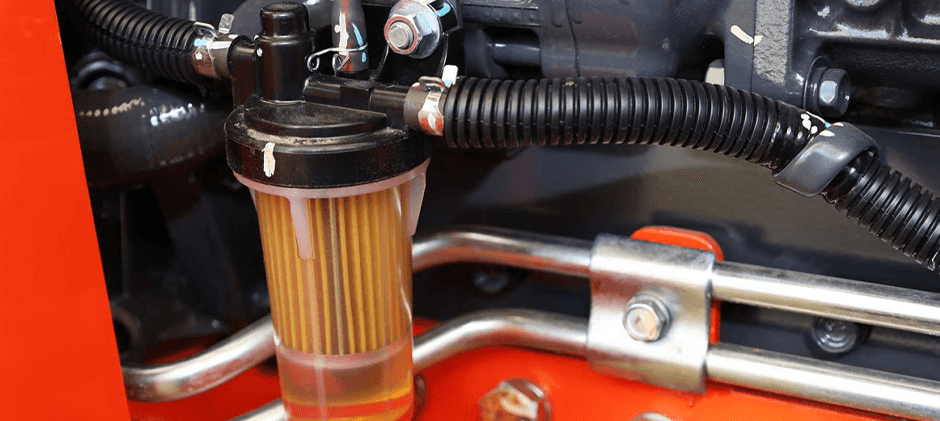
A fuel filter acts like a fine sieve. Fuel from the tank gets pushed through a tight filter material (paper, cellulose or synthetic). It traps all the harmful tiny particles, but it does more than that. Water causes rust in the fuel system and can wreck high-pressure injectors badly. That’s why almost all heavy equipment fuel filters are also water separators, doing two jobs at once. Here’s how they work:
- Filtering dirt: The folded filter material catches solid gunk—dirt, rust flakes, tank scale.
- Separating water: As fuel flows through, the filter makes tiny water droplets clump together and get heavier. Since water is denser than diesel, it sinks to the bottom of the filter’s collection bowl. You just drain the collected water every so often with the small valve on the bowl.
Skip this filtration, and all that gunk and water will quickly clog or ruin your fuel injectors. Your engine’ll lose power, burn more fuel, and eventually, your machine’ll just stop working entirely.
What Do Oil Filters Do?
The fuel filter protects the fuel system, while the oil filter directly protects the engine. The oil is like the “blood” of the engine, constantly lubricating the various parts and avoiding metal wear. Places like the crankshaft, pistons, and cylinder walls are supported by a clean oil film. But engine oil can get dirty over time, mainly from these things:
- Metal shavings: Tiny bits that wear off engine parts when it’s running normally
- Soot and carbon: Some exhaust gas seeps into the engine, bringing all that gunk with it
- Sludge: Oil breaks down under high heat and turns into thick, sticky gunk
If all this dirt circulates with the oil nonstop, the smooth oil will turn into liquid sandpaper. It’ll wear the engine out faster, and the engine will break down more easily.
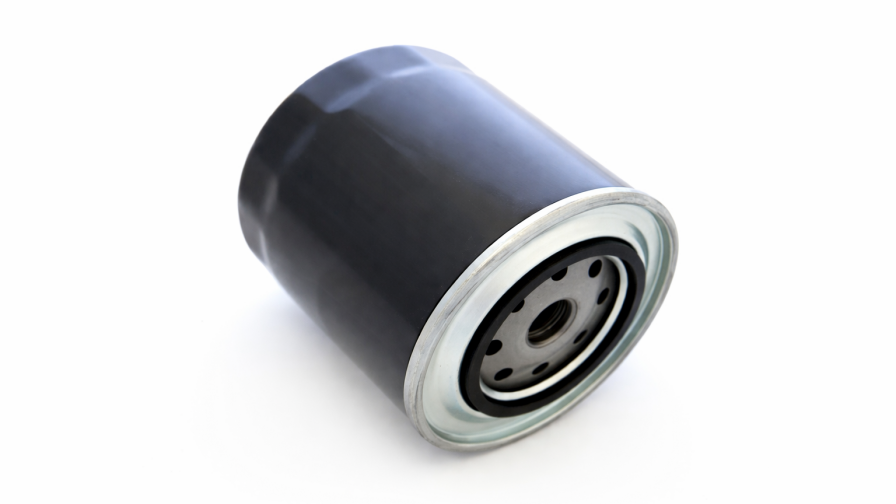
That’s where the oil filter comes in. The oil pump pushes the oil out, and it first goes through the filter. The filter paper traps all the dirt, and only clean oil flows to all the engine parts—doing the real protective work.
Where Are The Fuel Filter And Oil Filter Located?
Their exact spots vary by machine brand and model, but they’re usually in the same general areas.
Where’s the Fuel Filter?
It’s always on the fuel line between the fuel tank and the engine. On most new excavators and loaders, you’ll find it in the engine bay—easy to get to. It’s almost always a canister filter hooked up to fuel hoses, and it might be part of a set that has a primer pump (the small hand plunger you use to bleed air after changing the filter). Look for the clear collection bowl on the bottom—that’s the dead giveaway it’s a fuel/water separator.
Where’s the Oil Filter?
It’s nearly always bolted straight to the engine block. It’s a spin-on canister (usually painted blue, black or white) and sits right where it catches oil as soon as the oil pump pushes it out. On bigger machines, it might be behind a side access panel for protection, but it’s still always attached directly to the engine itself.
For the exact location on your machine, always check the operator’s manual or service manual first—it’s the best reference.
Symptoms of a Failing Oil Filter & Fuel Filter
Both fuel and oil filters will show clear warning signs when they start to clog up.
Fuel Filter Problems
A clogged fuel filter cuts off the diesel supply, and your engine will lose power right away. You’ll notice these issues:
- Big drop in power: Super obvious when lifting heavy loads or climbing slopes.
- Rough engine operation: Shaking, hesitation, or even sudden stalling if it’s really bad.
- Hard starting: Not enough fuel gets through, so the engine struggles to fire up.
- Unsteady idle: RPMs jump up and down when the machine’s idling and not working.
Oil Filter Problems
A clogged oil filter restricts oil flow, and this does serious damage to the engine. Common signs:
- Low oil pressure warning light on: Turn the engine off immediately when this pops up – don’t keep running it.
- Strange engine noises: Knocking or grinding sounds mean parts aren’t getting enough lubrication.
- Sluggish power & slow response: The engine doesn’t pick up speed as quickly when you hit the throttle.
- Rising engine temperature: Poor oil flow makes the engine’s cooling ability drop, too.
What Are The Key Differences Between An Oil Filter And A Fuel Filter?
Now we know what each filter does – let’s compare them directly. The difference between oil and fuel filters is way more than just the liquid they clean.
What Do They Protect?
- Oil filter: Cleans dirt from engine oil, protects the engine’s moving parts, and reduces wear.
- Fuel filter: Removes impurities from diesel, protects injectors and the whole fuel system from clogs and damage.
What Dirt Do They Stop?
- Oil filter: Targets gunk made inside the engine – like metal shavings, soot and sludge.
- Fuel filter: Catches contaminants coming from outside – like dirt, rust and water. Separating water from diesel is a super key job for diesel fuel filters.
How Fine Is Their Filtration?
- Oil filter: Balances filtration and oil flow. It usually traps 20–30 micron particles, and lets thick oil pass through fast.
- Fuel filter: Filters much finer – built to protect delicate injectors, it typically traps tiny 2–10 micron impurities.
What’s Different in Their Design?
- Oil filter: Has a bypass valve. If the filter gets totally clogged, the valve opens to keep oil flowing. Dirty oil is better than no oil at all.
- Fuel filter: Usually has a water separator and a drain valve for easy water removal. No bypass valve here – dirty diesel going to injectors causes serious damage right away.
Do They Handle the Same Pressure?
- Oil filter: Must stand up to the full pressure of the engine’s oil system – usually 60 PSI or even higher.
- Fuel filter: Works at lower pressure most of the time. Only the secondary fuel filters in high-pressure common rail systems need to handle higher pressure.
How Frequently Do Filters Need To Be Replaced?
Oil Filter
Change the oil filter every time you change the engine oil. For most heavy machinery, that’s every 250–500 operating hours. Exact timing depends on the manufacturer’s recommendation and how tough the working conditions are.
Fuel Filter
Replace it every 500 operating hours, usually. But change it sooner if you work in super dusty areas, or if you think you used bad-quality diesel. Also, make it a daily habit to check the water separator bowl and drain any water that’s built up.
Always follow the exact service intervals in your machine’s service manual. It’s the most accurate guide for your equipment.
Cost of Oil Filter & Fuel Filter Replacement
Changing filters is one of the most cost-effective preventive maintenance tasks you can do.
- Fuel filter replacement cost: A new fuel filter for an excavator or tractor is really affordable – usually $15 to $70.
- Oil filter replacement cost: An oil filter is priced about the same, typically $15 to $60.
A single fuel injector can cost hundreds of dollars, and an engine rebuild can cost tens of thousands. Spending a little on new filters on a regular schedule is a smart investment. It’s the cheapest insurance you can get against serious, costly part failures.
Conclusion
If you’re a heavy equipment operator or fleet manager, you already know how important it is to change your machine’s fuel and oil filters on schedule. Check out our product range – you’ll find compatible parts for all your needs here. For more info, contact our parts experts. We’ll give you personalized support. Get your fleet back up and running strong.
