

The ignition control module is the core of the entire ignition system. It controls the ignition timing and the spark, like the engine’s brain. The ignition module directly affects engine performance. In this guide, we’ll explain the early bad ignition control module symptoms, the causes of faults, and the steps you can take to deal with them.
What Is an Ignition Control Module?
Think of the ignition control module (ICM) as the electronic brain of your machine’s ignition system. It’s small but super important—usually a black or silver box with cooling fins. You’ll find it near the engine, or sometimes inside the distributor. Its only job? Send a perfectly timed spark to light the fuel-air mix in the engine’s cylinders.
What Does the Ignition Control Module Do?
The ignition control module (ICM) works like a smart switch for the ignition coil. Here’s a breakdown of the process:
- Gets a signal: The ICM picks up a timing signal from a sensor. Newer machines use a crankshaft or camshaft position sensor for this. On older ones, it’s probably a pickup coil (or Hall-effect sensor) inside the distributor. This signal just tells the module two simple things: where the engine is in its spin, and how fast it’s turning.
- Controls the coil: The ICM hooks up to the negative side of the ignition coil. Using that timing signal, it flips the power to the coil on and off super quickly.
- Makes the spark: Every time we cut the power to the ignition coil, the magnetic field inside just drops out. That creates a huge jolt of high voltage, which then zips over to the spark plug. The electricity jumps the tiny gap on the plug—boom—a spark pops up, and the fuel lights right away.
The ICM does this precise little dance thousands of times a minute. If the timing is even a tiny bit off, or the signal is weak or spotty, your engine’s gonna run terribly.
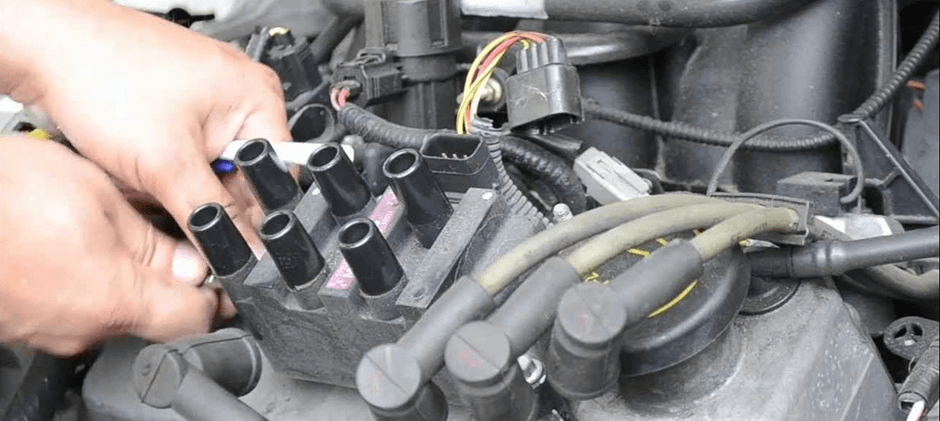
Common Bad Ignition Control Module Symptoms
Because the ignition control module (ICM) is very critical to engine operation, if it has problems, the engine will usually show abnormalities immediately. Many times, failures are hit or miss at first. Especially after the engine gets hot, the problem will become more and more frequent. Here are some common glitch manifestations.
Cannot Start
If the module does not control the ignition coil properly, no sparks will be generated. No matter how you start it, the engine won’t respond. In the case of normal fuel and sufficient battery charge in the battery, the ignition control module is the object that needs to be inspected in a focused manner.
Intermittent Stalling
This is a common situation when the ignition control module begins to age or is about to fail. Everything may be fine when the machine is cold-started. But after running for 15~30 minutes, the engine will suddenly stall. Wait for it to cool down for a while, then it may restart again. Usually, because the electronic components inside the module work erratically when heated. There is also a safety risk when a forklift suddenly stalls while handling goods or equipment, affecting work.
Misfires and Rough Running
When the signal output by the ICM becomes weak or unstable, the ignition time may be inaccurate. This will cause some cylinders to burn insufficiently. The engine will jitter and vibrate, run improperly, and reduce load capacity.
Engine Backfiring
If the ignition time is wrong, as if it is ignited too late, incompletely burned fuel may enter the exhaust system and burn at high temperature, producing a loud bang. In addition to abnormal sound, it can also damage the exhaust system for a long time.
Check Engine Light Is On
On newer machines with an onboard diagnostic system, a faulty ICM (or its related wiring) will usually trigger the Check Engine Light. Plug in a scanner, and you’ll likely see codes linked to misfires (like P0300, P0301) or ignition circuit problems.
Causes of Ignition Control Module Failure
Ignition control modules are solid-state electronics, but they work in one of the toughest spots imaginable—the engine bay of a hardworking machine. A bunch of things can cause them to conk out eventually.
- Heat soak: The ignition control module is located near the engine. The engine heats up and cools down again and again. Over time, the circuits and solder joints inside the module will age. This is also why the problem with many ignition modules often starts after the engine heats up.
- Vibration: Off-road machines shake. Nonstop, high-frequency vibrations slowly weaken the module’s internal parts and electrical connections. This leads to on-and-off glitches at first, then total failure later.
- Electrical problems: A voltage spike from a bad jump-start, or a dying alternator/voltage regulator, can send way too much current through the module. That fries its delicate internal circuits instantly. Same with a failing ignition coil that hogs too much current—it puts way too much strain on the ICM, making it overheat and die early.
- Moisture and corrosion: This equipment is flushed with high-pressure water. The working environment is relatively harsh. Water easily enters the plug of the ignition module, and the metal pins inside are prone to rust and corrosion. And the performance will also decline. Finally, there is a problem with the module, or the plug breaks first.
- Age and wear: An ignition control module just doesn’t last forever. After years of use and countless on-off cycles, the electronic parts inside simply wear out and call it quits.
How to Test a Faulty Ignition Control Module?
Figuring out if your ICM is bad can be tricky sometimes—its symptoms look just like other engine problems. With a few basic tools and a logical approach, you can usually tell if the module’s the troublemaker.
Check for Spark
Grab an inline spark tester—it’s safe and works like a charm. If there’s no spark in any cylinder, the issue’s probably a shared part like the ICM or ignition coil. If only one cylinder is misfiring, it’s way more likely a bad spark plug, wire, or fuel injector.
The Heat Test
Start the machine and let it run until it stalls or acts up. If it won’t start when it’s hot, get it into that “dead” state first. Then, carefully spray the ICM body with electronics freeze spray (or even wipe it with a cool, damp rag). Wait a minute and try starting the engine. If it fires right up, you’ve almost definitely found the problem—cooling it temporarily fixes the broken internal connections.
Use a Multimeter
- Check the ignition control module: First, disconnect the module’s electrical connector and turn the key to the “ON” position. Use a multimeter to measure the voltage of the power pin, and the value should be similar to the battery voltage; at the same time, confirm that the ground pin is connected to the chassis and engine block. If there is a problem with the power supply or grounding, it is basically a matter of the line, not a broken module
- Measure the output signal of the module: measure the voltage of the ignition coil‘s negative pole. The engine starts, and the voltage will jump or pulse rapidly. If the voltage is fixed at 12V or 0V and does not change, it is because the module has no output signal.
Visual Inspection
Look at the module itself. Check for cracks in the plastic case, signs of melting, or burnt-looking terminals on the connector. These are dead giveaways that the module’s fried.
How Much to Replace an Ignition Control Module?
Replacing an ignition control module on off-road gear can cost a lot more or less, depending on the machine’s brand, model, and how old it is.
- Part cost: The module itself can run you as little as $80 for basic stuff like a golf cart or utility vehicle. But for a fancy, specialized module on a newer industrial forklift or loader? It can go over $400. The big factors here are how complex the equipment is and what brand it is.
- Labor cost: A pro can swap it out in 30 minutes to 2 hours—depends on where the module’s tucked away. Plan on paying $100 to $250 for labor.
If you know your way around engines, this job’s usually pretty easy. But if the module’s hidden deep in the engine bay or built right into the distributor, it’s gonna be a lot trickier.
Summary
A faulty ignition control module can cause your engine to misfire, run rough, or even stall out. If you ignore these warning signs, your forklift, golf cart, loader, etc., could end up totally dead and unable to start one day. So why wait to replace that worn-out ICM? Head over to FridayParts now—we’ve got a huge selection of control modules in stock. Grab yours today!
