

When a commercial mower won’t start before a job, stalls in heavy growth, or starts leaving stripes, time and money disappear fast. This guide breaks down the most common lawn mower issues on off-road grounds equipment (zero-turns, front mowers, riding mowers, and walk-behind units) and shows what to check first, what usually fixes it, and when it’s smarter to stop and inspect deeper so you don’t turn a small problem into downtime.
Top 20 Common Lawn Mower Issues

1) Won’t start
Most likely causes: dead/weak battery, bad connections, safety interlock, blown fuse.
What to check:
- Battery terminals: tight, clean, no green/white corrosion
- PTO/blade switch off, brake/neutral set, seat switch working (if equipped)
When to stop: repeated clicking, a burnt smell, or hot cables = time for an electrical diagnosis.
2) Cranks but won’t fire
Most likely causes: stale fuel, spark plug issue, clogged carburetor jet, airflow restriction.
Fix path: fresh fuel → check spark → check air filter → then fuel delivery/carb cleaning.
3) Starts then stalls
Most likely causes: clogged air filter, fuel cap vent issue, debris in fuel, carb varnish, safety switch cutting out.
What to check: air filter condition, fuel flow, visible wiring at interlocks.
4) Surging/hunting at idle
Most likely causes: partially clogged carb passage, air leak, stale fuel.
Practical fix: drain old fuel, clean the carb, and replace the fuel filter if restricted.
5) Low power under load
Most likely causes: dull blade, deck packed with debris, belt slip, clogged air filter, mowing speed too high for conditions.
What to check first: deck underside + blade sharpness + belt tension/condition.
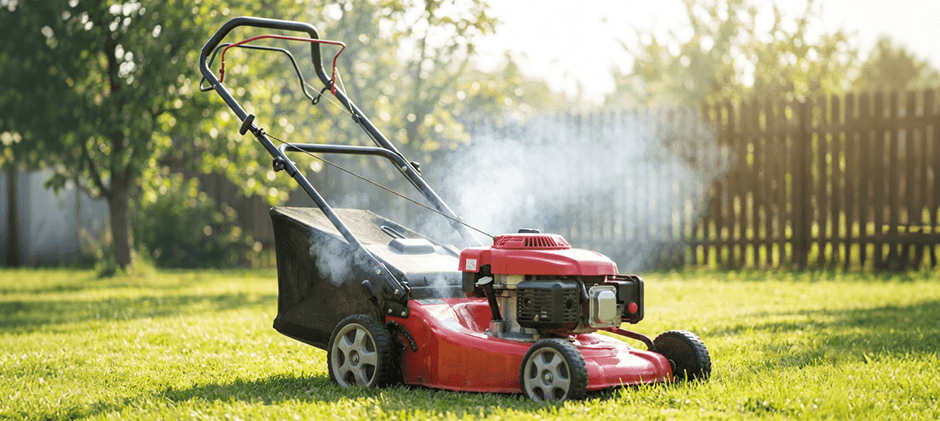
6) Blue/white smoke
Common causes: oil overfill, machine tipped during service, oil leaking into muffler, and internal wear.
When to stop: steady smoke + power loss = inspect for engine wear.
7) Hard starting
Most likely causes: restricted airflow, carb issues, weak spark, low compression (worn valve/rings).
When to stop: if it keeps returning after fuel/air/spark checks—test compression.
8) Overheating
Most likely causes: blocked cooling fins/shrouds, debris around the engine, low oil, lean fuel mix from a carb problem, clogged air filter.
What to do: clean cooling areas, confirm oil level, and reduce load until fixed.
9) Black smoke
Meaning: too much fuel / not enough air (rich condition).
Common checks: choke stuck, dirty air filter, carb set too rich.
10) Engine runs rough / misfires
Most likely causes: fouled plug, bad fuel, restricted air, weak ignition coil (less common).
Fix: tune-up basics before chasing rare failures.
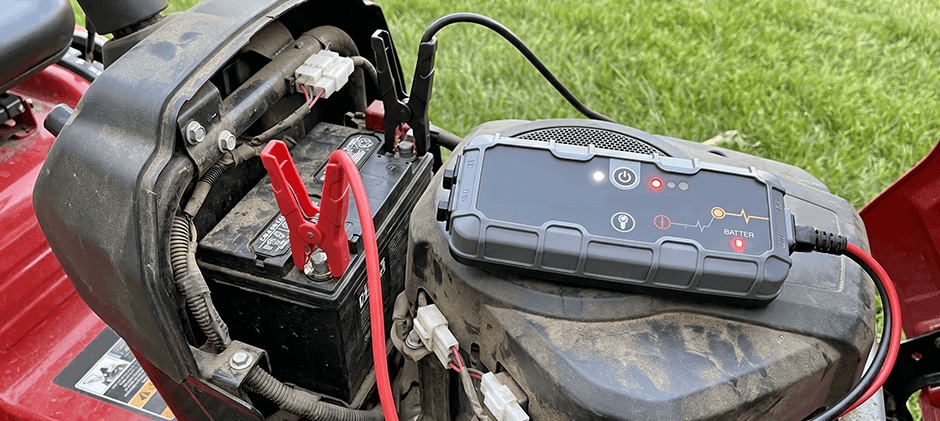
11) Battery keeps dying / no charge
Common causes: old battery, loose grounds, charging circuit problem, parasitic drain from damaged wiring.
Check: charging output (if equipped), inspect harness routing, and rub points.
12) Fuel smell, leaks, or high fuel use
Most likely causes: leaking line, loose clamp, stuck float, choke not opening fully.
Safety: treat fuel leaks as urgent—hot engine + fuel is a bad mix.
13) Cuts unevenly / leaves stripes
Most likely causes: blade dull/bent, deck not level, tire pressure mismatch, worn spindles.
Fix order: tire pressures → deck level → blade inspection.
14) Scalping
Most likely causes: deck too low, anti-scalp wheels set wrong, deck unlevel, speed too high on uneven ground.
Fix: Raise the cut height and re-level the deck.
15) Grass clumping / poor discharge
Most likely causes: wet growth, dull blade, deck packed, incorrect mowing pattern, belt slip, and reducing blade tip speed.
Quick win: clean deck and slow down; fix blade/belt if needed.

16) Abnormal noises
Common causes: belt slip, idler bearings, spindle bearings, debris contact, loose blade bolt.
Rule: noise + vibration together usually means stop and inspect immediately.
17) Excessive vibration
Most likely causes: bent blade, unbalanced blade, loose hardware, damaged spindle bearing.
When to stop: vibration that starts suddenly—shut down and inspect before spindle/housing damage spreads.
18) Blade won’t engage / PTO won’t stay on
Common causes: worn belt, misrouted belt, failed PTO clutch, safety interlock issue, debris jam.
Check: belt routing and clutch connector; inspect for burnt belt smell.
19) Belt squeal, slip, or repeated belt breaks
Most likely causes: worn/glazed belt, incorrect tension, seized idler pulley, misalignment, debris buildup.
Fix: replace the belt if cracked/frayed/stretched; inspect the pulleys before installing a new belt (or the new belt fails again).
20) Poor drive
Common causes: drive belt wear (some systems), linkage out of adjustment, fluid/heat issues on hydro drives, debris blocking cooling.
When to stop: Hydro systems can get expensive fast—avoid “keep pushing it” troubleshooting.
How to Troubleshoot Lawn Mower Issues?
A clean troubleshooting flow keeps you from guessing. Use this order because it matches how the mower actually works: combustion first, then load, then transfer of power.
Step 1: Safety setup
- Park on level ground, set the brake, and remove the key.
- Let the rotating parts stop fully.
- Disconnect the spark plug lead before your hands go near blades or belts.
- Block the machine if lifted; don’t rely on a jack alone.
Step 2: Decide if it’s “engine” or “deck/drive”
Ask: Does it run fine until blades engage or until you start moving?
- Runs fine until blades on → focus on blade/belt/deck load.
- Runs rough even with blades off → focus on fuel/air/spark/compression.
Step 3: Check the “Big 3”
- Fuel: fresh, clean, correct type; confirm shutoff valve open (if equipped).
- Air: a clogged filter restricts airflow and causes hard starts, surging, and power loss.
- Spark: inspect plug condition and connection.
If airflow is questionable, replacing the filter is often faster than trying to “make it work.” For the right fitment options, start with a lawn mower air filter. (Many manufacturers recommend replacement about every 25 hours or once per mowing season; dusty use needs more frequent checks. Foam pre-filters can often be washed and re-oiled, while paper elements are typically replaced when dirty.)
Step 4: Reduce load and retest
If it bogs or stalls in heavy growth:
- Raise the deck one step
- Slow ground speed
- Clean deck buildup
If performance returns, the mower may be fine mechanically, but the cutting system likely needs attention (blade sharpness and belt condition).
Step 5: Inspect the blade and cutting path
A blade that’s dull, bent, or chipped forces the engine to work harder and leaves a ragged cut.
If replacement is the best move, use a compatible lawn mower blade and follow proper torque specs and balancing. (A common service rhythm is inspection around every 20 hours of use, with replacement often every 1–2 years depending on conditions.)
Step 6: Inspect belt health and pulley function
Belts are the “power transfer.” If the engine is healthy but the blade speed is low, the belts and pulleys are prime suspects. Look for:
- cracks, fraying, glazing
- A stretched belt that rides low on pulleys
- idlers that don’t spin smoothly
When it’s time, choose a correct-fit lawn mower belt and verify routing. (Common belt types include V-belts, serpentine belts, and cogged V-belts. Wrong routing or a seized idler can destroy a new belt quickly.)
Step 7: If the basics check out, move to engine internals or component-level repair
Recurring starting failure, constant smoke, or repeated overheating can point to deeper engine needs. That’s when targeted replacement parts matter more than “universal fixes.” For rebuild and repair coverage across many mower engines, browse lawn mower engine parts and match by model/part number to avoid wrong-fit downtime.
Once the problem is identified, the goal is to keep it from coming back next week. That’s where a short set of habits pays off.
5 Mower Troubleshooting Tips
- Work from simplest to hardest
Start with the cheap, fast checks (fuel quality, filter condition, loose connectors) before pulling major components. - Use one change at a time
Change only one variable, then retest. If you replace three things at once, you won’t know what fixed it—or what’s still wrong. - Match the symptom to the system
- Cutting quality problems → blade/deck/belt first
- Starts/stalls/surges → fuel/air/spark first
- Heat problems → cooling airflow + oil + load
- Track hours and conditions
Dusty job sites, sandy ground, and long run times shorten service intervals. A log helps predict “next failure” instead of reacting to it. - Keep parts ready for the fleet
For crews running multiple units, a small shelf of the most common wear items (filters, blades, belts) can save an entire day. If you’re building that kit, the broadest starting point is the mower parts catalog, so you can search by brand, model, part name, or part number.
Conclusion
Most lawn mower issues trace back to a short list: fuel quality, airflow, spark, blade condition, belt slip, and deck load. A calm, step-by-step check prevents repeat failures and protects the engine and cutting system. When replacement makes sense, FridayParts can help with wide-fit aftermarket options—high-quality products at affordable prices, vast inventory, and compatibility across many heavy equipment brands—so your mower gets back to work with less downtime.
