

Having the right type of oil is essential for good engine performance. The effect of oils depends on the engine type and the climate. SAE 30 and SAE 10W30 are common oil choices. But which one should you choose? This article will compare SAE 30 vs 10W30 to help you choose the right oil!
What Is SAE 30?
“SAE” represents the Society of Automotive Engineers, which sets the viscosity standards for motor oils used today. The number “30” indicates the oil’s viscosity at the standard operating temperature (212°F / 100 °C).
SAE 30 is a single-grade motor oil, meaning it has only one viscosity standard. It does not contain the viscosity modifier found in multigrade motor oils, which we will discuss later. Simply, SAE 30 forms a thick, steady layer of oil once the engine is warm. This makes it particularly suitable for certain uses, such as older or simply constructed air-cooled engines that run at high temperatures.
Pros
- Good shear stability: SAE 30 doesn’t have viscosity improver additives, so it doesn’t break down easily under heat and stress. It keeps a steady thickness and protects the engine well.
- Good protection in hot conditions: SAE 30 works well in engines that run hot, like air-cooled engines in many lawn mowers and generators. It’s also a good choice in hot summer weather.
- Affordable: SAE 30 is a simple and well-known oil formula, so it’s usually cheaper than many other oils.
Cons
- Not good for cold weather: When it’s cold, SAE 30 becomes very thick, almost like honey. This makes the engine harder to start, and the oil takes longer to circulate. That can cause more engine wear.
- Limited temperature range: SAE 30 is usually recommended only when the outside temperature is above 40°F (4°C).
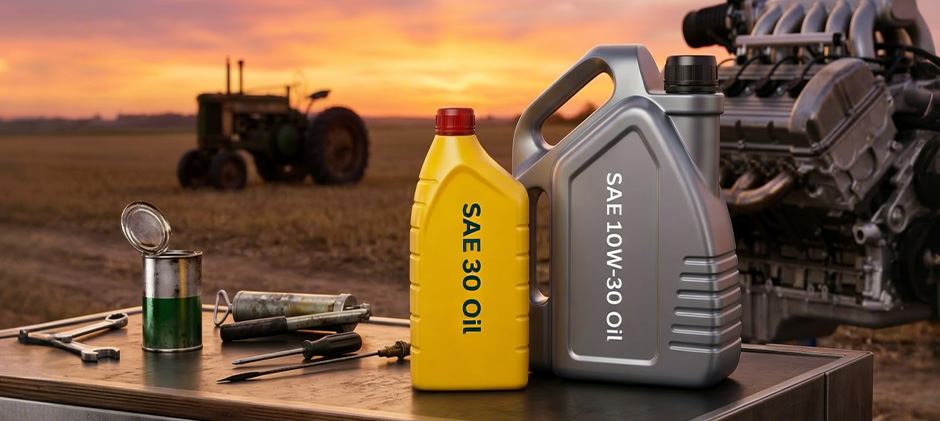
What Is SAE 10W-30?
SAE 10W-30 is a multi-grade oil, which means it works well in different temperatures. The name tells you how it performs.
- The “10W” shows how the oil flows in cold weather. The “W” means winter. In low temperatures, the oil flows like a thinner 10-weight oil, so it can move quickly through the engine during cold starts.
- The number 30 tells you how thick the oil is when the engine is at its normal working temperature — around 212°F / 100°C. When the engine is hot, it protects it just like SAE 30 oil.
This works because it’s made with a thinner base oil plus special additives called VI improvers. When the oil gets hot, these additives expand and keep the oil thick enough to protect the engine.
Pros
- Great cold-start protection: 10W-30 flows easily in cold weather, so it reaches engine parts quickly when starting. This helps reduce engine wear.
- Works in a wide temperature range: It performs well in both cold winters and hot summers.
- Very versatile: One oil can work for different machines and different seasons, which makes maintenance easier.
Cons
- Can lose thickness over time: The additives that give it multi-grade performance can break down under engine stress. Over time, the oil may become thinner.
- May burn faster in very hot engines: In some very hot air-cooled engines, 10W-30 may thin out and burn faster than SAE 30.
Is SAE 30 the Same as 10W-30?
No, they are fundamentally different, but they share one important characteristic: at full operating temperature, both are designed to have the viscosity of a 30-weight oil. The primary difference lies in their performance when the engine is cold. Think of it this way: 10W-30 starts thin and thickens relative to its base oil as it heats up, while SAE 30 starts thick and thins as it heats up.
This distinction is the key to understanding which oil is right for your machine. Let’s move from the “what” to the “why” and explore the practical factors that should guide your decision.
Oil Consumption and Shear Stability
A question many equipment users ask, especially lawn mowers or generators that use air-cooled engines: Why does it seem that with 10W-30 oil, the engine is easier “burns oil” and needs to be refilled more frequently?
Actually, there is a reason for this. Air-cooled engines operate at higher temperatures than the liquid-cooled engines of cars. At high temperatures and with continuous operation, the viscosity modifier in 10W-30 oil can break down under heat and mechanical stress. Over time, the viscosity of the oil will decrease.
Simply, 10W-30 may slowly become thinner, approaching 10W-20. Once the oil is thinned, it is easier to pass the piston rings into the combustion chamber and be burned together, so it looks like the engine is “consuming oil”.
Many experts therefore suggest: In air-cooled engines operating at high temperatures, SAE 30 single-stage oil is generally more stable. Because it does not rely on these easily destroyed additives, it can better maintain its original viscosity at high temperatures. This is also why many equipment manufacturers still recommend using SAE 30 in the summer.
How Does Climate Affect Which Oil You Should Use?
Climate matters a lot when choosing oil.
- Warm weather: If you live where it rarely freezes, like Florida or Georgia, or only use your machine in spring and summer — such as a lawn mower — SAE 30 works great. It stays stable in heat and protects your engine well in hot conditions.
- Cold weather: If you use your machine all year or in cold winter weather, 10W-30 is better. SAE 30 gets thick in the cold, the engine is harder to start and straining the starter and battery. 10W-30 flows easier when it’s cold, so your engine gets lubricated faster at startup.
What Are Oil Additives and Why Do They Matter?
Choosing between SAE 30 and multi‑grade oil isn’t just about thickness—it’s also about the additives in the oil. One key additive is ZDDP, a zinc‑based ingredient that protects engine parts from wear under heavy pressure. This is really important for small heavy engines and off‑road equipment.
The problem is that many modern car oils (including some 10W‑30) have less ZDDP to protect car catalytic converters. But most small engines and heavy equipment don’t have these converters, so they still need strong wear protection. That’s why SAE 30 oil made for small engines or heavy‑duty diesel oil is often better. They usually have more ZDDP, which is exactly what your engine needs.
Why Do Older Engines Have Different Oil Requirements?
Older engines from the 1950s and 60s need different oil than modern ones. Their parts were made with bigger gaps between them. A thicker oil like SAE 30 fills those gaps better. It keeps good oil pressure and protects the engine well.
Also, these old engines were designed to use oil with lots of ZDDP anti-wear additives. Using oil with plenty of these additives is very important to protect the valve parts.
When Is It Actually Worth Upgrading to Synthetic Oil?
Full-synthetic 10W-30 combines the best qualities of all oil types. Specially designed to resist heat and wear far better than regular oils. Even in hot-running engines, synthetic 10W-30 holds its thickness far more steadily. This greatly cuts down or completely fixes the high oil use you get with standard multi-grade oils.
Better yet, synthetic oils flow smoothly in cold weather, offering stronger protection when you start your engine in freezing conditions. Upgrading to synthetic makes real sense if:
- run your equipment in extreme hot or cold temperatures.
- want top-tier protection for a valuable or heavily used machine.
- fix oil consumption in an air-cooled engine, without losing the easy cold starts that multi-grade oils provide.
10W-30 or SAE 30 Engine Oil for Your Mower?
They serve different purposes. Only in warm summer months, SAE 30 is preferred for its stability in high heat. In winter, if you use your tractor or mower for tasks like snowblowing, use 10W-30 to prevent starting issues and engine wear.
Can You Mix SAE 30 and 10W-30?
While mixing is theoretically possible in emergency situations, it is not recommended. Mixing the two oils will reduce their performance. Mixing will reduce the cold start performance of 10W-30 oil and reduce the shear stability of SAE 30 oil. The best thing to do is to drain the old oil first and then fill it with a single and correct oil.
Which Engine Oil Is Better?
There is no single oil that is always “better.” The right choice depends on how and where you use your equipment. The guide below can help you decide.
SAE 30 may be the better option when:
- Equipment is mostly used in temperatures above 40°F (4°C).
- The machine has an air-cooled engine that runs hot and tends to burn multi-grade oil.
- Summer work involves long hours or heavy loads, where strong viscosity stability is important.
10W-30 is often a better choice when:
- Equipment needs to operate year-round, including starting in freezing temperatures.
- Convenience matters, and using one oil for all seasons is preferred.
- A modern liquid-cooled engine specifically recommends this oil in the owner’s manual.
- For air-cooled engines that run particularly hot, a synthetic 10W-30 can also be considered. It may provide all-season performance while reducing oil consumption.
No matter which oil you choose, checking the owner’s manual should always be the first step. The manufacturer’s recommendation is the most reliable guide.
Conclusion
SAE 30 vs. 10W-30. Now you know all about these oils. Just think about your engine and the weather, then pick the oil that fits best. Once you choose the right oil, it’s really important to check it regularly and change it on time. If you need any engine parts for repairs, come to FridayParts. We offer reliable, compatible replacement parts for your equipment.
