

If your off-road machine loses power, won’t start cleanly, or has weak hydraulic response, the root cause is often a pump that can’t build stable pressure. This guide shows how plunger pumps work, the main types used on off-road machinery, and a practical selection process—so you can match pressure, flow, mounting, and fitment details without wasting time on wrong parts.
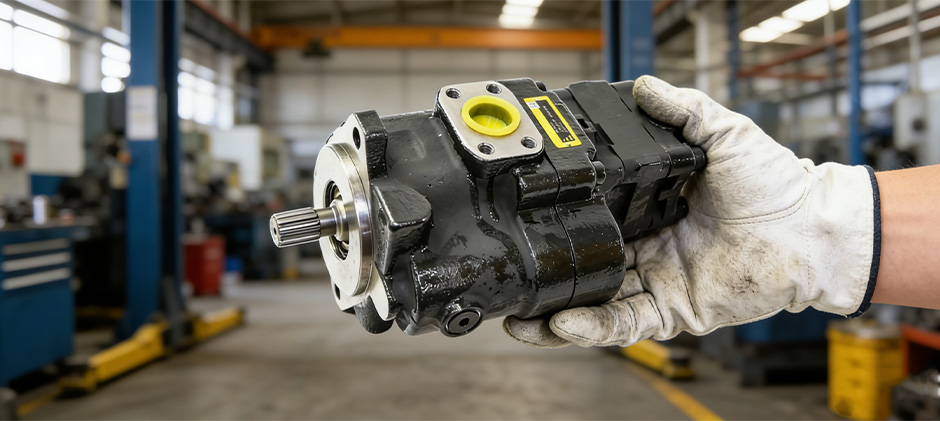
What are Plunger Pumps?
Plunger pumps are positive-displacement pumps that move fluid by pushing a solid plunger (or piston-like element) back and forth in a cylinder. Each stroke displaces a set volume of fluid. That is why these pumps are valued when your system needs repeatable pressure and steady delivery under load.
On off-road machinery, “plunger pump” can mean two common things:
- Hydraulic plunger-type pumps (often referred to as piston pumps in service manuals): used to generate hydraulic flow/pressure for functions like travel, boom, steering, and auxiliary circuits.
- Fuel-system plungers inside injection components: the fuel pump plunger or injection pump plunger creates the pressure needed for injection events (common in mechanical injection pumps and some pump assemblies).
A related but different part is the fuel primer plunger pump—a small hand primer used to remove air and pull fuel to the filter/pump after service or when fuel has drained back.
The Types of Plunger Pumps
Instead of treating all pumps as “same size, same fit,” sort them by where they live and what pressure job they do.
1) Hydraulic plunger-type pumps
These are used where high efficiency and high pressure are needed. Common configurations include:
- Axial piston/plunger pumps (variable or fixed displacement): widely used in excavators, loaders, dozers, and telehandlers.
- Radial piston/plunger pumps: used in some specialized circuits requiring high pressure and compact layout.
Key traits you’ll see in specs:
- Rated pressure and peak pressure
- Displacement (cc/rev)
- Input shaft type, spline/tooth count, rotation
- Control style (if variable: pressure/flow control)
If you are shopping for complete hydraulic units, the fastest browsing paths are:
- hydraulic pumps and motors (covers pump and motor assemblies and related items)
- hydraulic pump (pump-focused catalog for heavy equipment)
2) Fuel injection plungers
Here, the “pump” may be an assembly, but the precision wear part is the injection pump plunger (also called a pumping element in some documentation). What matters is very small clearances and smooth sealing between the plunger and the barrel.
Common failure signs tied to a worn fuel pump plunger / plunger-barrel pair:
- Hard start (especially hot)
- Weak power under load
- Unstable idle or “hunting.”
- Excess smoke caused by poor injection events (varies by engine and condition)
Because fuel injection systems are precision parts, correct matching is critical—especially if the machine uses a specific pump family or calibration.
3) Primer plunger pumps
A fuel primer plunger pump is usually low-pressure but high-impact on uptime. If it leaks air, collapses, or won’t build suction, you may get:
- Long cranking after filter changes
- Random stalling (air intrusion)
- Bubbles in clear lines (if equipped)
4) High-pressure “pressure plunger pump” applications
The term pressure plunger pump is often used loosely to describe any plunger-type pump designed to produce higher discharge pressure. In off-road contexts, that typically points to:
- Hydraulic circuits that demand high-pressure stability
- Certain auxiliary or test/charging circuits, depending on machine design
How to Choose the Right Plunger Pumps?
Selection is easiest when you separate the performance match (pressure/flow) from the physical match (mounting/shaft/ports). If either side is wrong, the install fails.
Step 1: Identify which “plunger pump” you’re dealing with
Start with the symptom and the system:
- Hydraulic symptoms: slow boom, weak travel, no steering assist, high oil temp → likely hydraulic pump or pump control issue
- Fuel symptoms: hard starting, weak power, stall under load → likely fuel delivery/injection issue involving fuel pump plunger/injection pump plunger or related components
- After filter change, symptoms: long crank, won’t prime → likely fuel primer plunger pump or air leak
This prevents ordering a “plunger pump” for the wrong system.
Step 2: Lock in the operating requirements
For hydraulic plunger-type pumps, your selection should match:
- Rated pressure (system working pressure)
- Flow need (often linked to displacement and RPM)
- Duty cycle (continuous heavy work vs light intermittent)
For fuel-side plungers, the “requirements” are less about external flow specs and more about:
- Pump family and engine application
- Correct plunger element size/spec per pump design
- Cleanliness and installation standards
Quick practical checklist
- What machine and attachment functions are affected?
- When does the problem appear (cold, hot, high load)?
- Any fault codes or pressure readings available?
- Has the hydraulic oil/filter or fuel filter been recently serviced?
Step 3: Confirm physical fit
This is where many “looks the same” parts fail.
For hydraulic pumps, confirm:
- Mounting flange pattern
- Port type and location (thread type, size, orientation)
- Case drain port (if applicable)
- Rotation (CW/CCW from a defined view)
- Input shaft dimensions
For fuel-related pumps/plungers, confirm:
- Pump model family and tag info (if present)
- Delivery valve/element style (design-specific)
- Any calibration or setup steps required by the service manual
What Information Is Needed at Purchase?
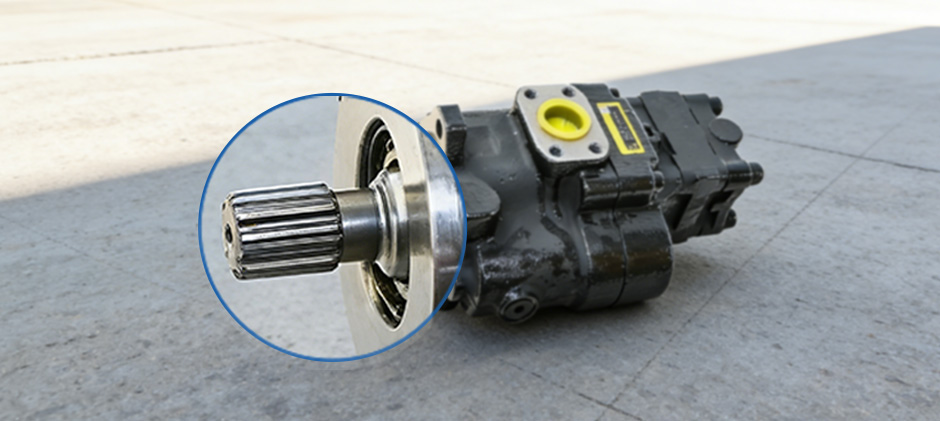
Even if you provide the machine nameplate and multi-angle photos, fitment can still be uncertain for some plunger-pump setups. One common reason is the front shaft gear/spline tooth count. Different tooth counts can look nearly identical in photos but require different parts.
What must be checked: front shaft tooth count (13 / 14 / 15)
For certain pumps, the same housing style may come with different drive tooth counts, such as:
- 13 teeth
- 14 teeth
- 15 teeth
Those tooth counts are not interchangeable. If the tooth count is wrong, the pump will not mate correctly, or it may damage the drive.
Does “old part multi-angle photos” mean photos of the plunger pump?
Yes. The “old part” multi-angle photos should show the plunger pump assembly you are replacing (or the pump section relevant to the fitment). Photos of the machine alone are helpful, but they usually don’t clearly show the drive interface, ports, or tags.
Photo checklist
Take clear, well-lit photos of the old pump:
- Full pump view (front, back, left, right)
- Close-up of the front shaft/gear teeth (straight-on)
- Close-up of mounting flange and bolt pattern
- Close-up of all ports (include thread area and orientation)
- Any tags, stamped numbers, casting marks
- A photo with a ruler/caliper for the shaft diameter, if possible
How to count teeth correctly
- Clean the shaft/gear face (oil/dirt hides tooth tips).
- Mark one tooth with paint/marker.
- Count slowly around once.
- Take a close-up photo showing the marked tooth and several adjacent teeth.
Where to Source Related Heavy Equipment Parts
When you’re ready to replace the pump or rebuild related hydraulic circuits, it helps to shop by the correct equipment category rather than generic terms. For broader hydraulic system needs (pumps, valves, cylinders, connectors), browse hydraulic and pneumatic parts. If you already know you need a complete pump unit, start with a hydraulic pump, and if your job involves matching a pump with a motor or related assemblies, use hydraulic pumps and motors.
This also supports smarter repairs: sometimes the pump is fine, but a relief valve, control valve, or suction restriction is the real reason pressure drops.
Common selection mistakes
- Choosing the machine model only
The same model can have multiple pump options by serial range or build spec. Use model + serial + pump photos + tooth count. - Ignoring suction-side issues
A restricted suction line can mimic pump failure. Check the suction strainer, hoses, and air leaks before blaming the pump. - Replacing the pump but not fixing contamination
If a pump failed internally, metal can spread. Flush, replace filters, and inspect the tank/lines as your manual recommends. - Treating injection plungers like generic parts
The injection pump plunger fit depends on the pump design. If you’re not fully sure, verify pump identification and follow correct cleanliness rules.
Conclusion
Picking the right plunger pumps comes down to two things: meeting the system’s pressure/flow needs and matching the physical drive and ports—especially the front shaft tooth count (13/14/15). If you share clear multi-angle photos of the old pump and confirm tooth count, fitment decisions become far more reliable. As an aftermarket parts supplier, FridayParts supports heavy equipment owners with affordable, high-quality options, wide compatibility across brands, and a large inventory to keep machines working.
