

A field excavator or generator running rough can stop work fast. If you pull spark plugs and see oil, don’t panic — but don’t ignore it either. Oil on your plug can tell you where your machine is leaking and how serious it is. Here’s a simple, practical guide to help you find the cause and decide what to do next. (Confused on two plugs? read: Glow Plug vs. Spark Plug: What’s the Difference?)
Find Out Where the Oil Is
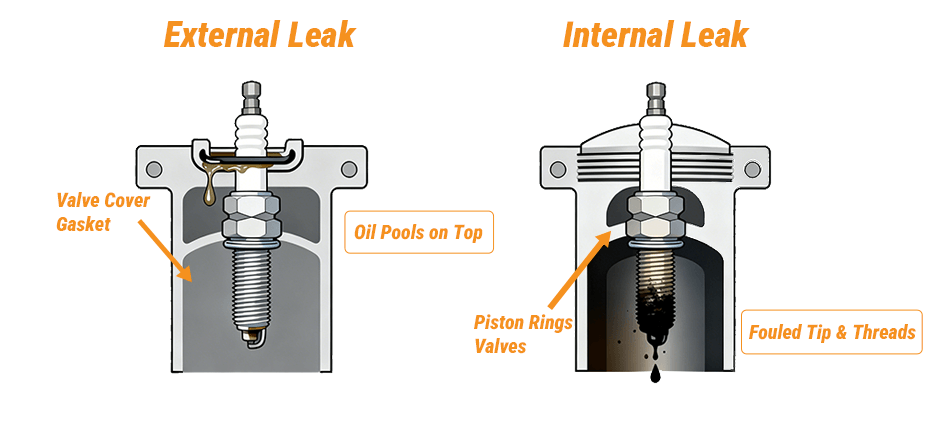
A. Oil on Top of the Plug (Outside the Engine)
- What you’ll see: Oil pooled in the spark plug well, coating the white insulator and metal hex head. The ignition boot or wire end is oily, too.
- What it means: The oil is leaking from the outside, not the combustion chamber. Usually, it’s dripping from the valve cover area.
- Severity: Mild. It’s messy but rarely dangerous if caught early.
Most common causes:
- Bad valve cover gasket — old, cracked, or hardened gasket letting oil seep down around the plugs.
- Worn spark plugs, tube seals (O‑rings) — small seals around plug holes fail with age, letting oil pool in the wells.
B. Oil on the Plug Tip (Inside the Engine)
- What you’ll see: The plug’s threads and electrode are black and oily, but the top is clean.
- What it means: Oil is leaking inside the combustion chamber — an internal engine problem.
- Severity: Serious. Needs professional diagnosis.
Common internal leak causes:
- Worn piston rings – oil slips past into the cylinder.
- Bad valve stem seals – oil runs down the valve guides into the combustion area.
- PCV (Positive Crankcase Ventilation) fault – blocked valve or line causing pressure buildup and leaks.
- Worn cylinder walls or a failed head gasket – Extreme wear on cylinder walls prevents the piston rings from sealing properly. While less common for this specific symptom, a failed head gasket can also create a passage for oil to enter the combustion chamber.
Why is Oil on Spark Plugs Risky?
Even a small oil leak can lead to big problems if left alone:
- Misfires and rough running: Oil on the electrode blocks the spark.
- Low power and high fuel use: One or more cylinders are not firing properly, leading to a noticeable drop in performance. You might even get a dashboard warning about what reduced engine power means.
- Blue exhaust smoke: Oil burning in the cylinder.
- Ignition coil damage: Oil degrades rubber boots and can short electrical parts.
- Catalyst or exhaust damage: Unburned fuel and oil can harm emission systems on newer gensets or machinery.
If your equipment misfires, smokes, or loses power, fix it before extended use — running it could cause even more wear or downtime.
What You Should Do Next
If It’s an External Leak (Oil on Top)
This is often DIY‑repairable with basic hand tools.
- Valve cover gasket kit (with tube seals)
- Torque wrench and socket set
- Scraper and cleaner (brake cleaner or degreaser)
- RTV sealant (for corners only)
Quick steps:
- Cool the engine and disconnect the battery.
- Remove ignition coils/wires to access the cover.
- Unbolt and remove the valve cover.
- Clean surfaces completely — no oil or old gasket left.
- Replace gaskets and tube seals.
- Apply sealant where the manual recommends (usually at sharp corners).
- Reinstall and torque bolts evenly to the correct spec.
- Clean plug wells, replace plugs if fouled.
Time: 1–2 hours for most small engines.
Tip: Replace spark plugs after oil contamination — it’s cheap insurance against misfires.
If It’s an Internal Leak (Oil on the Tip)
Leave this to a qualified mechanic or rebuild shop.
They’ll perform:
- Compression test – checks piston ring sealing.
- Leak‑down test – identifies valve or ring leaks.
- PCV system inspection – ensures crankcase pressure is vented properly.
Repairs might involve replacing valve seals, re‑honing cylinders, or a full overhaul — so get a clear diagnosis first.
Prevent Oil Leak from Happening Again
- Change oil on schedule to prevent sludge and ring wear.
- Use the correct oil grade for your equipment’s conditions.
- Replace PCV valve or breather filters regularly.
- Avoid overfilling oil — learn about what happens if you put too much oil in the engine.
- Check spark plug wells every few hundred hours during maintenance.
When to Stop Running the Machine
- Misfiring or power drop: stop and inspect immediately.
- Burning oil smell or blue smoke: internal problem — professional check needed.
- Oil-flooded spark plug wells: clean, fix the gasket before restarting.
Running with oil‑fouled plugs can destroy ignition coils, sensors, and even the catalytic elements in exhaust-equipped machinery.
Key Takeaways
- Oil on the top = external leak (valve cover or tube seals).
- Oil on the tip = internal engine issue.
- Fix external leaks early — simple, low‑cost repair.
- Internal leaks require pro testing — don’t guess.
- Never ignore it: Oil‑soaked plugs cause misfires and equipment downtime.
Your Partner in Uptime
At FridayParts, our goal is to keep your off‑road machinery running strong.
Whether you need a valve cover gasket, spark plug seals, or a complete engine repair kit, we’ve got spark plug parts built for durability and fast delivery — so you can fix it once and get back to work.
