

MID 144, PSID 247, FMI 14 means there’s a fault with the engine brake stalk lever signal. The Jake brakes still work, but the system picks up a communication error.
First, turn off the ignition and wait a few minutes to reset the ECU. If the fault code comes back, check the wiring and connectors on the engine brake stalk. Look for damage or corrosion. After fixing the issue, use a diagnostic tool to clear the code. Check your electrical connections on a regular basis. This stops false signals and keeps your engine brake running steadily.
What Does MID 144 PSID 247 FMI 14 Mean on My Machine?
- MID 144: This refers to the vehicle ECU, or VECU. It’s basically the main control brain inside the cab. It’s separate from the engine computer and runs all your manual controls, like switches and levers.
- PSID 247: This code narrows the issue down to the engine brake lever, also known as the Jake Brake. The problem is either the lever itself or its connected wires.
- FMI 14: This is the key detail. It means the ECU is picking up weird, conflicting signals. The system gets mixed input it can’t process. For example, it may receive cruise control and engine brake commands at the same time. Since these two functions can’t run together, the system marks the signal as invalid.
MID 144 PSID 247 FMI 14 shows the cab control module is getting mixed up, faulty signals from the engine brake lever.
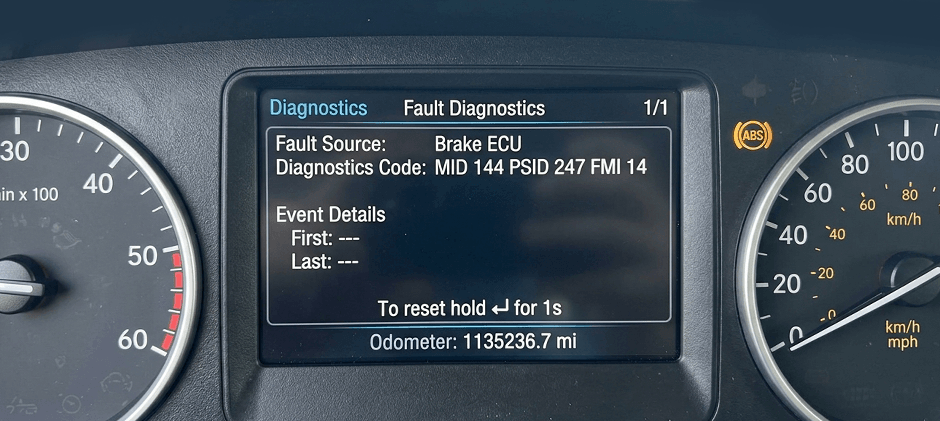
What Causes this Fault Code?
Rough job sites are really hard on all electrical parts. Here are the three most common causes for this code:
Mixed-Up Electrical Signals
Modern machines share wiring between different systems. The engine brake and cruise control often run on the same circuit. If a ground wire comes loose or gets corroded, it can’t send a clear on or off signal. The ECU picks up unstable, fluctuating voltage it can’t read, and that sets off the fault code.
Oversensitive Control Software
Sometimes the machine’s software is just too sensitive. Older software versions will throw an error even from small, normal voltage drops. Updating your VECU to the latest factory firmware usually fixes this issue quickly. It helps the computer ignore minor electrical static and false alerts, with no wiring repairs needed.
Worn Wiring Inside the Steering Column
The steering column moves nonstop, and heavy machine vibration wears wires down fast. Over time, the wiring for the engine brake lever loses its insulation from constant rubbing. These bare wires can touch the metal steering shaft and cause short bursts of short circuits. This sends messy, mixed signals to the control unit, and it’s an extremely common issue on high-hour equipment.
What Happens When This Fault Code Appears?
Don’t ignore this fault code, even if your engine brake still works now and then. It can cause big safety and performance problems down the line.
Sudden Engine Shutdown at Idle
The control unit picks up mixed signals from the engine brake lever and treats it as a safety hazard. To stop any unexpected machine behavior, it may shut the engine down automatically to stay safe.
Unstable Engine RPM
You’ll often see the engine speed jump up and down, especially at low speeds. Since the engine brake and cruise control signals conflict, the computer sends mixed commands. This makes the engine surge and struggle to hold a steady RPM.
Cruise Control Failure
As a safety limit, cruise control will stop working once this fault shows up. The system can’t trust the engine brake lever signals—and the Jake brake is a key way to turn off cruise control—so it locks this feature out completely.
How Can We Diagnose the Problem?
- Do the wiggle test: With the machine running, turn and move the steering wheel all the way back and forth. If the code pops up or clears while you move it, there’s definitely a frayed or pinched wire inside the steering column.
- Check for corrosion: Unplug the main VECU connectors in the cab. Look for green rust or buildup on the metal pins. Heavy gear works in wet, dirty conditions, and even a little corrosion can mess up voltage and trigger this fault.
- Inspect the brake pedal switch: The system reads both the engine brake lever and the regular brake pedal to match signals. If the brake pedal switch is out of place or worn out, it sends mixed signals. Make sure it clicks properly and fully engages when you let off the brake.
- Test the ground wire: Don’t rush to replace the costly VECU right away. First, check the ground wire for the engine brake lever. A loose or corroded ground is the top cause of this random, hard-to-trace fault, and it’s easy to fix.
How to Clear the Code After a Repair?
Fixed the wiring and connectors, but the fault code won’t go away? No need to worry. This specific code won’t clear right after repairs. The VECU needs to get steady, normal signals for a period of time to confirm the issue is fully fixed. You’ll usually need to run the machine for 2 to 4 hours of actual work or driving time — just idling won’t work.
If you don’t want to wait that long, you can use a professional diagnostic tool. Once you finish all repairs, manually clear the code right away.
Conclusion
No matter if it’s a corroded connector, a worn wire in the steering column, or an outdated software version, a step-by-step troubleshooting approach will help you find the real problem. You can also get all the repair parts you need in one place from FridayParts, so everything fits and works as expected, helping you fix it right the first time. With regular checks and a proactive approach, you can keep your equipment running smoothly and efficiently.
