

When your Kubota B2601 is down, the problem is rarely “big”—it’s usually a filter that’s overdue, air in the fuel system, a weak electrical feed, or a wear part that finally hit its limit. This guide keeps things practical: you’ll get a clear overview of what the Kubota B2601 is used for, how to do a parts lookup without guessing, and maintenance steps that reduce no-starts, power loss, and hydraulic trouble so you can get back to work faster.
About Kubota B2601
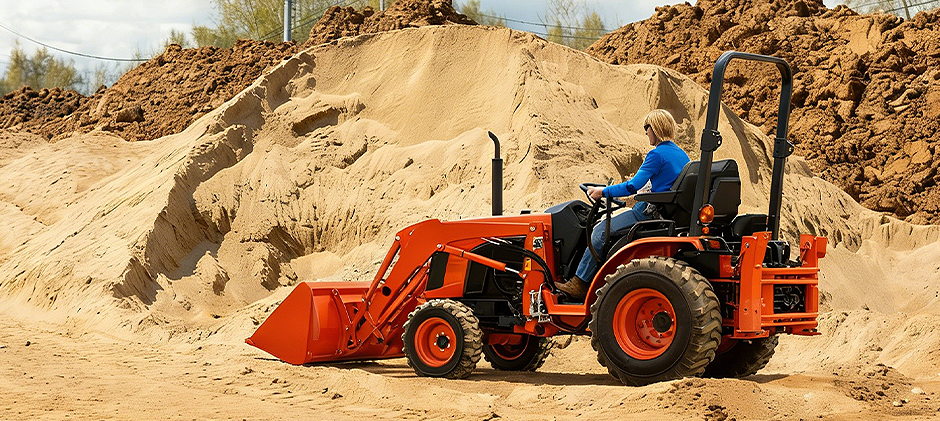
The Kubota B2601 is a compact off-road tractor that often runs with a loader, mower, blade, tiller, or other implements. It’s popular because it covers a lot of jobs without needing a full-size utility tractor footprint. Here’s the quick, field-focused picture:
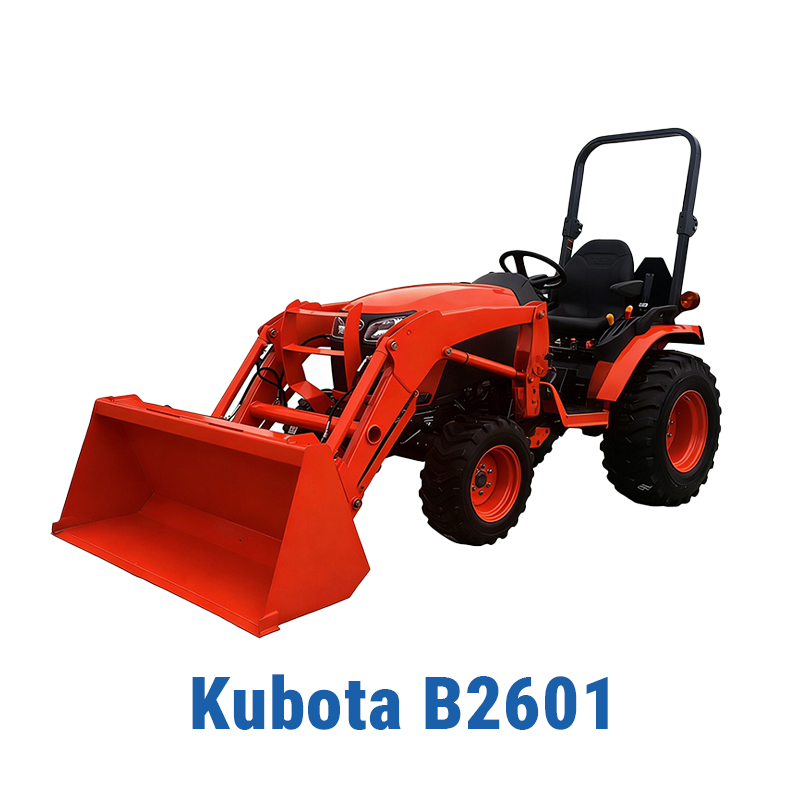
- Compact tractor for off-road work: property maintenance, light grading, material handling, mowing, and seasonal tasks.
- Hydrostatic drive option in this class: many owners choose an HST setup for quick forward/reverse changes when doing loader work.
- Three-range style operation: Low/Medium/High ranges help match speed and push power to the task (for example: slow control for digging and grading, faster travel speed between work areas).
- Simple operator layout: controls are intended to be easy to learn, which matters when multiple people run the same machine.
- ROPS and safety interlocks: foldable ROPS are common on tractors of this size; seat/neutral/PTO interlocks help prevent unsafe starts.
- Works with many attachments: quick changes depend on your hitch/loader setup and attachment type—planning the attachment “ecosystem” matters as much as the tractor itself.
Once the machine type and common use cases are clear, the next step is keeping it reliable. That’s where maintenance and correct parts selection pay off.
Kubota B2601 Specifications
Engine Detail
| Kubota D1105 diesel 3-cylinder liquid-cooled |
– |
|---|---|
| Displacement | 68.5 ci 1.1 L |
| Bore/Stroke | 3.07×3.09 inches 78 x 78 mm |
| Power (gross) | 25.5 hp 19.0 kW |
| Air cleaner | dual dry element |
| Rated RPM | 2800 |
| Starter | electric |
| Starter volts | 12 |
| Oil capacity | 3.3 qts 3.1 L |
| Coolant capacity | 4 qts 3.8 L |
Transmission
| Type | hydrostatic |
|---|---|
| Gears | infinite forward and reverse (3-range) |
| Oil capacity | 12 qts 11.4 L |
Kubota B2601 Tires
| Standard tires (ag) | Front: 7-12. Rear: 11.2-16 |
|---|---|
| Optional tires (ag) | Front: 6-12. Rear: 9.5-16 |
| Lawn/turf front | 22×8.50-12 |
| – | 23×8.50-12 |
| Lawn/turf rear | 31×15.5-15 |
| – | 33×12.5-15 |
| Industrial front | 23×8.50-12 |
| Industrial rear | 12-16.5 |
Dimensions
| Wheelbase | 61.4 inches 155 cm |
|---|---|
| Length | 94.5 inches 240 cm |
| Width | 49 inches* 124 cm |
| Height (ROPS) | 85 inches 215 cm |
| Weight | 1632 lbs 740 kg |
| Ground clearance | 12.8 inches 32 cm |
www.tractordata.com
Related Kubota B2601 Parts
Maintenance Tips for Kubota B2601
Maintenance on a Kubota B2601 is not about doing “everything” all the time. It’s about hitting the items that fail first in off-road conditions: dust, vibration, moisture, and long idle periods between seasons.
Below are the checks that prevent the most common real-world failures.
1) Start with a fast daily walk-around
Before you turn the key, scan for issues that lead to overheating, loss of hydraulics, or unsafe operation:
- Fluid leaks under the tractor (engine oil, coolant, hydraulic fluid, diesel)
- Loose or damaged hoses near the loader valve area and steering
- Radiator and screen blockage (dry grass and chaff pack fast)
- Tire damage and lug tightness
- Loader pins and grease points (if equipped)
- 3-point hitch and PTO area: look for bent guards, damaged shafts, or missing clips
If you find a leak, don’t only top off fluid—find the source. “Low fluid” often creates a second failure (pump noise, aeration, heat).
2) Air filtration
Compact tractors spend a lot of time in dust: mowing, driveway grading, arena work, and dry soil. A restricted air filter can cause:
- sluggish throttle response
- darker exhaust
- higher fuel use
- faster soot buildup
Good practice
- Tap out dust only if your service method allows it; don’t damage the filter media.
- Check the intake path for cracks or loose clamps that can pull unfiltered air.
Parts-lookup note: FridayParts lists multiple air filter options across Kubota equipment and engines. For example, there’s an Air Filter 15741-11080 shown for certain Kubota tractor and excavator applications. Use this as a reminder to match by model + engine + part number, not by “looks similar.”
3) Electrical and starting: solve slow crank before it becomes “random problems.”
A weak battery, poor ground, or aging starter can create confusing symptoms that look like fuel trouble.
Common signs
- Slow crank, click-no-start
- Starts fine, warm, but struggles with cold
- Lights are dimming hard during crank
Fast checks
- Clean and tighten battery terminals (both ends of cables).
- Inspect the ground cable connection to the frame/engine—rust and paint raise resistance.
- Measure voltage during cranking (a meter is better than guessing).
- Check for heat at cable ends after cranking (heat often means resistance).
Glow plugs matter on many small diesels
If cold starts are getting worse, glow plugs and their wiring are worth checking (resistance test, power feed test). FridayParts lists glow plug sets such as Glow Plug 16281-65510 for certain Kubota engine series—use your engine model to confirm.
4) Cooling system: keep it clean, not just “full.”
Overheating on compact tractors is often airflow-related, not a failed pump.
Best practices
- Keep radiator fins clear (use low-pressure air/water from the correct direction).
- Inspect belts and the fan area for debris.
- Watch the coolant condition and hose softness.
FridayParts also lists water pumps for some Kubota engine families (example: Water Pump 1E051-73036 for certain applications). If you’re losing coolant or seeing seepage, verify the exact engine and gasket setup before buying.
5) Hydraulics and HST: protect the most expensive system on the tractor
Loader work and hydrostatic drive put constant demand on hydraulic fluid and filters. When service falls behind, you may notice:
- slower loader lift/curl
- whining under load
- loss of push power in HST
- hot hydraulic oil smell
Practical steps
- Use the correct hydraulic fluid type recommended for your tractor.
- Keep the fill area clean—dirt introduced during filling is a long-term problem.
- Change filters on schedule and after contamination events (hose failure, water intrusion).
Also, inspect quick couplers for leaks and damage. Even small leaks can pull air in and cause foaming and noise.
6) When maintenance turns into parts replacement
Once testing points to a worn component (not just a dirty filter), it’s reasonable to replace it with quality aftermarket parts—especially for high-wear service items on off-road machinery.
A simple buying rule:
- Filters, sensors, solenoids, glow plugs, fuel pumps: replace when tests and symptoms line up.
- Starters, injectors: replace after basic electrical and fuel checks confirm the cause.
If you’re building a maintenance cart or planning a repair, you can browse aftermarket Kubota parts by category and engine family, then narrow down by part number. This is especially helpful when you maintain more than one off-road machine and want a single source for common service items.
Later, if the focus is strictly tractor-related components and you want a tractor-only catalog view, use aftermarket Kubota tractor parts to reduce time spent filtering out non-tractor listings.
Conclusion
A reliable Kubota B2601 comes down to clean air, clean fuel, solid electrical power, and hydraulic service that doesn’t slip. Use a consistent parts lookup method—model, serial range, engine tag, and part number—to avoid wrong orders and repeat downtime. When tests show a part is worn, quality aftermarket replacements are a cost-smart way to get back to work. We support off-road machinery owners with affordable, high-quality parts, wide compatibility, and a deep inventory.
