

Can I repair my hydraulic hose? Or should I choose to replace it straight away? Many heavy-duty equipment owners are sometimes confused about this. After reading, you can have a clear knowledge of hydraulic hoses and make your choice.
What Are Hydraulic Hoses?
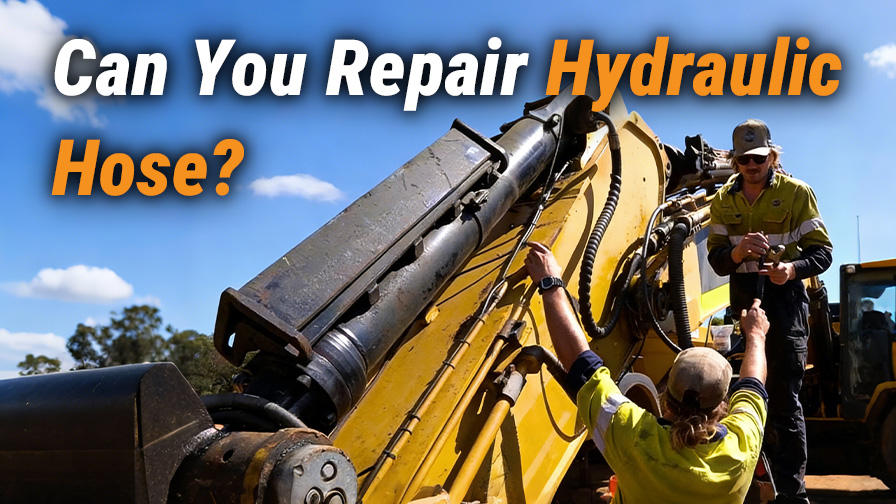
Hydraulic hoses are the lifelines of fluid power systems. They are essential for powering the construction equipment and agricultural machinery. They contain fluid and block contaminants during transmission. When they fail, they will not only affect the system’s performance but also cause serious damage and require expensive repairs to other components in the hydraulic system.
Common Hydraulic Hose Failures
Abrasion: Hydraulic hoses are susceptible to wear when they rub against other parts or surfaces, such as lift arms. Over time, it can lead to minor scuffs and even expose the wire reinforcement beneath the outer cover. If left unaddressed properly, the abrasion can cause costly leaks or sudden bursts.
Kinks & Twists: During operation, hydraulic hoses are likely to kink and twist if they are bent too much. This restricts fluid flow, weakens the inner tube and can cause a dangerous burstdue to extremely high pressure.
Fluid Leakage: Leaks can occur along the hose itself or at the fitting end. Any sign of fluid leakage should be taken seriously. It indicates a breakdown in the hose’s ability to hold pressure and block contaminants.
Corroded Fittings: Some surface corrosion on fittings is normal and white oxidation is generally acceptable. But red rust on fittings signals an immediate replacement, as it affects the sealing ability and increases the risk of leaks and burst under pressure.
Improper Assembly: The smooth operation of the hydraulic system can’t live without these hoses. If you put together these hydraulic hoses the wrong way, and the fittings aren’t crimped and secured properly, the hoses won’t handle the extremely high pressure very well. That means messy leaks and dangerous bursts.
Is Hydraulic Hose Repair Ever A Solution?
To be honest, no one wants to hear “replace it straight away”, especially when you have a tight schedule and workers waiting for the operation. In some cases, repairing is a wise option.
You can repair your hydraulic hoses when:
- A stranded machine can’t move until you fix a leak.
- A reusable hydraulic hose fitting can be a temperature fix.
- It is a minor issue like damaged o-rings or a loose fitting.
Anyway, repairing the hydraulic hose is a temporary fix, for it might cause costly repairs and a threat to safety if you don’t replace the failing hydraulic hoses.
When Should You Replace Hydraulic Hoses?
While hydraulic hose repair can be a temporary solution and save you some time, it is wise to quit that thought in most cases. Hydraulic hose replacement is the only safe and practical choice. Below are situations where you should replace your hydraulic hoses.
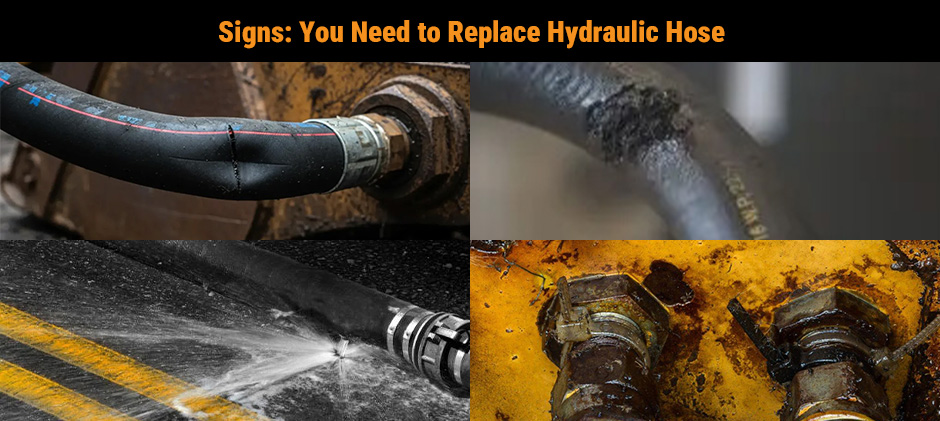
Visibly Damaged Hoses: If there are deep cuts, cracks, bulging or severe abrasion on the outer cover, your hydraulic hoses have been structurally compromised. A damaged hose can burst without warning under extremely high pressure.
Kinked & Crushed Hoses: If your hoses are kinked or crushed, it will restrict fluid flow and weaken the inner tube. Even though there’s no visible leak yet, internal damage has already been caused.
Repeated Leaks: If your hydraulic hose continues to leak in the same spot after repairs, it indicates a deeper issue. A simple patch or fitting replacement can’t fix it permanently.
Corroded & Deformed Fittings: If your hydraulic hose fittings are severely corroded or deformed, it can affect the seal, leading to costly bursts.
Past Service Life: If your hydraulic hoses are past their service life, these aging rubber hoses lose their flexibility and pressure resistance over time, even though they look fine. Many hydraulic hoses have an average service life of 5-7 years, depending on operating conditions. Check manufacturer guidelines and never ignore age alone as a reason to replace.
Hydraulic Hose Repair vs Hydraulic Hose Replacement
When a hydraulic hose fails, you have to decide whether to repair or replace it. Here’s a straightforward breakdown to help you choose.
Cost
Repairing a hydraulic hose is cheaper upfront. For a minor leak or fitting replacement, it typically costs $10 to $50 in parts plus labor. Hydraulic hose replacement costs more, ranging from $30 to $250+, depending on hose size, pressure rating and materials of hoses & fittings. But a poorly repaired hose that fails again can damage pumps, cylinders, and valves downstream, turning a $50 repair into a $500+ problem. Over time, repeated repairs almost always cost more than a single proper replacement.
Safety
Under high pressure, a repaired hose is more likely to fail than a new one, putting equipment, operators and other people on the worksite at risk. When a hydraulic hose is damaged, it can be very dangerous. Since hydraulic fluid is not compressible, and when pressurized, it creates an extremely high pressure from 2,100 psi to over 5,000 psi. Operating hydraulic equipment with a repaired hose means a higher risk of hose failure, leading to severe and irreversible injuries. Replacing a compromised hose is always a safer choice for everyone on the job site.
Downtime
While a quick repair can get your machine running again faster, you may face even more downtime later. A proper replacement takes slightly longer upfront but assures you that the hose won’t fail again anytime soon.
Head-to-Head Comparison
From this table, you can make your decision between hydraulic hose repair or replacement. It is recommended to replace hydraulic hoses. To ensure safety, reliability and to prevent disastrous system failure, especially with high-pressure systems, replacement is always a wise option over repair.
How to Choose the Right Hydraulic Hoses & Fittings
Once you‘ve decided to replace your hydraulic hose, choosing the right one is as important as the replacement itself. The wrong hoses or wrong fittings can fail quickly, leading to more costly repairs. Always Follow the “STAMPED” guide to ensure the replacement is done correctly. Each letter represents a key consideration in selecting the right hose and fittings for your equipment.
S-Size
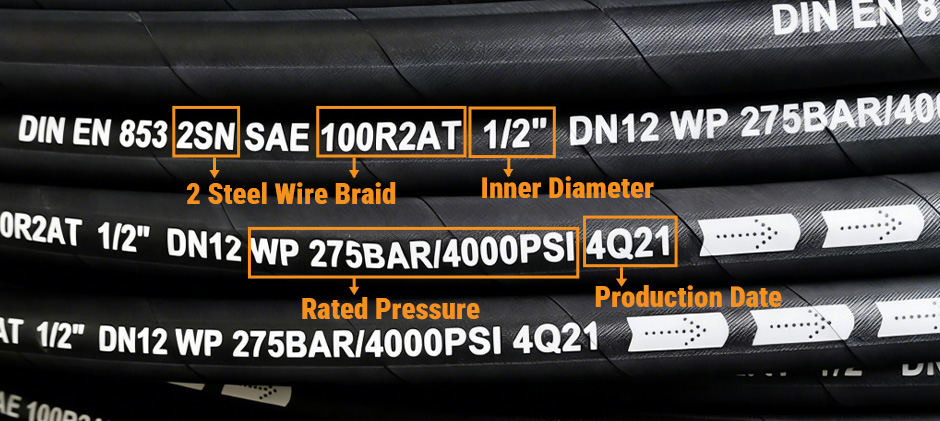
The first step in selection is determining the correct size. You must know the inside diameter, outside diameter and the overall length of the hose you need. Often, the hose layline—the printing on the side of the hose—will provide much of this essential information.
T-Temperature
Also, you must ensure the hose ir rated for the specific temperature conditions of your operation, including the minimum & maximum temperature of the fluid moving through the hose and the ambient temperature of the environment surrounding the hose.
A-Application
Always consider how and where the hose will be used. This may include specific SAE specifications, environmental conditions & potential for excessive abrasion and operating temperature fluctuations.
M-Material
The material of the hose is also crucial. It must be compatible with both the fluids through the hose and the external environment. If you are not sure about compatibility, you should consult the hose ratings for conveyed fluids or a chemical resistance table.
P-Pressure
The rated working pressure of the hose must be higher than the system it will operate on. Besides, you need to identify the correct reinforcement type. By cutting back a small portion of the hose cover, you can identify if the existing hose uses wire braid or spiral reinforcement.
E-Ends
The ends refer to the couplings used to attach the hose to your equipment. Selecting the correct hydraulic hose fittings ensures a secure and leak-free connection.
D-Delivery
Finally, consider the delivery, which refers to the volume of fluid moving through the hose. This factor helps determine the necessary inside diameter. An adequate inside diameter is necessary to keep pressure loss to a minimum and to avoid hose damage caused by heat generated from excess turbulence.
You can confidently select the right hydraulic hose & fittings for your equipment by remembering the STAMPED guideline.
Tips to Prevent Hydraulic Hose Failure & Extend Hose Life
Replacing a failing hydraulic hose can solve the immediate problem, but proper maintenance can help prevent hydraulic hose failures. A few practices can significantly extend hose service life and reduce both downtime and repair costs.
Inspect Regularly
Check your hydraulic hoses frequently for signs of wear, leaks or corroded fittings. Regular inspection can help catch issues early before it snowballs into a full system failure.
Route & Secure Hoses Correctly
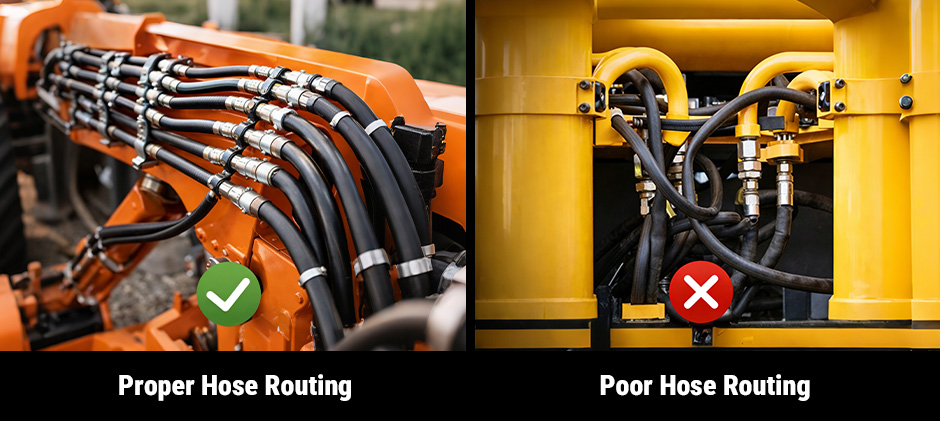
Misrouted or unsecured hoses are one of the most common causes of premature hydraulic hose failure. Follow the manufacturer’s recommended routing, use proper clamps to keep hoses in place and avoid tight bends that exceed the minimum bend radius. A well-secured hose experiences far less movement, friction, and stress during operation.
Use Protective Sleeves & Heat Shields
When rubbing against other components or surfaces is unavoidable, installing abrasion guards & sleeves can help and heat shields can extend hose service life.
Maintain Your Hydraulic Fluid
Keep hydraulic fluid properly filtered, topped up, and replaced on schedule. Contaminated or poor fluid accelerates internal hose wear and can cause compatibility issues that break down the hose from the inside.
Final Words
Hydraulic hoses are crucial parts in powering your machines. Knowing when to repair and replace as well as how to maintain your hoses are what keeps your equipment running safely and reliably. When it’s time to replace, the quality of your hydraulic hoses and fittings matters. At FridayParts, we supply a full range of high-quality hydraulic parts, including hydraulic hoses & fittings built for high-pressure conditions. We’re ready to help you get your equipment back up to its peak performance.
