

If your off-road machine starts hard, idles rough, misfires under load, or suddenly burns more fuel, the problem is often simple: a weak or fouled spark plug. In this guide, we’ll show how to tell if a spark plug is bad using practical symptoms, quick checks you can do during routine maintenance, and a step-by-step diagnosis path that helps you avoid swapping parts blindly and wasting downtime.
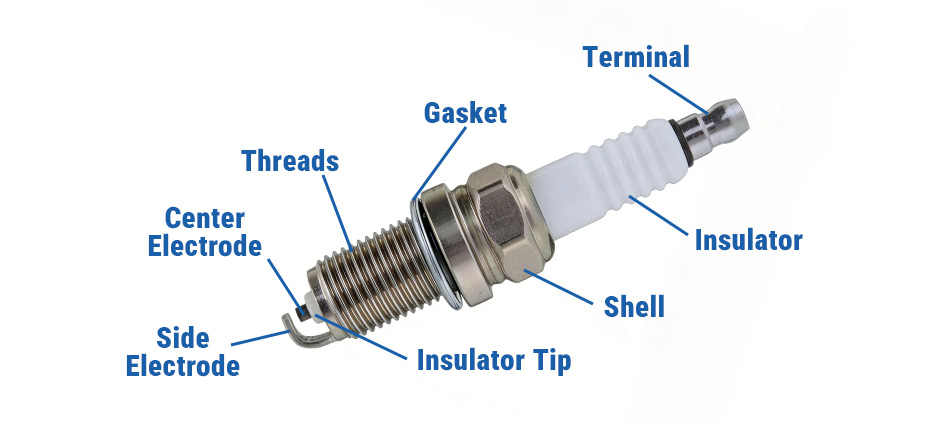
What Spark Plugs Do?
A spark plug is installed in the cylinder head. Its job is straightforward: create a spark that ignites the air–fuel mixture in the cylinder so the engine can start and run smoothly. In off-road machinery that uses gasoline (or certain gas-fueled setups), spark plugs are the “trigger” for combustion—thousands of sparks per minute, hour after hour.
Over time, heat cycles and normal combustion leave deposits on the plug. The electrode edges wear, the insulator can get dirty, and the spark can become weak or inconsistent. When that happens, you don’t just lose smooth running—you often lose fuel efficiency, power, and reliability.
A quick but important note for heavy equipment owners:
- Gasoline engines use spark plugs.
- Diesel engines typically do not—they rely on compression ignition and may use glow plugs for cold starts. If your machine is diesel and you’re chasing a “no-start,” don’t force-fit a spark-plug diagnosis where it doesn’t apply.
What makes the “right” spark plug right?
Choosing the correct plug is not optional. Key fit and performance specs include:
- Thread size: commonly in the 10–18 mm range, depending on the engine. The wrong thread size can cause poor sealing or damage during installation.
- Heat range: often described on a scale (commonly 1–10). The wrong heat range can increase fouling or overheating risk.
- Electrode gap: often around 0.5–1.0 mm, depending on the engine. Too small can cause incomplete combustion; too large can cause a weak spark and misfires.
Always match your engine’s specification (manual or engine tag), especially in high-load off-road duty cycles.
Symptoms of a Bad Spark Plug
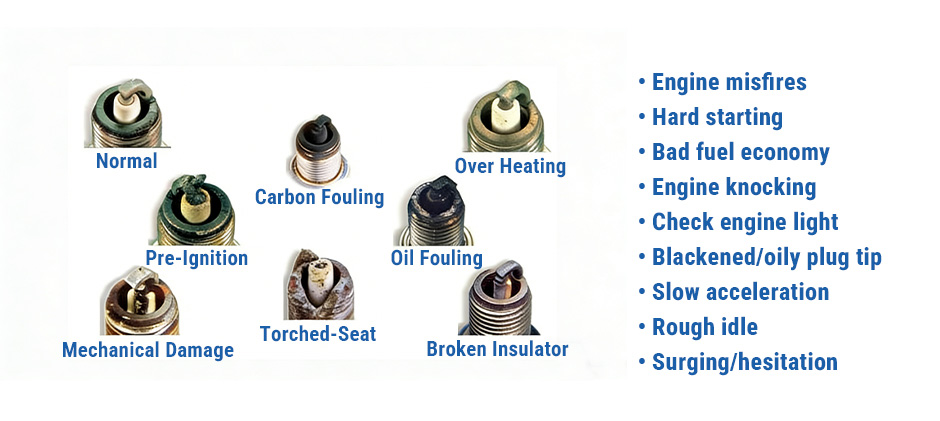
Symptoms overlap with other ignition and fuel issues, so the goal is to spot patterns. Below are the most useful bad spark plug symptoms for off-road machinery.
1) Hard starting
You may notice extended cranking, multiple tries, or a start that “catches” late. A weak plug can’t ignite the mixture reliably—especially when the engine is cold or the battery voltage dips during cranking.
What to check next: plug condition, plug gap, and whether the ignition system is delivering a strong spark.
2) Misfire under load or at steady RPM
A classic sign: the engine runs “okay” at idle but stumbles during acceleration, climbing, or when a PTO / hydraulic load increases. Under load, cylinder pressure rises, and it takes more spark energy to jump the gap. A worn plug is more likely to fail here first.
What to check next: plug wear, gap growth, deposits, and ignition coil output (if applicable).
3) Rough idle or unstable low-speed running
If the machine shakes more than normal at idle or sounds uneven, one or more cylinders may be firing inconsistently.
What to check next: plug fouling (carbon/oil), cracked insulator, and plug wire/boot condition.
4) Reduced power and slower response
A weak spark can cause incomplete combustion. The machine may feel “flat,” especially when throttling up.
What to check next: plug color/condition, fuel quality, and air intake cleanliness.
5) Poor fuel efficiency
Misfires and weak combustion waste fuel. On off-road machines, this shows up as shorter run time per tank or higher fuel burn for the same job.
What to check next: plug deposits and whether the engine is running too rich (often linked to intake restriction or other fueling issues).
6) Increased exhaust smell or abnormal emissions behavior
Even without dashboards, you can sometimes smell unburned fuel or notice a harsher exhaust note. That can happen when combustion is incomplete.
What to check next: plug fouling, mixture issues, and ignition strength.
7) Visible plug damage or heavy deposits
When you remove and inspect the plug, you may find:
- carbon buildup,
- oil fouling,
- worn electrode edges,
- cracked insulator,
- signs of overheating.
These are direct clues that help answer how to tell if a spark plug is bad without guessing.
How to Diagnose a Bad Spark Plug?
This is the “money section,” because it helps you avoid the common trap: replacing plugs when the real issue is upstream (coil, wire, fuel, air) or downstream (compression).
Step 1: Confirm you actually have a spark-plug engine
Before touching anything, confirm your machine is gasoline/gas ignition. If it’s diesel, shift your focus to diesel-start systems (for example, glow plugs, fuel delivery, etc.).
Step 2: Do a targeted symptom check
Use what you already observed to guide the next step:
- Only hard starting? Think spark strength during cranking, plug gap, and battery voltage drop.
- Only under-load misfire? Think worn plug gap, coil breakdown, plug wire leakage.
- Rough idle + fuel smell? Think fouling and rich-running causes.
A clean symptom picture reduces unnecessary part swaps.
Step 3: Visual inspection
Remove the plug(s) and inspect under good light. Look for:
- Dry, sooty black deposits often indicate rich running or weak ignition.
- Oily deposits: can indicate oil entering the chamber (engine condition issue).
- White or blistered insulator / eroded electrode: can indicate overheating or incorrect heat range.
- Cracked insulator or damaged threads: replace immediately.
Also, check the electrode gap. As plugs wear, the gap can open up, which demands more voltage to spark—misfires often appear under load first.
“If the electrode edges are rounded and the gap has opened up, the plug can ‘look fine’ but still misfire when the engine works hard.”
Step 4: Use a proper spark test method
Many people “ground the plug” and crank to watch for a spark. That can work, but it can also mislead you because it doesn’t fully load the ignition system the way a cylinder does—and it can be unsafe.
Better approach for off-road maintenance:
- Use an inline spark tester or an adjustable gap tester.
- Check for a consistent spark when cranking.
- If the spark is intermittent, you may have plug, wire/boot, or coil issues.
Important: No open fuel vapors, and follow your machine’s safety procedures. Avoid creating sparks near fuel sources.
Step 5: Isolate the plug from the rest of the ignition path
To answer the user’s real question—how to tell if a spark plug is bad and not something else—isolation matters.
- If one cylinder is acting up, swap the plug with a known-good cylinder (when the engine design allows).
- If the misfire follows the plug, the plug is likely the problem.
- If it stays on the same cylinder, suspect coil/boot/wire, injector/carb circuit, or compression.
Step 6: Check related starting and charging components
Hard starting isn’t always the plug. Slow cranking can reduce ignition voltage and make good plugs look bad.
If the starter drags or the charging system is unstable, inspection may need to include broader engine auxiliary components such as starter motors or alternators, because they directly affect cranking speed and electrical stability—two things ignition systems depend on.
Step 7: Decide replace vs. clean
In heavy-duty off-road service, “cleaning and reinstalling” is sometimes a short-term move. If a plug shows:
- worn electrode,
- cracked insulator,
- persistent fouling,
- or incorrect heat range/gap for the application,
If you’re at the point of replacement, sourcing the correct spark plug by fitment and spec helps prevent repeat issues from wrong thread size, wrong heat range, or wrong gap.
Conclusion
Knowing how to tell if a spark plug is bad comes down to two things: matching symptoms to likely causes, then confirming with inspection, gap check, and a proper spark test (plus a plug-swap when possible). This prevents guesswork and helps keep your off-road equipment reliable. If replacement is the best move, FridayParts is an aftermarket parts supplier offering high-quality products at affordable prices, a vast inventory, and wide compatibility across many heavy equipment brands.
