

Downtime on off-road machines usually starts the same way: long cranking, random stalling, or power loss under load. When that happens, we don’t want to “guess-and-buy” the wrong Kubota fuel pump—we want to identify the exact unit fast. In this guide, we’ll show you where to find the fuel pump serial number (and the part number), how to read what’s on the label, and how to use those details to match the right replacement for Kubota-powered tractors, loaders, and mini excavators.
What are Kubota Fuel Pumps?
On most Kubota off-road equipment, the fuel pump we’re talking about is a low-pressure supply pump (often called a lift pump or transfer pump). Its job is to pull diesel from the tank, push it through the fuel filters/water separator, and feed the injection system a steady supply. If that supply is weak, the engine can act like it has bigger problems—even when the injectors and injection pump are fine.
Kubota systems vary by machine and engine family, but the fuel path is usually:
- Tank → lines/strainer
- Primary filter/water separator
- Fuel pump (electric 12V is common on compacts)
- Secondary filter
- Injection system (mechanical injection or common rail)
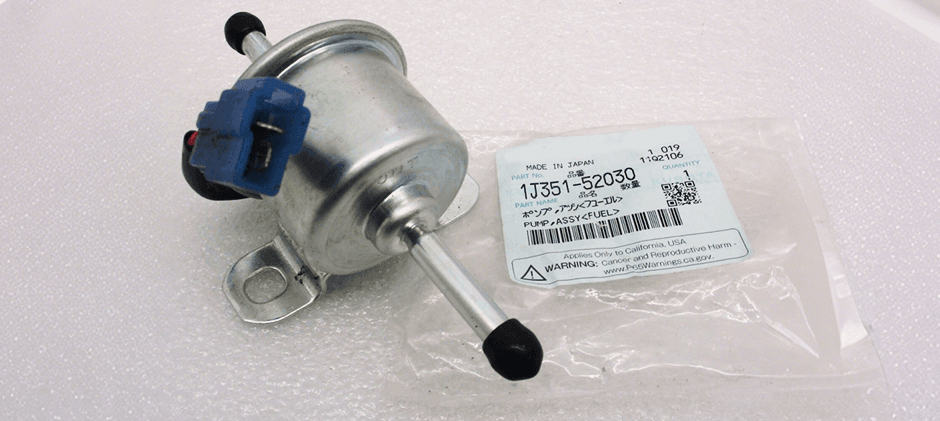
The Importance of Fuel Pump Serial Number
When you shop for a fuel pump, you often see three different “numbers” that people mix up:
- Machine serial number (tractor/excavator/loader ID plate)
- Engine model/serial (Kubota engine tag: D905, V2203, V2403, D902, etc.)
- Pump ID (often a part number, sometimes also a serial/lot code)
Why does this matter? Because the machine serial number tells you what you own, but the pump ID tells you what you need. Two similar machines can use different pumps based on year, engine variant, emissions tier, or wiring connector style.
Serial number vs. part number
For many Kubota low-pressure electric pumps, the part number is the primary fitment key, while the serial number is mainly for manufacturing traceability (batch/lot/date). In practice, we use the pump’s part number to buy, and we keep the serial/lot code for warranty and troubleshooting.
- A quick real-world example from common off-road applications:
- 12V electrical fuel pump 1G662-52030 / 1G662-52033 is listed for Kubota engines D905, D920, D1005, D1105, D1703, V1505, V1903, V2203, V2403
- Fuel pump 1G961-52030 is listed for Kubota D902 utility vehicle applications (RTV900 series)
- Fuel pump RD411-51353 is listed for Kubota mini excavators such as KX71-3, KX91-3S, KX121-3, and compact excavators U25, U45S, U55, etc.
Those are not “serial numbers”—they’re part numbers that drive correct ordering.
How to Decode Your Kubota Fuel Pump Serial Number?
This is the part most owners struggle with, so we’ll keep it practical and accurate: there is no single universal public decoding chart that turns every Kubota fuel pump serial number into a model/year. Formats differ by pump maker and pump type, and some codes are only meaningful to the manufacturer.
What you can do reliably is decode what’s on the pump label/tag into three buckets that help you match parts correctly.
Step 1: Find the pump identification area
Electric 12V low-pressure pumps (common on compact equipment):
- Look on the pump body for a sticker, laser marking, or stamped text.
- Also, check the mounting bracket side and near the inlet/outlet ports.
- Many units show:
- Voltage (12V)
- Flow direction arrow
- A part number (most important for ordering)
- A smaller lot/date code (often mistaken as the serial)
Mechanical lift pumps (engine-mounted):
- Look for a small tag or stamped area on the housing.
- The tag may be dirty or hidden by hoses—wipe it clean before taking a photo.
Important: Don’t confuse the injection pump’s tag with the low-pressure fuel pump tag. They can be near each other, but they’re different parts with different IDs.
Step 2: Separate the numbers into “Fitment ID” vs “Traceability ID”
When you see multiple lines of text, sort them like this:
- A) Fitment ID
- Kubota-style part numbers (often formatted like xxxxx-xxxxx)
- Examples that appear on common off-road listings:
- 1G662-52030, 1G662-52033
- 1G961-52030
- RD411-51353
- B) Traceability ID (often the real serial/lot code)
- Shorter codes, date-like strings, or mixed letters/numbers that don’t match Kubota part number patterns.
- These help with:
- Warranty tracking
- Manufacturing batch identification
- Root-cause analysis if a failure repeats
Rule of thumb: If it matches the format used in parts listings and catalogs, it’s probably the part number, not the serial.
Step 3: Read the “context clues” printed near the serial/lot code
Even when you can’t decode the serial itself, the label often gives usable specs:
- Voltage: 12V (common for compact tractors/excavators)
- Port orientation: inlet/outlet direction, banjo vs barb fittings
- Flow direction arrow: install orientation matters
- Connector style: 2-pin vs other plug shapes
- Mounting style: rubber isolators vs hard mount
These clues prevent a very common mistake: ordering a fuel pump that technically “fits” the engine but doesn’t match the harness connector or plumbing.
Step 4: Cross-check with the engine model and the application
Here’s a clean way we recommend:
- Record engine model (example: V2403, D1105, D902).
- Record the pump part number from the label (example: 1G662-52030).
- Confirm voltage and connector.
- Verify the application list in a trusted catalog.
If you’re still not sure, that’s where a broad catalog helps. Mid-project, we often jump straight to a dedicated fuel pump category like fuel pump to compare pictures, connectors, and listed engine models side-by-side.
Step 5: Don’t skip the electrical side
A weak relay, bad connection, or voltage drop can cause the same “dies after 30–60 minutes” pattern that people blame on the fuel pump itself. Before you condemn the pump, it’s smart to review common electrical warning signs—this checklist of fuel pump relay warning signs is a good mid-diagnosis reference.
“A pump can be good and still not run right if it can’t get steady voltage under load.”
Quick field checklist
- Replace/verify fuel filters (restriction is common on off-road machines)
- Check for suction-side air leaks (wet fittings, cracked hoses, loose clamps)
- Confirm the pump is installed in the correct flow direction
- Verify power and ground at the pump while cranking and while hot
- Listen for pitch change (an electric fuel pump getting loud can mean restriction)
Fuel Pump Types by Popular Model
Kubota equipment spans tractors, loaders, and mini excavators, and the fuel pump choice often tracks the engine family and the machine layout.
| Pump type | Typical use on off-road equipment | What fails most often | What to record |
|---|---|---|---|
| 12V electric low-pressure lift fuel pump | Compact tractors, mini excavators, skid/track loaders (varies by model) | Heat-related pressure drop, worn internals, check valve drain-back | 12V marking, part number, connector type, flow arrow |
| Mechanical engine-driven lift fuel pump | Some older/simple diesel setups | Diaphragm wear, internal valve leak, external seep | Part number, mounting/gasket style |
| Fuel system “helpers.” | Filters, water sensor, shutoff solenoid | Restriction, water-in-fuel signal faults, no-fuel shutdown | Sensor/solenoid part numbers, filter part numbers |
If you’re sourcing beyond pumps (filters, sensors, solenoids, starters), it’s usually faster to use a brand catalog. We often point customers to a single Kubota lookup page, like Kubota parts, so everything stays consistent with the same model/engine family.
Kubota Fuel Pump FAQ
1) Where is the serial number on a Kubota fuel pump?
On electric pumps, it’s usually on the pump body label or a stamped area near the ports or bracket. On mechanical pumps, it may be stamped on the housing or printed on a small tag. Clean the area and use a flashlight—dirt hides most IDs.
2) What’s more important for ordering: serial number or part number?
For most Kubota low-pressure electric fuel pumps, the part number (example: 1G662-52030) is the most reliable ordering key. The serial/lot code helps with traceability, but often won’t decode into a fitment result.
3) I only have my tractor/excavator serial number. Is that enough?
It helps, but it’s not always enough. We get better accuracy with:
- Machine model
- Engine model (D905, V2403, etc.)
- Pump part number from the label
- Photos of the pump and connector
4) Can the wrong fuel pump “kind of work”?
Yes—and that’s a problem. A pump with the wrong pressure/flow curve or the wrong connector can cause hard starts, surging, or repeated stalling. Always match part number, voltage, and connector.
5) What symptoms make you check the fuel pump first on off-road equipment?
- Long crank after sitting (possible drain-back)
- Dies after warming up (electric pump losing output when hot)
- Power loss under load (weak supply or restriction)
- Repeated air in fuel after bleeding (suction leak)
6) Should we replace anything else when changing a fuel pump?
Often yes. If filters are old, replace them. If hoses are cracked or clamps are weak, replace them to prevent air leaks. Also, inspect wiring and the relay circuit—electrical issues can cause pump failure.
7) How do we avoid “no pressure after installing a new fuel pump”?
Most “new pump still doesn’t work” cases come from:
- Air trapped in the system (bleed fully)
- Pump installed backwards (check arrow/ports)
- Loose clamps are letting air in on the suction side
- Plugged filter or tank pickup restriction
Conclusion
When we identify a Kubota fuel pump correctly, we stop wasting time and money on the wrong parts. Focus on what you can verify: pump part number, voltage, connector, and engine model—then use the serial/lot code for traceability, not guesswork. As an aftermarket parts supplier, FridayParts supports off-road owners with high-quality products at affordable prices, wide compatibility, and a deep inventory so your machine can get back to work fast.
