

Knowing how to jump a starter solenoid is necessary for heavy equipment starting systems. It is located between the battery and starter motor, to connect power so the engine fires up.
But starter solenoids often break down. Once it fails, your machine won’t start at all. If you run into this emergency, jumping the solenoid is a temporary fix. Meanwhile, you quickly troubleshoot whether the problem is the solenoid itself or other parts.
What Is a Starter Solenoid?
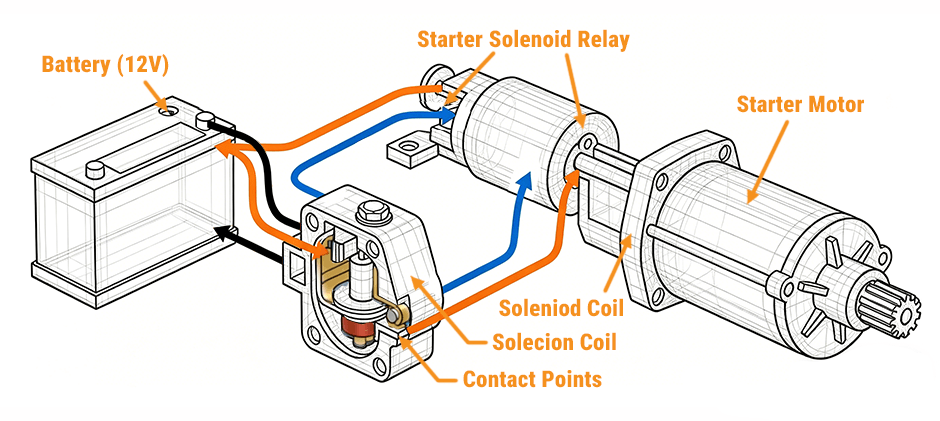
The starter solenoid is a big switch that controls the starter motor. When you turn the key, it doesn’t send power straight to the starter. Instead, it sends a small electric signal to the solenoid first. Once the solenoid gets that signal, it powers up the starter motor, which spins the engine crankshaft and fires up the engine.
- Boost electric current: The small current from your ignition key triggers the electromagnet inside the solenoid. It pulls the internal contacts closed, letting high power from the battery flow straight to the starter motor. Without this part, the ignition key switch couldn’t handle that heavy current at all.
- Push out the drive gear: Magnetic force pushes the internal plunger forward. This moves the small Bendix gear out to lock and mesh with the engine’s large flywheel gear.
If the starter solenoid breaks, either power can’t reach the starter or the gear won’t engage. Either way, your engine just won’t start.
What Does “Jumping a Starter Solenoid” Mean?
Jumping a starter solenoid means bypassing it and sending power straight to the starter motor.
Normally, electric current runs through the solenoid first, then to the starter motor. If the solenoid fails, you can use tools (like a screwdriver or thick wires) to connect the battery directly to the starter. Skip the faulty solenoid. That’s what jumping or bypassing it is.
When Do You Need to Jump the Starter Solenoid?
Jumping the starter solenoid is only for special situations. It is not part of regular maintenance.
Check if the solenoid is bad. The engine starts normally after bypassing it; then the solenoid is the problem. You can replace it. In urgent cases where the machine must be moved, you can jump the solenoid to start the engine. Move the equipment to a safe or proper repair spot, then fix it correctly later.
Common Symptoms of a Faulty Starter Solenoid
How to determine if there is a problem with the start solenoid valve (solenoid)? Actually, just a few very typical performances are enough. But first make sure the battery has power. If the battery is fine and the following situations occur, you should focus on suspecting the solenoid valve.
- There’s only one “click” sound when you turn the key: Just heard “click” and then there was no movement. This is the plunger inside the solenoid moving, but the contacts are not connected and the power cannot be sent to the starter motor.
- No sound at all: The battery is good, but when you twist the key and it doesn’t respond at all, it doesn’t make any sound or crank. This situation may be that the solenoid coil is broken.
- Keep “click click” ringing quickly: Although this is often due to insufficient battery voltage, it may also be due to unstable solenoid operation, causing it to engage and disengage back and forth.
- The starter motor is running, but the engine is not moving: You can hear the motor “buzzing” idling, but the engine is not turning. Although the solenoid was energized, the gear was not pushed in and did not engage with the flywheel.
If the battery and battery wire are confirmed to be fine, and these phenomena occur, the probability of the solenoid valve having problems is very high. At this time, you can try Jump Start.
How to Jump a Starter Solenoid: A Step-by-Step Guide
Jumping a starter solenoid means dealing with high current and moving parts, so safety is very important. If done wrong, especially when the machine is in gear, it can make the equipment suddenly move.
Stay Safe First
- Park on flat ground
- Pull the parking brake
- Put the machine in neutral or park
- Wear gloves and safety glasses
Find the Starter and Solenoid
The starter motor is a round unit on the side of the engine. The solenoid is the smaller cylinder mounted on top of the starter. You’ll also see a thick cable coming from the battery.
Identify the Terminals
You’ll usually see 3 main terminals:
- B+ (battery terminal): thick cable from the battery
- M (motor terminal): goes into the starter motor
- S (start signal): small wire from the key switch
Do the Jump (bypass)
- Key ON, but don’t crank yet.
- Use a screwdriver or jumper wire.
- Touch the B+ terminal
- Then bridge it to the M terminal
This sends power straight to the starter motor. Expect sparks and noise — this is normal. The engine should start cranking right away. Remove the tool immediately once it starts. Need a starter solenoid wiring diagram?
What It Means
- Engine cranks and starts: solenoid is bad
- Starter spins but the engine doesn’t turn: mechanical issue in the solenoid
- Nothing happens: problem is elsewhere (starter motor, wiring, or ground issue)
Final Thought
Learning how to jump a starter solenoid is a handy skill. It helps you quickly figure out starting issues and fire up your heavy equipment in a pinch. This is only a temporary fix, though. You should repair or replace a bad solenoid as soon as possible. Shop reliable solenoids and other repair parts at FridayParts, with great prices for all your equipment needs.
