

When a refrigeration unit on a worksite trailer or yard equipment starts hard-starting, losing prime, or stalling under load, ordering “a pump that looks the same” often wastes days. What actually prevents wrong-fit orders is reading the Carrier fuel pump number correctly and checking it against your unit and engine info. In this guide, we’ll show how we decode the Carrier fuel pump number in a practical, step-by-step way—so we can match the right part faster and cut downtime.
Why Does the Fuel Pump Series Number Matter?
A fuel system failure doesn’t just stop the engine—it can disrupt temperature control, load schedules, and compliance requirements. The problem is that many pumps are close in size and mounting style, but they differ in voltage, connector, flow direction, pressure range, or revision level. That’s why the Carrier fuel pump number (and its series/revision) matters in real maintenance work.
Here’s what that “series number” protects us from:
- Revision traps: a later revision may change a connector, bracket, or internal check valve.
- Unit family differences: similar unit models can use different fuel delivery setups.
- Engine pairing: many refrigeration units are built around specific industrial engines; the same “Carrier unit name” may still have multiple engine configurations across years.
- Inventory accuracy: the right number avoids returns and rework—especially when you’re ordering from a distance and need a first-time fit.
What “number” are we talking about?
In practice, we may see several identifiers:
- Unit model (for the refrigeration unit family)
- Engine model (the engine installed in the unit)
- Part number on the pump label/packaging/catalog line
- Vendor codes/listing suffixes that appear in online catalogs
The Carrier fuel pump number should refer to the orderable part number—not just a casting mark or a supplier-only trace code.
A quick look at Carrier-style part numbering
From the parts catalog content you provided, Carrier-related parts are commonly displayed in structured formats such as:
- 30-01114-02 (example: alternator listing)
- 25-39476-00 (example: starter listing)
- 14-00311-02SV (example: filter drier listing)
- 10-00332-21SV (example: transformer base unit listing)
- plus other numeric formats that may not include hyphens
You shouldn’t claim every digit has a universal meaning across every Carrier component. But you can use a field-proven decoding workflow: treat the number as Family / Item / Revision, then confirm by fitment data (unit model + engine model + electrical details).
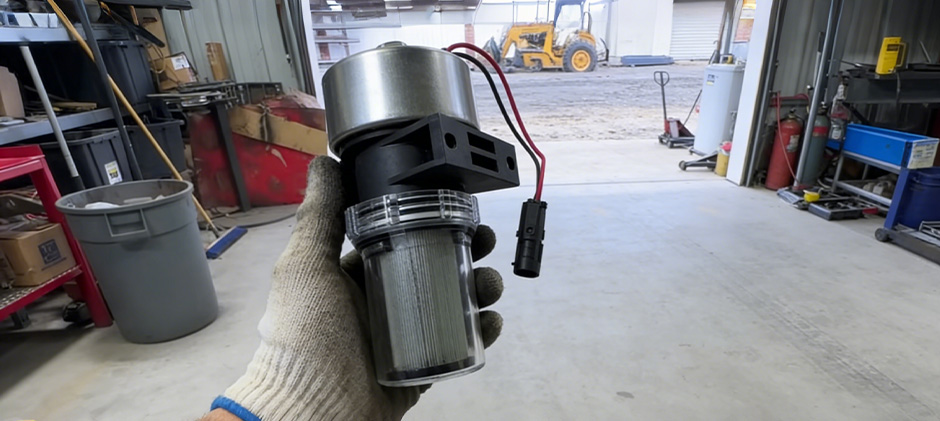
How to Decode the Carrier Fuel Pump Number?
Below is the method you use to decode a Carrier fuel pump number in a way that is consistent with how parts are listed, revised, and purchased in the real world.
Step 1: Confirm you’re reading the correct number source
Before decoding, you identify where the number came from:
- Pump label or tag (best source)
- Packaging label (often clearer than a worn pump body)
- Parts list/service documentation for your exact unit
- Online catalog listing
Avoid relying on: casting numbers stamped into housings (often not the orderable number).
Practical tip: If your pump is covered in dust/oil, clean the tag area first and take a close-up photo. Most “bad decoding” is actually one misread digit.
Step 2: Normalize the format
Carrier-style numbers are frequently shown with hyphens. You rewrite the part number into the cleanest standard form you can:
- Keep hyphens: XX-XXXXX-XX
- Remove spaces
- Double-check common misreads: 0/8, 1/7, 5/6, 2/Z
This makes it easier to compare your number to catalog entries and avoids ordering the wrong revision.
Step 3: Split the number into three functional chunks
For many Carrier listings, the number looks like a three-part structure:
- Prefix block (often 2 digits): e.g., 30-, 25-, 14-, 50-
- Middle block (often 5 digits): the specific item identity
- Suffix block (often 2 digits): revision/version such as -00, -01, -02, -03
Step 4: Watch for suffixes like “SV”
In the content you provided, some parts show suffixes like SV (for example, 14-00311-02SV, 10-00332-21SV, 251556800SV).
Because suffixes like this can be catalog/listing identifiers, you should do this:
- Record the full displayed code (including SV) for reference.
- Also, isolate the core part number without extra listing suffixes when searching across databases.
- If two results differ only by an added suffix, you verify what the seller defines it as (packaging, kit content, or listing format).
This prevents us from rejecting a correct part just because the listing includes an extra suffix.
Step 5: Pair the part number with the unit model and engine model
Decoding the Carrier fuel pump number is not complete until you verify fitment using the equipment identifiers that actually control configuration.
From the Carrier parts content, you can see Carrier equipment references such as:
- Carrier refrigeration unit families (e.g., Supra series and similar lines in the catalog section)
- Engine model references shown alongside parts (e.g., CT4-134 and other CT engine identifiers in listings)
Why this matters:
- A fuel pump may be correct for one CT engine type but wrong for another due to voltage, mount, fuel line routing, or connector.
Our minimum checklist before ordering:
- Refrigeration unit model (exact)
- Engine model (exact)
- Your pump’s part number (exact, normalized)
- Electrical system: 12V vs 24V
- Photos of the connector + mounting points
Step 6: Don’t confuse pump failure with power-supply problems
Many “pump problems” are actually power delivery problems—especially on equipment that sees vibration, moisture, and corrosion.
If the unit sometimes primes and sometimes doesn’t, or it dies after vibration, we check:
- relay control
- fuse holders
- grounds
- harness connectors
A helpful mid-troubleshooting reference is this guide on fuel pump relay warning signs (these issues can mimic a bad pump and lead to unnecessary parts swapping):
Fuel pump relay warning signs.
Step 7: Use the number to shop smarter
Once you’ve normalized and verified the Carrier fuel pump number, you can choose the fastest sourcing path:
- If you need a replacement pump now, browse a dedicated pump category so you can compare options, specs, and pricing in one place. FridayParts lists a wide range of aftermarket pumps across equipment types and brands, with high-quality assurance and a one-year warranty policy in the fuel pump category:
fuel pump - If you’re bundling parts (filters, belts, alternator, starter, sensors) to reduce repeat shipping and repeat downtime, it helps to shop by brand catalog for the unit family:
Carrier parts
This is also where decoding pays off financially: the right Carrier fuel pump number helps us avoid return shipping, extra labor, and avoidable “second outage.”
Common mistakes you see when decoding the Carrier fuel pump number
Even careful teams get caught by a few repeat issues:
1. Ordering by unit name only
Unit families can have multiple configurations; the pump may change by engine or revision.
2. Ignoring the revision suffix
-00 vs -03 can matter. If a part is superseded by a new revision, please confirm what replaces what.
3. Mixing 12V and 24V
A correct-looking pump that’s the wrong voltage wastes time and can cause electrical faults.
4. Skipping connector verification
Two pumps may mount similarly but use different plug styles. Always compare photos.
5. Treating listing suffixes as the “true” part number
Extra suffixes may be seller-side formatting. Please verify the core number.
Conclusion
Decoding the Carrier fuel pump number is less about memorizing a secret code and more about a reliable workflow: normalize the number, split it into family/item/revision, and confirm fit using unit + engine identifiers and electrical details. When we do that, we avoid wrong-fit pumps and repeated downtime. As an aftermarket parts supplier, FridayParts supports this approach with high-quality products at affordable prices, a vast inventory, and wide compatibility across heavy equipment brands.
