

Dirty injectors can make off-road machinery hard to start, weak under load, and more expensive to run. This guide explains how to clean fuel injectors based on how bad the deposits actually are, how to pick the right method, and how to recognize when cleaning is no longer worth it. It also looks at what causes the problem in the first place, since that is usually the key to avoiding repeat downtime.
Start With the Right Method
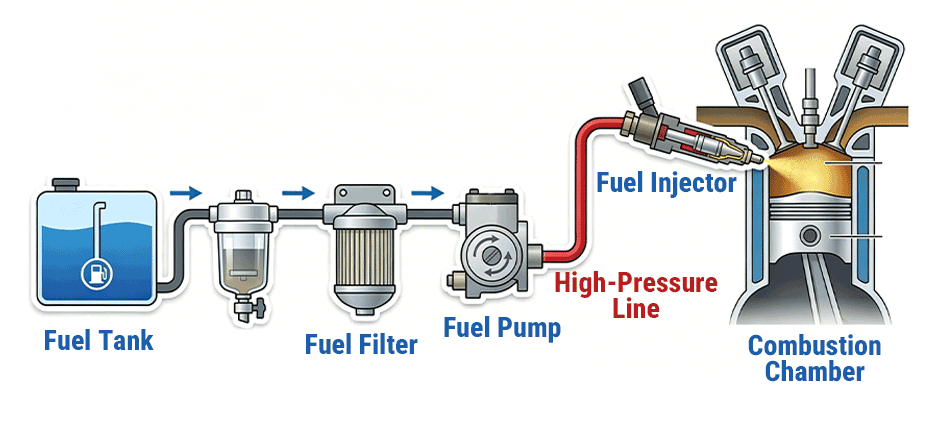
A fuel injector meters fuel and sprays it into the combustion chamber in a fine pattern. In off-road diesel engines, the spray quality drives combustion, power, fuel use, and smoke. As deposits build up, the spray pattern gets ragged, combustion turns less efficient, and performance falls off.
Before picking a method, check two things:
- How severe are the symptoms?
- What type of fuel system does the machine use?
Diesel is the main context for most off-road equipment. A fuel-system cleaner can handle light deposits, but high-pressure diesel systems usually call for more care than lighter-duty engines.
| Condition | Common Signs | Best First Step |
|---|---|---|
| Mild | Slight power drop, light smoke, small fuel economy loss | Fuel-system cleaner |
| Moderate | Rough running, slower response, harder starts | On-machine pressurized cleaning |
| Severe | Hard starting, strong power loss, repeated faults | Bench testing and cleaning |
If the machine still works normally under load, the issue may be minor. If output drops during real work, a basic cleaner probably won’t be enough.
Signs to Check
Start with what the machine is actually doing in the field. The usual signs are hard starting after sitting, a rough idle during warm-up, slow throttle response, more smoke than normal, higher fuel use, and power loss under load. None of these confirms injector fouling on their own, but together they point to a fuel delivery or combustion problem worth a closer look.
It is also a good moment to check the parts that keep fuel flowing cleanly. A fresh fuel filter, a clean water separator, or a healthy fuel pump all help protect the injectors and make any cleaning hold up better.
Why Do Deposits Build Up?
Off-road machinery runs in conditions that practically invite injector deposits. Dusty sites raise the odds of contamination during refueling. Poor-quality diesel leaves more residue at the injector tip. Long idle periods cause incomplete combustion, which lets carbon take hold faster. Machines that sit for weeks can end up with stale fuel and internal deposits. Skip a filter service, and more debris moves through the system; let water sit in the diesel, and it dulls spray quality while adding wear.
This is why cleaning is rarely a one-and-done fix. Leave the cause in place and the same problem comes back, often sooner than you’d expect.
How to Clean Mild Deposits?
When symptoms are still light, a diesel-compatible fuel-system cleaner is usually the most practical first step. It is the right call when you’re seeing a small dip in performance, light smoke, or a modest rise in fuel use, and the machine still pulls well under load.
Basic approach:
- Choose the right cleaner. Use one made for diesel fuel systems.
- Follow the ratio exactly. Too much product can do more harm than good.
- Run the machine long enough. Treated fuel needs time to circulate.
- Check the results. Watch starting, smoke, and response under load.
This works best on early buildup. It does little once fouling is heavy or there’s already clear power loss.
A cleaner can help with light deposits. It won’t correct internal wear, leakage, or a badly distorted spray pattern.
Pressurized Cleaning for Moderate Cases
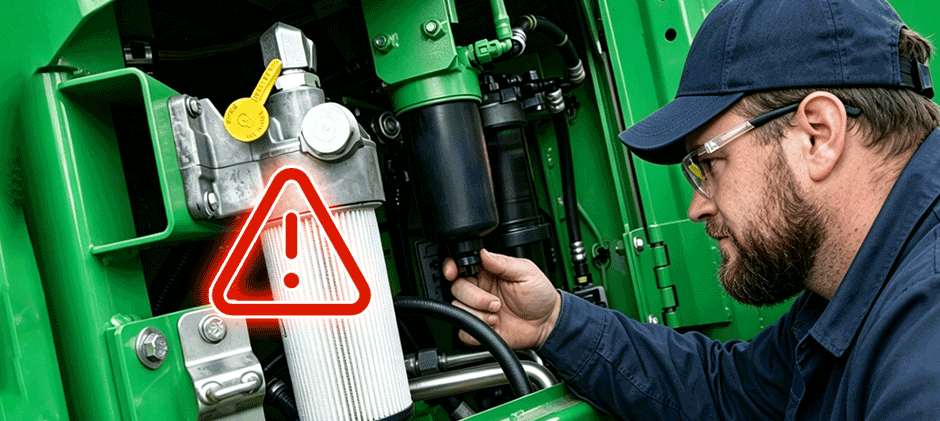
If the cleaner doesn’t get you far enough, on-machine pressurized cleaning is often the next step. It pushes concentrated cleaning fluid through the fuel path more directly than a tank additive, so it can shift heavier buildup.
This method suits an engine that runs rough, responds slowly to the throttle, smokes more than it should, or has lost noticeable power without being fully down. It does take the right equipment and a careful hand, though. On diesel systems, contamination introduced during the service itself can create fresh injector or pump trouble.
Before starting, check the related parts: the fuel line, fuel pump, and injector seal kit. If one of them is weak or leaking, the cleaning won’t last.
Warning: High-pressure diesel can penetrate skin and cause serious injury. Never loosen fuel lines on a pressurized common rail system.
Bench Service for Severe Problems
When a machine starts hard, has lost real power, keeps running rough, or shows no gain after basic cleaning, it’s usually time to pull the injectors. Bench service lets you test them as well as clean them, which matters on precision diesel systems.
Bench work checks for:
- Spray pattern
- Leakage
- Response consistency
- Fuel delivery balance
Deposits are often only half the story. Internal wear, poor sealing, or a damaged nozzle can be in play, too. On electronically controlled injectors, a faulty solenoid or coil can throw off fuel delivery, and no amount of cleaning will fix that kind of failure.
This is also the point to inspect or replace supporting parts like the injector nozzle, return line, and seal ring set. Once an injector is out of spec, the parts around it often need attention as well.
Cleaning Without Removal
Knowing how to clean fuel injectors without pulling them can save real time, but it only works while deposits are still mild to moderate and the machine runs reasonably well. The approach falls short once starting is difficult, smoke is heavy, or power drops sharply under load. And if an in-place method has already failed once, running it again usually just adds cost without touching the real cause.
Cleaning or Replacement?
Cleaning is the better choice when deposits are the main problem. Replacement tends to be the better long-term value when an injector has wear, leakage, electrical faults, or a spray pattern that cleaning can’t bring back.
| Option | Best For | Main Limit |
|---|---|---|
| Cleaner in fuel | Early deposits | Limited effect on severe issues |
| Pressurized cleaning | Moderate buildup | Won’t fix worn injectors |
| Bench cleaning | Severe fouling | More labor and downtime |
| Replacement | Worn or failed parts | Higher upfront cost |
A weak lift pump, a dirty filter housing, or a damaged injector connection can drag down performance, too. When one of those is in the mix, cleaning the injectors alone won’t bring the engine back to where it should be.
How Often Should You Clean Injectors?
There’s no single interval that fits every machine. In off-road use, how often you clean comes down to fuel quality, operating hours, idle time, job site dust, storage conditions, and how well you keep up with filters.
The practical move is to follow the service history and the symptoms rather than chase a fixed number. Preventive cleaner use can help in rough fuel environments, but symptoms that keep coming back are a signal to dig deeper. When that happens, finding the cause beats topping up with more cleaner.
Prevent Repeat Problems
Prevention almost always costs less than a late repair. Good fuel handling and steady service habits do most of the work in keeping injectors healthy.
The basics:
- Use clean diesel from reliable sources
- Keep your refueling practices clean
- Replace fuel filters on schedule
- Drain water whenever it’s called for
- Don’t let fuel go stale in storage
- Act early on changes in smoke or starting
Conclusion
Once you know how to clean fuel injectors and where the limits are, the calls get easier: cleaning earns its place when deposits are light, while severe problems usually need testing, repair, or replacement. And when injectors, seals, or filters are too far gone to recover, the parts you put back in matter as much as the work itself. FridayParts supplies aftermarket fuel-system components for off-road machinery, with wide compatibility to help match the right part to your machine.
