

A mower that leaves ragged grass, strips, or clumps is usually telling you one thing: the blade setup doesn’t match the job (or the blades are worn). In this guide, you’ll learn how different mower blades work, what specs actually matter, and how to pick the right blade for your off-road property machines—so you get a cleaner cut, less rework, and fewer “mystery” issues like belt slip or deck vibration.
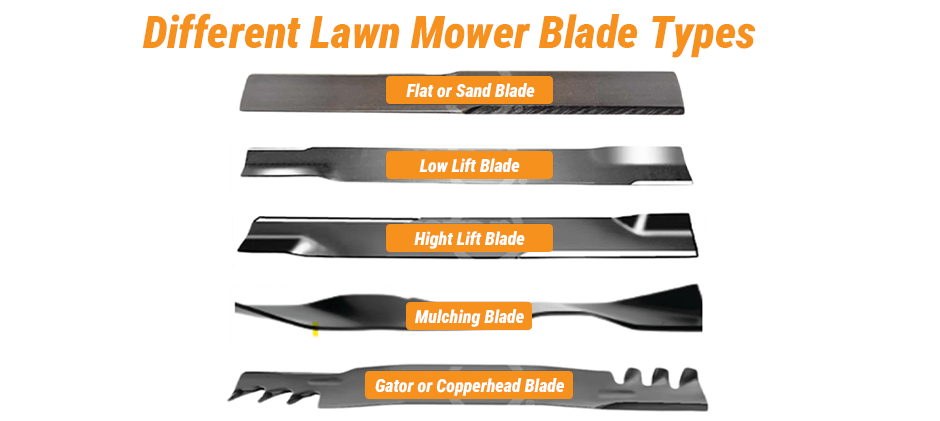
Types of Mower Blades
Before choosing, it helps to think about what a blade really does. It cuts grass, but it also acts like a fan: the blade’s “lift” creates airflow that stands grass up and moves clippings through the deck. That airflow is why two blades with the same length can cut very differently.
1. Standard (Straight) blades
These are general-purpose blades designed for basic cutting and discharge. They usually have moderate lift and a simple edge profile.
Best for
- Routine mowing on maintained turf
- Conditions where you mainly discharge clippings
Trade-offs
- Not the best for heavy mulching
- Can struggle with wet grass (clumping) if the airflow isn’t strong enough
2. High-lift blades
High-lift blades have a taller “sail” (the upward curve on the back of the blade). That sail increases suction and throws clippings farther.
Best for
- Bagging (when you want strong airflow into the chute/bagger)
- Taller, denser grass when the deck can handle the load
Trade-offs
- More airflow often means more engine load and can amplify dust and debris
- In sandy or dusty off-road properties, a strong lift can increase abrasion inside the deck
3. Low-lift blades
Low-lift blades create less suction and typically discharge more gently.
Best for
- Sandy soil areas (reduces dust clouding)
- Drier, shorter grass where aggressive lift isn’t needed
Trade-offs
- Weak lift can leave grass laid over, causing an uneven cut
- Not ideal for bagging
4. Mulching blades
Mulching blades are shaped to recirculate clippings inside the deck so the grass is cut multiple times. Many designs use extra cutting edges, curves, or notches to keep clippings in the cutting chamber longer.
Best for
- Cleaner-looking lawns with less visible clipping
- Returning nutrients (small clippings break down faster)
- Operators who want flexibility: mulch sometimes, discharge other times
Trade-offs (important)
- Recirculation increases resistance: the deck is “processing” clippings longer
- Expect higher load in thick or wet grass; if the mower is underpowered for the deck, mulching can reduce ground speed and increase clumping
5. “Serrated” / toothed mulching blades
These are mulching-oriented blades with more pronounced teeth/serrations.
Best for
- Frequent mulching in normal conditions
- Cutting clippings smaller for faster breakdown
Trade-offs
- Can be noisier
- More sensitive to dulling if you mow rough ground with hidden debris
6. Bagging-focused blades
Some blades are shaped to prioritize airflow into a bagger system. In practice, many “bagging” setups use high-lift blades.
Best for
- Collection-heavy jobs: leaves, cleanup, mowing, properties where clippings must be removed
Trade-offs
- More lift = more power demand
- A full bagger increases load on the machine; keep blades sharp to avoid strain
The Key to Choosing Mower Blades
Here’s the part that saves time and prevents wrong orders: blade choice is not only about “mulch vs bag.” It’s also about fitment, deck airflow, and work conditions (dust, sand, wet grass, rough terrain).
Key factor #1: Exact fitment
Even a “great” blade is wrong if it doesn’t match the deck.
Check these items first:
- Blade length (tip-to-tip)
- Center hole shape (round, star, “D,” etc.)
- Blade width
- Blade thickness
- Offset (the bend/shape that affects height and deck clearance)
If any of these are off, you risk:
- Poor cut quality
- Excess vibration
- Spindle wear
- Unsafe operation
“If the center hole doesn’t match perfectly, stop. Forcing fitment is how decks get damaged.”
Key factor #2: Lift (airflow) vs available power
Lift is performance—but it’s also load.
- More lift helps bagging and improves cut in taller grass
- Less lift reduces dust and can be smoother in dry, sandy areas
- Mulching designs may need more power because clippings stay on the deck longer
If your machine bogs down, it’s not always “engine trouble.” It can simply be the wrong blade type for the deck size and conditions.
Key factor #3: Your mowing conditions
Off-road property mowing isn’t a golf course. Blade choice should match what you actually hit:
- Sandy soil / dry dust: low-lift or moderate lift often behaves better
- Leaf cleanup: high-lift typically performs better
- Thick spring growth: sharp blades + enough lift + slower ground speed
- Wet grass: no blade is magic—wet mowing increases clumping risk. If you must mow, prioritize sharpness, a clean deck, and a moderate pace.
Key factor #4: Blade sharpness and balance
A dull blade tears grass instead of slicing it. That leads to:
- Brown tips (torn grass)
- More clumps
- Higher deck load and vibration
Vibration is not just annoying—it accelerates wear on spindles, bearings, and mounts.
Key factor #5: Belt and deck drive strain
Blade choice and blade condition affect belt load. When blades are dull, bent, or too “aggressive” for the setup, the deck drive can work harder. That can show up as belt slip, heat, or premature wear.
If you’re seeing belt symptoms (cracks, fraying, stretching, slipping), it may be time to inspect the blade setup and also consider a replacement lawn mower belt as part of a full deck refresh.
How to Choose the Right One?
Use this process to pick blades confidently—without guessing.
Step 1: Define the primary goal (pick one)
- Clean mulch finish (clippings not visible)
- Best bagging (strong lift into chute)
- Fast discharge (simple, reliable cutting)
- Dust control (reduce blowout on sandy ground)
This one decision narrows the blade type quickly:
- Mulch finish → mulching blade
- Best bagging → high-lift / bagging-focused
- Fast discharge → standard/medium lift
- Dust control → low-lift / moderate lift
Step 2: Confirm the deck and blade fitment specs
Use your manual or current blade markings (when readable). If you’re sourcing aftermarket parts, match:
- Length
- Center hole pattern
- Width/thickness
- Any special offset required by the deck
If you’re also updating other wear items (spindles, idlers, belts, pulleys), it’s often faster to shop by machine category and part name/number through a single catalog of mower parts.
Step 3: Choose lift level based on grass height + bagging needs
A practical guide:
- Mostly bagging or leaf cleanup → high lift
- Mixed mowing, normal lawns → standard/medium lift
- Sandy, dry, dusty, light turf → low lift
- Dedicated mulching → mulching blade (and use the correct plug/baffle if your deck requires it)
Step 4: Be honest about power and ground speed
If the mower frequently slows down in thick grass:
- Don’t jump straight to the most aggressive mulching blade
- Consider standard/medium lift and a stricter sharpening schedule
- Reduce ground speed in heavy sections
Aggressive airflow + heavy growth can overload smaller machines.
Step 5: Decide: sharpen or replace?
Sharpening can work if the blade:
- isn’t bent
- isn’t cracked
- still has enough material at the cutting edge
- can be balanced after sharpening
Replace the blade if you see:
- cracks, bends, heavy chips
- severe thinning
- Repeated vibration issues even after balancing
When you’re ready to replace, a dedicated blade category makes it easier to match by application: lawn mower blade.
Quick selection table
| Your main job | Best blade style | What you’ll notice | Watch out for |
|---|---|---|---|
| Mulch and “make clippings disappear.” | Mulching / 3‑in‑1 | Smaller clippings, cleaner look | Higher load in thick/wet grass |
| Bagging grass/leaves | High-lift / bagging-focused | Stronger suction into the bagger | More dust + more power demand |
| General mowing + discharge | Standard/medium lift | Stable, predictable cut | Not ideal for heavy mulching |
| Sandy/dusty areas | Low-lift | Less blowout | May leave an uneven cut in tall grass |
FAQs
1) When should mower blades be replaced?
If the mower stops cutting cleanly, leaves uneven patches, or the blades look damaged, it’s time to replace them. A common rule is to inspect blades often (many operators check around every ~20 hours of use) and replace when sharpening no longer restores a clean cut or the blade is damaged.
2) Can one blade do mulching, bagging, and discharge?
Some “all-purpose” mulching blades can do multiple modes, but there are trade-offs. Mulching-focused shapes tend to keep clippings inside the deck longer, which can increase load and reduce performance in wet or overgrown grass. If bagging is the main job, high-lift usually performs better.
3) Why does my mower vibrate after installing new blades?
Most often: wrong fitment, improper torque, debris on mounting surfaces, bent blade, or the blade isn’t balanced. Stop and correct it—vibration can damage spindles and deck hardware.
4) Do blades affect belt life?
Yes. Dull or overly aggressive blades can increase cutting resistance, which can stress the deck drive. If belt wear is showing up along with poor cut quality, inspect both blades and the belt. Replacing a worn lawn mower belt along with blades can restore normal deck behavior faster than swapping only one item.
5) Is it safe to use “universal” blades?
Only if the fitment matches exactly (length, center hole pattern, offset, thickness). If anything is off, don’t run it—incorrect blades can be unsafe and can damage the deck.
Conclusion
Choosing the right mower blades comes down to two things: exact fitment and matching blade airflow to your real mowing conditions. Mulching blades can deliver a clean finish, high-lift blades boost bagging, and low-lift options help in dusty soil—each with clear trade-offs. Keep blades sharp, inspect for damage, and watch belt strain signs. As an aftermarket parts supplier, FridayParts supports quick repairs with high-quality products at affordable prices, a vast inventory, and wide compatibility across many heavy equipment brands.
