

The brake pad replacement cost is a major concern for every heavy equipment owner. Due to the large differences in equipment type, brake system structure and working conditions, the price range will also change accordingly. Replacing brake pads typically costs around $300 to $2,500. Knowing the key factors that influence costs helps you to choose the best option within your budget.
How Often Should You Replace Your Brake Pads?
Construction equipment brake pads don’t have a simple lifespan measured in miles or years. Instead, it’s all about operating hours and conditions. How often you need brake service depends entirely on how and where your machine works.
- Operating Environment: A farm tractor on flat, soft soil wears brakes way less than a wheel loader in a quarry. Environments with steep hills, abrasive dust, mud, or water make the brake system work much harder. That means you’ll need to replace the pads more often.
- Application & Habits: How you use the machine matters a lot. An operator who’s always stopping and going aggressively (like during loading) will wear out brake pads much faster. But if you use smooth, gradual movements—letting the transmission or hydraulics help slow the machine—pads last longer.
- Brake System & Materials: Heavy equipment uses two main types of brake systems: wet multi-disc brakes and dry caliper disc brakes. Wet brakes are sealed and cooled by oil. They’re super durable and can last thousands of hours. Dry brakes are more exposed to the elements. They may need service more often, but replacing them is usually simpler. The friction material, too—from sintered metallic compounds to advanced carbon materials—affects how long the pads last and how well they perform.
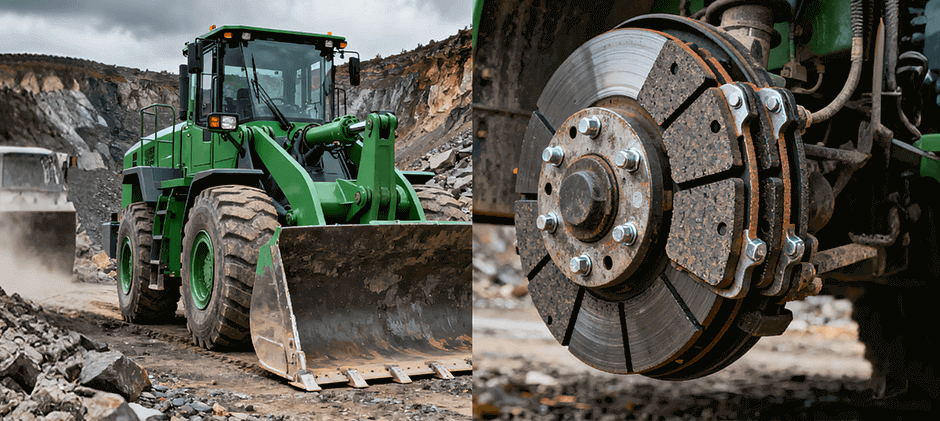
Factors That Affect Brake Replacement Cost
When you get a quote for brake work on your excavator, dozer, or tractor, the final price adds up from several key parts. Knowing what these are helps you see why prices can be so different.
Type of Equipment
Brake pad prices vary a lot by equipment type. Brake components for tractors, excavators, loaders, and trucks are very different in size, complexity, and cost. Bigger, more powerful machines need stronger, more expensive brake pads.
Brake System Type
As we mentioned, wet disc brake systems are totally different from dry ones. Replacing friction discs in a wet brake system usually means draining axle oil, removing axle shafts, and taking apart the axle housing. This takes a lot of labor. Dry brake replacement is typically simpler—just take off the wheel and caliper.
Scope of the Repair
Is it just the brake pads (or friction discs)? Or are other parts worn or damaged? If brake rotors (or steel plates in a wet system) are warped, scored, or worn too much, they have to be replaced. This can double the part cost.
Labor Costs
Heavy equipment mechanics are specialized pros. Their hourly rates show that—usually $100 to over $200 per hour. A complex brake job on a large machine can take a full day or more. So labor makes up a big part of the total brake pad replacement cost.
Part Quality (OEM vs. Aftermarket)
Original Equipment Manufacturer (OEM) parts come from the machine’s brand. They fit perfectly, but they’re often more expensive. High-quality aftermarket brake pads are made to meet or beat OEM specs. They can save you a lot of money without losing performance or safety.
Associated Damage
Sometimes, a brake job uncovers other problems. A common and costly issue in wet brake systems is a failed axle seal. When an axle seal fails, differential oil gets into the brake housing. This oil soaks the friction discs and ruins them completely. What started as a simple brake fix now means replacing all seals, discs, and plates—plus flushing the whole system. That’s why repair costs can jump quickly. This “extra damage” is why a low initial quote might go up once the mechanic starts working.
Brake Pad Replacement Cost
With these factors in mind, let’s break down the numbers. We will provide estimated ranges, but always get a specific quote for your machine.
Brake Pad Part Cost
The cost of the parts alone varies widely based on the machine. Here are some general estimates for a set of brake pads or friction discs for one axle:
- Compact Utility Tractor: $200 – $500
- Large Agricultural Tractor: $600 – $1,500
- Skid Steer Loader: $300 – $700
- Mid-Size Wheel Loader or Excavator: $800 – $2,500+
Remember, if rotors or steel separator plates are also needed, these costs can easily double.
Professional Repair Costs
This is where parts and labor combine. A professional repair ensures the job is done correctly with the right tools and safety procedures.
| Equipment Type | Estimated Part Cost (per axle) | Estimated Labor Hours | Estimated Total Cost (per axle) |
|---|---|---|---|
| Compact Tractor (Dry Brakes) | $200 – $500 | 2-4 hours | $400 – $1,300 |
| Large Tractor (Wet Brakes) | $600 – $1,500 | 6-10 hours | $1,200 – $3,500 |
| Wheel Loader (Wet Brakes) | $800 – $2,500 | 8-16 hours | $1,600 – $5,700+ |
| Excavator (Final Drive Brakes) | $700 – $2,000 | 5-9 hours | $1,200 – $3,800 |
These are estimates. Complex jobs with contaminated systems or seized components will be higher.
DIY Brake Repair Costs
DIY saves you labor costs. Labor usually makes up 50% or more of the total bill. You only pay for parts, fluids, and any special tools you might need to buy.
But DIY isn’t for everyone. Heavy equipment parts are big and heavy. You often need lifting gear, heavy-duty jacks, and torque multipliers. The brake system is a critical part—if it’s not installed right, safety is at risk. Before you start, it’s best to learn the common signs of worn brake pads and the specific steps. If you don’t have enough tools or experience, letting professional mechanics do the job is safer.
Brake System Maintenance
The best way to keep brake pad replacement costs down is to make your current brake system last longer, with regular maintenance.
- Regular Fluid Checks: If your machine has hydraulic or wet brake systems, check the brake fluid or axle oil levels and condition often. Contaminated or low fluid makes brakes work poorly and wear out faster.
- Listen to Your Machine: Pay attention to listen for any strange sounds. If there is a grinding, squealing, or “clicking” sound when braking, it is basically that the brake pads are almost worn and may even start to damage the rotors.
- Visual Inspections: For dry brake systems, you can usually check the pad thickness with your eyes. For all machines, regularly look for leaks around the axle housings and wheels. A dark, wet spot means the seal might be failing—watch out for that.
- Follow Service Intervals: Your machine’s operator manual tells you when to service the brake system. Stick to these guidelines for inspections and fluid changes. It’ll help prevent big breakdowns.
Tips for Saving on Brake Replacement Costs
Even with good maintenance, you’ll eventually need to replace your brakes. Here are a few tips to manage the cost—without skimping on safety.
- Shop Around for Labor: If you don’t have an in-house mechanic, get quotes from three places: The dealership, an independent heavy equipment shop, and a mobile mechanic service. Labor rates and availability can be very different.
- Choose High-Quality Aftermarket Parts: This is one of the best ways to save money. You don’t have to pay extra for OEM parts to get reliable performance. Reputable aftermarket suppliers make parts to strict quality standards. They’re durable and affordable.
- Perform Your Own Inspections: Do the regular maintenance checks we talked about earlier. This way, you can catch wear early. Replace pads before they’re metal-on-metal. It saves you from paying extra to replace rotors or discs.
- Bundle Your Maintenance: If your machine is already getting serviced for something else—like a hydraulic hose replacement or engine maintenance—ask the shop to check the brakes too. Bundling work can sometimes lower total labor costs and reduce downtime.
Final Thoughts
Know the things that affect cost, do preventative maintenance, and choose parts suppliers wisely. This way, your equipment stays safe and reliable, without going over budget. FridayParts has a huge inventory. You can find compatible brake system parts for many heavy equipment brands. We guarantee your equipment runs smoothly.
