

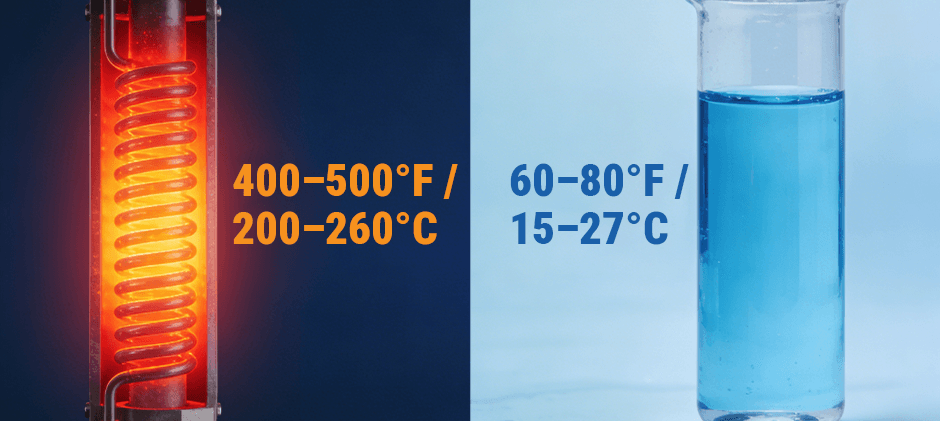
In most cases, a block heater helps raise engine and fluid temperatures about 30–50°F (15–28°C) above the outside air. And the highest temperature can even get 400–500°F (200–260°C) at the surface. Will this high temperature make my coolant boil? Many people worry about this. Don’t be! It only warms your engine gently. This guide explains everything you need to know about its temperature and how to fix it when you find something wrong.
What Temperature Does a Block Heater Actually Reach?
The most useful temperature is not the element temperature. It’s the coolant temperature after heating.
A block heater is made to warm coolant (and help warm oil), not to bring coolant near boiling. In freezing weather, a working block heater often warms the coolant to about 60–80°F (15–27°C).
That range is warm enough to help the engine start smoothly and reduce wear.
Clear Statement: A block heater element can go over 400°F, but its main job is to warm the engine coolant to about 60–80°F (15–27°C) in cold weather so the engine starts easier and with less wear.
Why Is a Block Heater’s Temperature Important?
The goal is good heat transfer, not extreme heat. Warming the engine core helps your off-road machine in three main ways:
- Easier cranking: A warmer engine turns over with less effort, so your starter and battery work less.
- Better oil flow: Cold oil is thick. Warming the engine helps oil move faster right after startup, so parts get lubrication sooner.
- Less cold-start wear: Cold diesel engines have tight parts that don’t like starting “dry and stiff.” A warmer block reduces stress and wear.
How Does a Block Heater Work?
How Does a Block Heater Work? A block heater turns electricity into heat inside the engine.
Many common block heaters are immersion-style heaters. They are installed in the engine block (often in place of a freeze plug) so the element sits in the coolant. When you plug it in:
- The element heats the coolant near it
- Warm coolant rises and cooler coolant moves in (this is called convection)
- Over time, heat spreads through the block and helps warm the internal parts and oil
For safe use, the whole system needs to be in good shape: outlet, cord, plug, and heater. During maintenance, it’s smart to check for worn cords, loose connections, and leaks near the heater.
3 Signs Your Block Heater Is Failing
If your heater is not doing its job, you can often spot it with these common signs. If you see any of them, inspect the heater and cord before using it again.
1. The Engine is Still Stone Cold
After the heater has been plugged in for a few hours, the engine should feel at least a little warm near the heater area. If the block feels just as cold as the air, the heater may not be working, not getting power, or not making good contact.
2. The Circuit Breaker Trips
If plugging in the heater trips a GFCI outlet or circuit breaker right away, that can mean an electrical short. The problem might be:
- a damaged power cord (common if it gets pinched or rubbed)
- a failed heating element inside the block
Do not keep using it if it trips breakers. That is a safety risk.
3. You See a Coolant Leak
If you see coolant dripping or a wet stain below the heater area, the seal may be failing. Over time, O-rings or gaskets can harden and leak. This needs attention quickly so you don’t lose coolant or risk engine overheating later.
When Should You Use a Block Heater?
A good rule: use it when temperatures are near or below freezing (32°F / 0°C).
For many machines, plugging it in 2–4 hours before starting is enough. Leaving it plugged in all night is usually not needed and can waste electricity—unless you are working in very extreme cold.
Final Words
In fact, what is important is not the peak temperature but whether your engine can work smoothly. If your engine still feels cold after a few hours plugged in, check the basics first: power at the outlet, the cord/plug condition, and any coolant leaks around the heater.
If there is something went wrong, and you need a replacement heater or cord for seasonal maintenance, you can browse compatible options on FridayParts here.
