

Choosing the right mower blade makes a big difference in how your machine cuts. The two most common types are high-lift and mulching blades, but they work in very different ways.
This guide explains how each blade works, shows where a hybrid style fits in, and helps you fix common issues like grass clumping—so you can always get a clean, even cut.
What Is a High-Lift Blade?
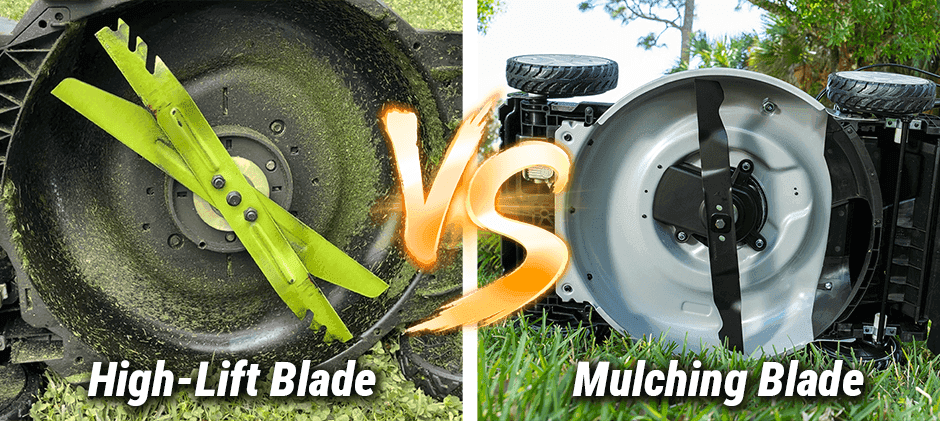
A high-lift blade creates strong suction (airflow) under the mower deck.
It has tall, angled fins that pull the grass straight up before cutting it cleanly.
The same airflow then blows the clippings out through the discharge chute or into your bagging system.
Because of this, high-lift blades are the best choice for bagging or clearing leaves quickly.
When Should You Use a High-Lift Blade?
Use a high-lift blade if your main goal is to collect clippings or avoid clogging in the chute when side-discharging.
Its powerful airflow keeps grass and leaves moving so they don’t block the deck.
However, more airflow also means it needs more engine power to spin and may wear faster in dusty, sandy areas.
“High-lift blades pull the grass up and chop it clean. You get a neat cut but need enough power to keep them turning strong.” – Mower owner
3 Considerations for High-Lift Blades
- They Need More Power – The strong suction puts extra load on the engine, especially in tall or wet grass. This makes routine maintenance, such as being aware of clogged air filter symptoms, even more critical for maintaining performance.
- They Can Cause Clumping – If the grass is thick or damp, too many clippings can pile up and leave large clumps.
- They Don’t Like Sand or Dust – The airflow lifts grit into the deck, dulling blades faster and scuffing paint.
What Is a Mulching Blade?
A mulching blade (also called a “3‑in‑1” blade) breaks clippings into tiny pieces and returns them to the soil.
It has a curved shape and several small cutting edges that keep the clippings swirling under the deck.
Each piece is chopped many times until it’s fine enough to drop back into the grass as natural fertilizer.
When Is a Mulching Blade the Best Choice?
Pick a mulching blade if you want a healthy, green lawn and don’t want to stop for bagging.
It works best when you mow often and only trim the top third of each grass blade.
Dry grass gives the cleanest results.
For perfect mulching, close the discharge chute with a mulch plug so the clippings stay under the deck long enough to be recut.
3 Reasons to Use a Mulching Blade
- Feeds the Grass Naturally – The small clippings break down fast, adding valuable nutrients to your soil.
- Saves Time – No need to stop and empty bags. As one user said, “Mulching just means I stop only for fuel.”
- Cuts Down on Waste – You’re reusing what you cut, keeping organic material out of landfills.
The Hybrid Solution: What Are Gator Blades?
Gator blades (the serrated brand made by Oregon) and other toothed or notched blades try to mix both worlds: strong airflow like a high‑lift blade and small, recut clippings like a mulcher.
They have a tall lift shape plus “teeth” along the trailing edge.
These teeth shred clippings into smaller pieces before they leave the deck.
Why Choose a Gator or Toothed Blade?
Use a Gator‑style blade if you discharge to the side but want to reduce clumping.
It throws grass evenly while also cutting it smaller for a cleaner finish.
Many large‑property owners like this style because it keeps mowing fast without bagging.
“It’s not just a replacement blade. It’s an upgrade.” – Product description
How to Choose High-Lift vs. Mulching Blades
| Feature | High‑Lift Blade | Mulching Blade | Gator / Toothed Blade (Hybrid) |
|---|---|---|---|
| Primary Goal | Maximum suction & bagging | Recycling & fertilizing | Cleaner discharge with less clumping |
| Best For | Bagging, leaf pickup | Frequent mowing, lawn care | Side discharge, thick grass |
| Ideal Conditions | Tall or wet grass | Dry, regularly cut lawns | Most general mowing situations |
| Engine Demand | High | Low | Medium |
| Clipping Size | Large | Very fine | Fine to medium |
3 Factors That Also Affect Your Cut Quality
“Deck design matters too.” – Forum user
- Deck Design: A deep mower deck moves air and grass better, cutting evenly and handling larger volumes.
- Engine Power: A stronger engine keeps blade speed high for a cleaner cut and better discharge.
- Mowing Frequency: Don’t let the grass get too tall. Cutting too much at once causes clumping, no matter what blade you use.
High-Lift vs. Mulching Blades: Which One Is Right for You
Finding the correct blade for your machine can be easy if you follow a few steps:
- Check Your Manual – Look for the blade part number listed under mower specifications.
- Measure the Blade – If you don’t know the number, remove the blade. Measure its length and note the center hole shape (star, round, etc.).
- Search by Part Number – Use the number to find matches from trusted brands or aftermarket parts suppliers.
- Search by Specs – If the part number isn’t available, use your mower’s deck size and the blade’s dimensions to find compatible options.
Final Words on High-Lift vs. Mulching Blades
Whether you need the strong suction of a high‑lift blade, the eco‑friendly action of a mulching blade, or the balance of a hybrid toothed blade, the right choice helps your mower cut faster, cleaner, and easier. Keeping sharp, well‑fitted blades lowers engine strain and leaves your turf healthy.
FridayParts offers a full range of durable blades and spindles for off‑road and commercial machines. Browse our collection of mower blades and cutting components to find your next upgrade and keep your machine cutting sharp, season after season.
