

Glow plug control modules are important for starting diesel equipment. But a lot of people don’t really know much about them. Do you know what they actually do? What signs show up when one goes bad? And how do you check if it’s faulty? We’re gonna break this down simply and easily—keep reading to get all the answers.
What Is a Glow Plug Control Module?
A glow plug is a tiny heating part that fits in each cylinder. Its main job is warming up the air for cold starts, so your diesel engine can ignite fuel easily. Now, here’s the question: When do these glow plugs actually turn on? How long to heat? How much power? These are not determined by the glow plugs themselves, but are controlled by the glow plug control module.
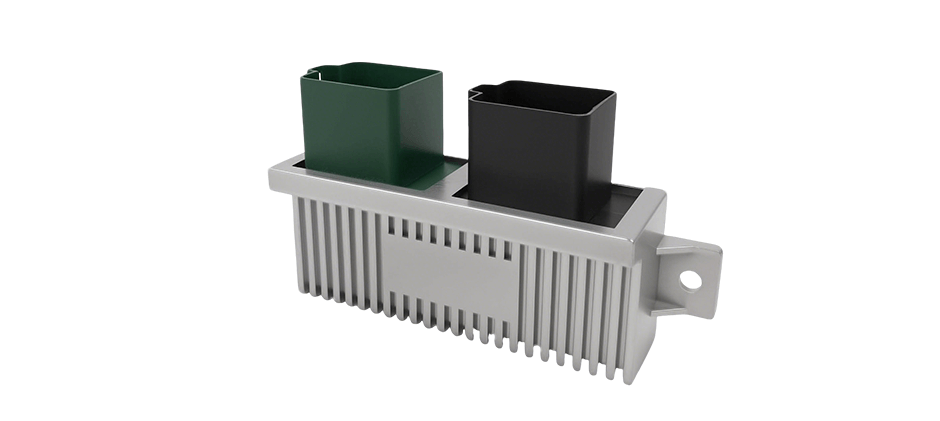
This module can be understood as the “control center” of the glow plug system. It is usually installed near the engine and is connected to the engine control unit (ECU). The module will judge based on the information provided by the ECU, such as coolant temperature, intake air temperature and engine speed, and then decide how the glow plug should work. Generally speaking, it is mainly responsible for these few things:
- Pre-heating stage: Before you start the engine, the module lets the glow plugs run for a bit. It warms the combustion chambers to the right temperature. That’s when the glow plug light on your dashboard turns on.
- Startup phase: When the engine is cranking, the module keeps the glow plugs heating. This helps the engine start faster and more smoothly.
- Post-heating stage: After the engine fires up, the module usually keeps the glow plugs going at low power for a short while. This makes combustion more stable when the engine is still cold. It also keeps the idle smooth, cuts down white smoke, and helps meet emission rules.
One thing to note: A glow plug control module isn’t the same as a basic glow plug relay. A relay is just a simple on-off switch for power. But the module is smart—it controls the timing and current precisely. This way, you get great starts, and the glow plugs won’t burn out too early from overload.
Symptoms of a Bad Glow Plug Control Module
The glow plug control module runs the whole heating system. If it goes bad, your machine will act up right away. A single faulty glow plug might just make the engine stutter a little when starting. But a broken module? It could stop the engine from starting at all. If you think something’s wrong with your glow plug system, watch for these common signs on your heavy equipment:
Hard to Start, or Won’t Start at All
If the module doesn’t get the glow plugs working right, diesel fuel is hard to ignite in cold weather. You’ll crank the engine forever, or it won’t start, no matter what. Weak batteries or fuel issues can cause this, too—but if the problem gets worse when it’s cold, the glow plug control module is the top suspect.
Lots of White Smoke from the Exhaust
When glow plugs don’t warm the cylinders enough, the injected diesel won’t burn fully on startup. This creates thick white smoke that smells strong like raw diesel. The smoke usually fades or goes away once the engine warms up.
Rough Idle and Weak Power after Starting
Some machines might still start, but a bad module kills the post-heating function. That means the cold engine can’t burn fuel evenly. The result? The engine idles up and down erratically, has no power, and feels sluggish—until it’s fully warmed up. For equipment that needs to get to work right away, this is a real efficiency killer.
Check Engine Light on, or Weird Glow Plug Indicator Behavior
Modern heavy equipment has built-in diagnostics. The ECU constantly monitors the glow plug control module and its wiring. If it detects a short circuit, broken wire, or unresponsive module, the Check Engine Light might turn on. Or the glow plug indicator on the dash could flash, or stay lit longer than usual. That’s the system’s way of telling you to get it checked out.
Glow Plugs Keep Failing Over and Over
If you’re replacing the same glow plug again and again, or multiple plugs burn out at once, the problem’s probably not the plugs—it’s the control module. A faulty module might send too much voltage to the plugs or keep them on for too long. That overheats and burns them out fast. Just swapping the glow plugs won’t fix the root cause—you need to replace the module instead.
How to Test Your Glow Plug Control Module?
If your glow plug system acts up, test it step by step. Here’s how to check it properly. Always work on a cool engine. Disconnect the battery’s negative terminal before touching any electrical parts.
Check the Glow Plugs First
Make sure the glow plugs are good first. Two simple, reliable ways to test them:
- Multimeter Test (Preferred): Set your multimeter to resistance (Ω). Unplug the wire from the glow plug. Touch one probe to the plug’s terminal, the other to a clean metal spot. A good plug has really low resistance—usually under 1 ohm. If the meter reads OL or a super high number, the plug is bad and needs replacing. Test every single one.
- Test Light Method (No Multimeter Needed): Grab a 12V test light. Clip it to the battery’s positive terminal. Unplug the wire from the glow plug, then touch the test light’s probe to the plug’s terminal. Light turns on? Plug’s probably good. No light? Plug’s bad.
Check the Glow Plug Control Module
If all the plugs check out, focus on the module and its wiring.
- Visual check: Locate the module on the engine. Look closely for obvious damage—like burnt/melted connectors, frayed wires, or heavy corrosion. Sometimes, just cleaning a corroded connector fixes the problem.
- Check if power is reaching the module: Set your multimeter to DC voltage. Find the thick wire that sends battery power to the module. Turn the ignition key on. Touch one probe to that thick wire, the other to a good ground. You should see a reading close to your battery’s voltage (12V+).No power here? The problem’s upstream—probably a blown fuse, broken fusible link, or bad wiring from the battery.
- Test the module’s output voltage: Reconnect everything. Have someone turn the ignition key to “ON” (don’t start the engine) to trigger the pre-heat cycle. As soon as they do, use your multimeter to check the voltage on the wires running from the module to the glow plugs. You should see voltage for the entire pre-heat cycle (usually 5–15 seconds). If power goes into the module but nothing comes out to the plugs, the module is bad—replace it.
- Use a diagnostic scan tool (for newer machines): This is the fastest way. A pro scan tool talks to the ECU and pulls up specific fault codes (like “P0380 – Glow Plug Circuit Malfunction”). These codes tell you right away if the problem is the module, a plug, or the wiring—saves you tons of time.
Final Thoughts
The glow plug control module is just a small part in your diesel engine, but it’s super critical for cold starts. If it’s working right, your machine starts fast and runs smoothly. But if it goes bad? Even a basic start becomes a hassle. Need to fix or replace parts for your glow plug system? FridayParts has you covered. Our site stocks high-quality glow plugs, glow plug relays, and other parts. They’re direct replacements for all kinds of brands and models—yours included!
