

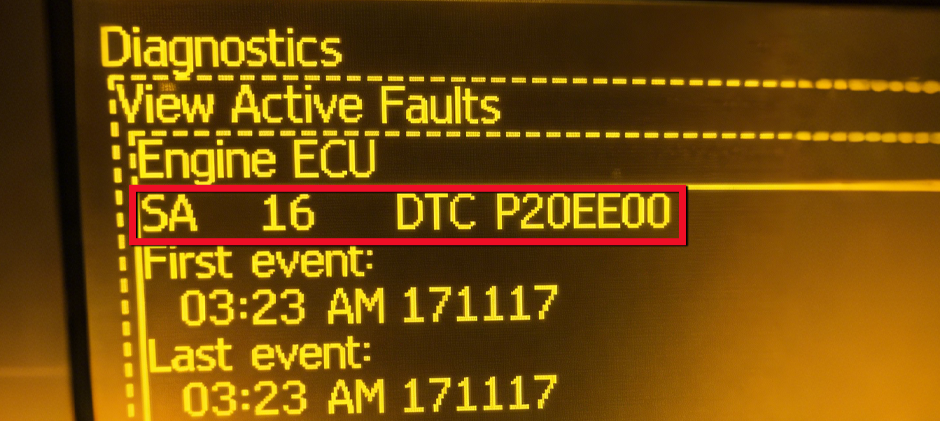
When your machine pops up error code SA 16 DTC P20EE00, it means the engine system of your off-road equipment is detecting a problem with the emissions system.
Simply, the SCR (Selective Catalytic Reduction) system can’t properly handle the NOx in the exhaust. Don’t ignore this issue—if you put off fixing it, the engine will lose power, your machine will shut down, and you’ll end up losing money.
What Does SA 16 DTC P20EE00 Actually Mean?
- SA (Source Address): It shows which control module on the machine is sending the fault alert. Number 16 usually stands for the engine control module. So SA 16 means the engine’s main computer has picked up an issue.
- DTC (Diagnostic Trouble Code): It’s just the standard label for a machine fault code.
- P (Powertrain): The letter P means the problem is with the powertrain system — engine, transmission, and exhaust aftertreatment parts all included.
- 20EE00 (Specific Fault Code): This is the key part. P20EE specifically means the SCR NOx catalyst is not working efficiently enough. The trailing 00 is a failure code, just telling you its performance has dropped below the normal standard.
SA 16 DTC P20EE00 means the engine control module has found the SCR system can’t cut down enough NOx from exhaust gas. It’s a clear warning that your equipment’s emission control system is underperforming.
What Is the SCR System?
The Selective Catalytic Reduction (SCR) system is a key part of modern diesel engines, especially for off-road machines that need to meet Tier 4 Final emission rules. Its only job is to clean up engine exhaust.
Diesel engines naturally make harmful NOx pollutants while running. The SCR system is designed to neutralize these NOx gases. How it works in simple terms:
- DEF fluid is a mixture of urea and deionized water. It sprays as a fine mist into the hot exhaust flow.
- The high heat turns DEF into ammonia. The exhaust mixed with ammonia then passes through a special ceramic component called the SCR catalyst.
- Inside the catalyst, a chemical reaction takes place. It converts harmful NOx into harmless nitrogen and water vapor, which then exit through the exhaust pipe.
- Two NOx sensors are mounted before and after the SCR catalyst to watch the whole process. The engine computer compares readings from the two sensors to check how well the SCR system is working.
If the system can’t cut NOx emissions enough, it will trigger the P20EE00 fault code. This warning can lead to reduced engine power and unexpected downtime.
What are the Common Causes of the P20EE00 Fault Code?
The P20EE00 code tells you what is wrong (the SCR system isn’t converting NOx efficiently), but it doesn’t tell you why. The low efficiency is just a symptom, not the real cause. From experience with heavy equipment, the issue is usually found in a few common areas.
Diesel Exhaust Fluid (DEF) Related Problems
- Bad or contaminated DEF: Using low-grade DEF, letting dirt, debris or fuel get into the fluid, is one of the most common causes of SCR issues. Contaminants make the urea in DEF crystallize, which clogs the injector, pump and fuel lines. It’s easy for dirt to get into the DEF tank when refilling if you don’t pay attention.
- Aged and degraded DEF: DEF goes bad when left in direct sunlight. Once DEF degrades, it loses its effectiveness and can no longer cut down NOx properly.
Faulty NOx Sensors
The whole system depends entirely on these sensors to feed back real-time data.
- Sensor failure: NOx sensors can wear out and fail electronically over time.
- Sensor contamination: Soot and ash can build up and coat the sensor probe. This makes the sensor read slowly or give wrong data. The engine control module may flag the SCR catalyst as faulty when the real issue is just a dirty downstream sensor sending incorrect readings.
Problems with the DEF Dosing System
The SCR system won’t work right if DEF isn’t sprayed in the correct amount and at the right time.
- Clogged DEF Injector: This is a very common problem. Urea crystals and dirt can plug the nozzle, stopping DEF from spraying into the exhaust.
- Weak or Failed DEF Pump: The DEF pump builds pressure to move the fluid. Over time, it can wear out or break down, resulting in too little DEF flow.
- Damaged DEF Lines: DEF lines can crack, get bent tight, or clog up. This cuts off or restricts fluid flow from the DEF tank all the way to the injector.
A Compromised SCR Catalyst
The SCR catalyst itself can also be the root cause of the fault.
- Catalyst clogging or surface buildup: If the engine produces too much soot, that soot can build up on the SCR catalyst. The exhaust gases can’t properly mix with ammonia and react inside the system. As a result, the SCR system can’t work effectively anymore.
- Physical damage: Off-road machines constantly face strong vibration. Over time, this can crack or even break the ceramic core inside the catalyst.
- Catalyst contamination (poisoning): High-sulfur fuel or engine oil burning leaves harmful chemicals behind. These chemicals ruin the precious metals inside the catalyst permanently. This is what’s called catalyst poisoning.
Exhaust System Leaks
The SCR unit is a sealed, precision-built part of the exhaust system. Even tiny leaks before or between the exhaust aftertreatment parts can let extra air in. This changes exhaust temperature and messes up NOx sensor readings. The end result is a false P20EE00 fault code popping up for no real SCR fault.
How Can You Prevent This Fault Code from Recurring?
- Use only top-grade DEF: Buy it only from trusted sellers that follow the ISO 22241 standard. Keep DEF in sealed containers and out of direct sunlight. Always use clean funnels and nozzles when refilling the DEF tank.
- Keep up with routine maintenance: Follow the manufacturer’s service schedule to replace all filters on time — DEF filter, fuel filter, and air filter included. A well-maintained engine is the best way to protect your exhaust aftertreatment system.
- Fix engine faults right away: If any error codes pop up, especially for fuel injectors, turbo or EGR parts, get them solved immediately. Problems in these parts often cause SCR issues and trigger the P20EE00 code.
- Let DPF regeneration run all the way through whenever you can: Stopping the process over and over sends extra soot down to the SCR catalyst and causes serious problems.
Summary
SA 16 DTC P20EE00 means your SCR system is running too inefficiently. This issue won’t fix itself. If you ignore it, your engine will lose power, burn more fuel, and you could end up with serious, costly damage to the exhaust aftertreatment system.
Figure out the root cause, then get reliable aftermarket parts from FridayParts. We carry everything from NOx sensors to EGR Valves, fitting all major heavy equipment brands.
