

If you’ve got a Cummins engine — such as the ISB, ISL, or ISX15 — you might see SPN 411 FMI 2, also called Cummins code 1866. It’s a really common problem. This code usually means your EGR Differential pressure sensor is giving unstable, spotty, or wrong readings. When that happens, your engine will cut power to keep from getting damaged. Let’s go over what causes this and how to fix it.
What Is the EGR System and Why Did It Break?
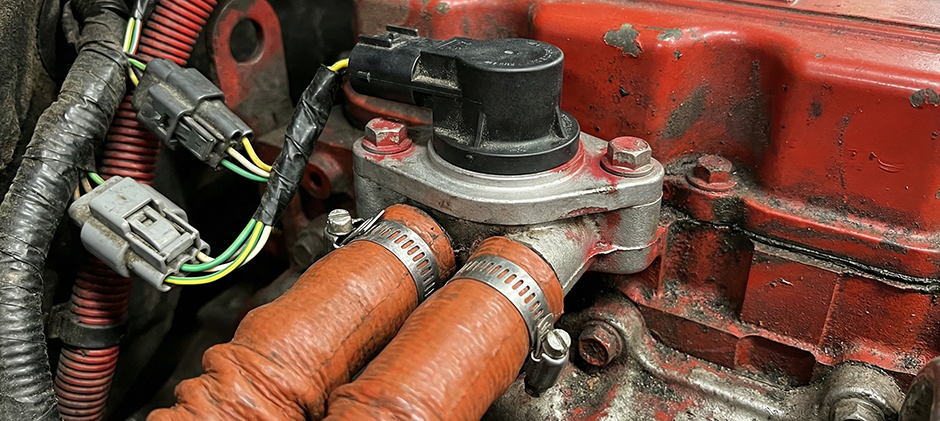
Think of your engine’s EGR system like a way to cut pollution—it just sends a little exhaust back into the engine to burn again. The engine’s “brain,” or ECM, needs to know how much exhaust is coming back. A sensor called the EGR Differential Pressure Sensor, or “Delta P,” keeps an eye on that.
If you see the fault code FMI 2, it basically means the sensor is giving bad or unreliable signals. In other words, the ECM can’t trust what it’s reading. When the ECM sees something weird, it turns off the EGR system to be safe. The downside? Your engine loses some power.
The 4 Main Reasons for Code SPN 411 FMI 2
Before you go swapping out expensive parts, it’s usually one of these four things:
- Soot Buildup (Most Common) – Exhaust soot is sticky and can bake into hard carbon. This can clog the tiny tubes the sensor uses to measure pressure, so the sensor can’t get a proper reading.
- Moisture and Ice – In cold weather, condensation can freeze inside the sensor or its tubes. When you start the engine, the ice blocks the sensor, causing it to fail.
- Wiring Problems – Wires can break over time, and connectors can corrode. A loose or damaged wire can mess up the sensor signal to the engine’s brain.
- Outdated Software – Sometimes the parts are fine, but the engine software is too picky. A quick software update from Cummins can help the system handle things like cold weather and stop false alarms.
On machines with 10,000+ hours, it’s often the wiring harness wearing out—not the sensor itself.
Step-by-Step Guide to Diagnosis
Don’t just clear the code and hope it goes away. Follow these steps to fix the root cause.
The Deep Clean (This is the most important step!)
- Remove the Sensor: Take the Delta P sensor off the EGR pipe. Look at the two small ports where it was connected. They are probably clogged with black carbon.
- Unclog the Ports: This is critical. Use a 1/8-inch drill bit (turn it by hand, not with a drill!) or a stiff piece of wire (a guitar string or a piece of garage door cable works great) to clean out the passages. You must be able to feel the tool go all the way through the tube to ensure the blockage is completely gone.
- Clean the Air Path: If you can, remove the larger EGR pipes and intake parts. If they are caked with soot, they need cleaning too. For a heavily fouled EGR valve, the only way to truly clean it is in a professional ultrasonic cleaning tank.
Check the Electrical System
While everything is apart, do these quick checks:
- Check Power Supply: Use a multimeter to confirm the sensor is getting power from the ECM. You should see a steady reading of around 4.97 volts at the connector.
- Check the Ground: Make sure the sensor’s ground wire has a solid, clean connection back to the engine block.
- Do the “Wiggle Test”: If you have a diagnostic tool that shows live sensor data, start the engine and wiggle the wiring harness connected to the sensor. If the numbers on your screen jump around, you’ve found a loose connection or a broken wire.
Tips for a Clean SPN 411 FMI 2 Code
This fault code can be tricky because it doesn’t always clear right away.
The Secret to Clearing the Code
To clear this code for good, the engine needs to be fully warmed up (coolant temperature above 154°F / 67°C). Then, you must turn the key off and wait for 2-3 minutes. This allows the engine’s brain to fully power down and run its self-test on the sensor. If the fix was successful, the code will clear itself.
Forcing a Reset
If you have access to a diagnostic tool like Cummins INSITE, you can run a special function called the “EGR Auto Zero Test.” This forces the ECM to immediately re-calibrate the sensor, which can clear a stubborn “ghost code.”
Fixing an Old Harness
For a high-hour machine, replacing the entire engine wiring harness is extremely expensive. A more practical solution is a “harness overlay,” where a technician runs a new, dedicated wire for the sensor directly from the ECM, bypassing the old, damaged wire.
Conclusion
Keep in mind that fault codes usually only clear after the engine reaches operating temperature and you do a proper shut down with power off.
By taking good care of your EGR system first and using high-quality aftermarket seals and sensors from FridayParts, you can keep your equipment running smoothly.
