

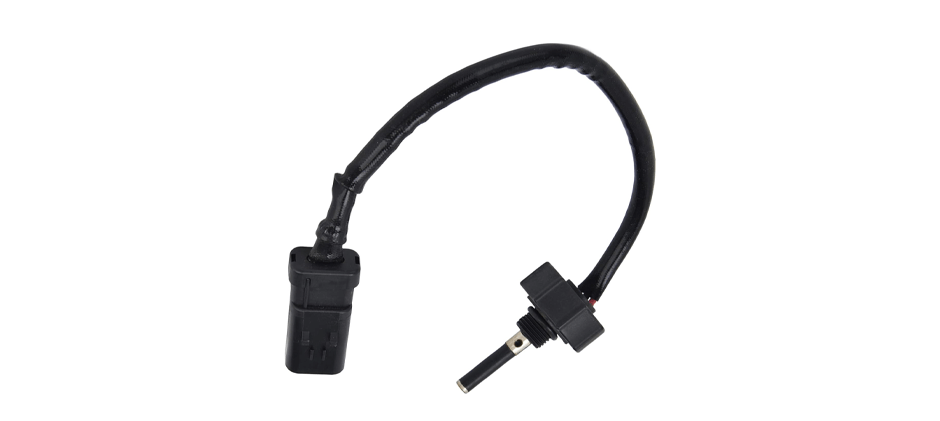
The fuel level sensor measures how much fuel’s left in the tank, and sends that info to your dashboard and the engine’s computer. If the ECM or PCM picks up a faulty signal from the sensor, the vehicle’s diagnostic system will log the P0461 code.
What Does the DTC P0461 Mean?
Trouble code P0461 means there’s a problem with the Fuel Level Sensor ‘A’ Circuit Range/Performance.
Basically, your machine’s ECM is getting a weird or jumpy signal from the fuel sending unit in the tank. This unit uses a float and arm setup to turn the actual fuel level into a voltage signal. The ECM uses this signal to run the fuel gauge and track how much fuel you’re using.
The ECM is programmed to expect steady, predictable voltage changes as fuel gets used up. If the signal goes haywire—like jumping suddenly from full to empty, or not changing at all even after hours of operation—the ECM flags it as a performance fault. That’s what triggers the P0461 code and turns on the check engine light. On heavy equipment, these on-and-off signal glitches are usually caused by constant vibration and the rough conditions of worksites.
What are the Possible Causes of the P0461 Code?
Even though the code points to the fuel level sensor circuit, the real problem could be one of several parts. Off-road machines take a beating from constant vibration, dust, and moisture—so wiring and connection issues are super common.
Faulty Fuel Sending Unit
The variable resistor inside can wear out over time, creating dead spots where no signal gets sent. The float itself can soak up fuel and sink. Or the arm mechanism can get stuck or break from all the fuel sloshing around in the big tank.
Wiring and Connector Problems
The wiring harness running from the fuel tank to the ECM can get damaged. Keep an eye out for these issues:
- Corrosion: Moisture and dirt can get into connectors, rust the pins, and cause weak or spotty signals. This is a super common failure point on machines that get pressure-washed a lot or work in wet conditions.
- Loose connections: Nonstop heavy vibration can shake connectors loose over time, making the signal cut in and out randomly.
- Chafed or broken wires: Wires can rub against the machine’s frame or other parts, wearing through the insulation and causing a short or open circuit. Debris kicked up during work can also cut wires clean through.
- Poor ground connection: The fuel tank and sending unit need a solid ground to the machine’s chassis. If this ground strap is corroded, loose, or broken, it can cause all sorts of weird, wrong readings—and trigger the P0461 code.
Instrument Cluster or Gauge Failure
This is less common, but the fuel gauge in the operator’s display could be faulty. It might be getting the right signal, but just can’t show it properly.
ECM Failure
This is the least likely cause. ECMs can fail, but it’s rare. You should rule out every other possible issue before you suspect the control module is bad.
What are the Common Signs of the P0461 Code?
- Fluctuating fuel gauge: The gauge might bounce between full and empty while you’re running the machine—or even when it’s sitting still.
- Fuel gauge stuck on empty or full: It may not move at all. Like showing full after hours of work, or empty right after you fill up the tank.
- Check engine light on: The ECM will turn on the warning light on your dashboard to let you know something’s wrong.
- Inaccurate “distance to empty” reading: If your machine has this digital feature, the number will be totally unreliable.
- Low fuel warning light on when tank’s full: The light might come on even when you know the tank’s full. That’s because the sensor is sending a wrong “empty tank” signal.
Ignoring these signs means you can’t trust your fuel level. You risk running out of fuel mid-job when it really counts. That’ll delay your project and force you to refuel a big machine in a spot that’s a pain to get to.
How to Diagnose the P0461 Code?
Diagnosing code P0461 needs a step-by-step approach. Before you start, park the machine on level ground and turn the ignition off. Safety first, always.
Confirm the Code with a Scanner
Plug a diagnostic scanner into the machine’s port. Read the codes and make sure P0461 shows up. Jot down any other codes too—they might be related.
Clear the code, run the machine for a short while, then check if the code comes back. If it does, you’ve got an active problem.
Do a Visual Check
This step is critical for heavy equipment. Get under the machine and check the entire wiring harness from the fuel tank to where it hooks into the main wire loom.
Look for physical damage, fraying, melting, or rust. Pay extra close attention to the electrical connector on top of the fuel tank—Is it snapped tight? Any dirt or water getting in? Also check the fuel tank’s ground strap to make sure it’s intact and tightened down.
Test the Circuit and Sensor
A digital multimeter is your best tool here.
- Access the connector: Unplug the electrical connector from the fuel sending unit.
- The sweep test: This quick test tells you if the problem is the sending unit or the wiring/gauge. Turn the ignition to “On” (don’t start the engine). Use a jumper wire to connect the signal wire terminal and ground wire terminal on the harness side of the connector. The fuel gauge should swing all the way to one end (usually full). Then disconnect the jumper wire— the gauge should swing all the way to the other end (usually empty).
If the gauge reacts like this, the wiring and gauge are probably fine—the problem’s the fuel sending unit.
If the gauge doesn’t move at all, the issue is with the wiring, the instrument cluster, or the ECM. - Test the sending unit: Set your multimeter to measure ohms (Ω). Hook the leads to the signal and ground pins on the sending unit itself. You should get a resistance reading.
If you can reach the float arm, move it slowly from its lowest to highest position. The resistance reading should change smoothly—no sudden jumps or dropouts.
If the reading is all over the place, or you get an open circuit (infinite resistance), the sending unit is bad and needs to be replaced.
How To Correct P0461 Fuel Level Sensor Circuit Range/Performance?
Once you’ve figured out what’s causing the problem, fixing it is pretty straightforward. And the repair has to be tough enough to handle the harsh conditions of your worksite.
- Fix wiring or connectors: If you found a corroded connector, clean the pins really well with electrical contact cleaner and a small brush. Put a thin layer of dielectric grease on them before plugging back in—it keeps moisture out. If you found a broken or frayed wire, don’t just wrap it in electrical tape. Fix it properly: use a weatherproof butt connector, or solder the wire and seal it with heat-shrink tubing. That way you get a strong, long-lasting repair.
- Replace the fuel sending unit: If your diagnosis says the sending unit is bad, replacing it is the only reliable fix. On most heavy equipment, you access this unit through a panel on top of the fuel tank. Clean the area around the sending unit really well before removing it—this stops dirt from falling into the tank. Always use a new gasket or seal when you install the new unit.
- Replace the instrument cluster: If the sweep test failed, and you’ve checked that the wiring and power/ground to the cluster are good, the cluster itself might need replacing. Sometimes this needs programming to match your specific machine.
- Fix the ground strap: If the ground strap was loose or corroded, clean the connection points on both the tank and chassis down to shiny bare metal. Then bolt it back on tight.
Final Thoughts
A P0461 trouble code can cause all sorts of annoying issues—like worse gas mileage, wonky range estimates, and a fuel gauge that can’t be trusted. If the problem traces back to a bad fuel pump or sensor, head over to FridayParts right away to grab a replacement. We even offer a low-price guarantee, so you always get the best value for your money.
