

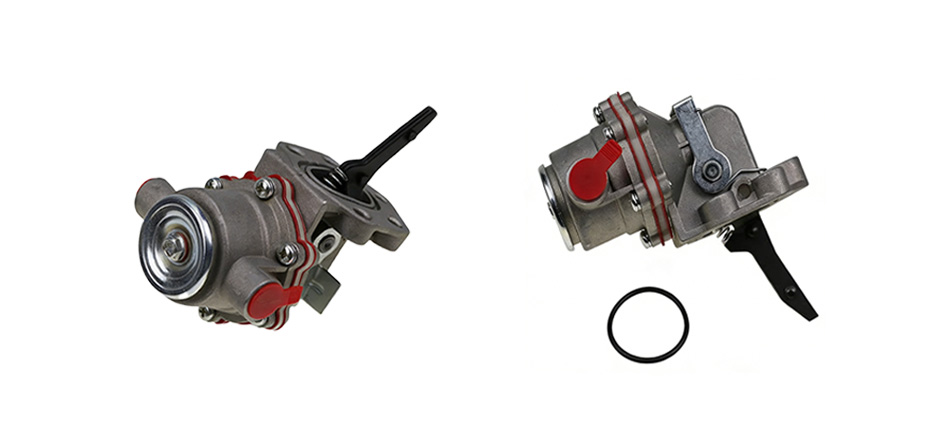
A fuel lift pump is part of the fuel system in a diesel engine.It moves fuel from the fuel tank to the high-pressure pump, keeping fuel flow and pressure steady, and provides a constant fuel supply for the engine injectors. Join us as we explain exactly what a fuel lift pump is, plus common diesel lift pump failure symptoms.
What Is A Lift Pump?
The lift pump is the first step in the diesel engine’s fuel system. It’s a low-pressure pump that pulls fuel from the tank and sends it to the high-pressure injection system. Almost all diesel equipment—from older mechanical engines to modern common rail systems—uses a fuel lift pump. Without it, the high-pressure pump would have to pull fuel all the way from the tank.
That extra work wears it out much faster. A bad lift pump starves the system, causing poor lubrication and possible damage to the injection pump and injectors.
What Exactly Does the Lift Pump Do?
The main job of the lift pump is to keep positive pressure in the fuel line, usually between 5 and 45 PSI, depending on the engine and machine model. This makes sure there’s always a steady, air‑free flow of diesel fuel for the next part of the system. There are two main types used in off‑road machinery:
- Mechanical Lift Pumps: Often used on older equipment. They’re driven by the engine’s camshaft or an eccentric lobe. Strong and simple, and they deliver a fixed amount of fuel at a fixed pressure that matches engine speed.
- Electric Lift Pumps: Common in modern machines with advanced ECUs (engine control units). They run on the machine’s electrical system. The ECU can control the pump very accurately, adjusting fuel flow based on engine load, speed, and other sensor readings for the best efficiency and performance.
Now that we know what it does, let’s look at the important signs that show this part is failing.
Common Diesel Lift Pump Failure Symptoms
Over time, they can still develop problems. How do I know if my diesel lift pump is bad? Let’s look at some common failure symptoms you might run into.
Engine Cranks but Won’t Start
If the lift pump fails completely, it can’t send fuel to the injection pump. You’ll hear the engine cranking, but it won’t start because no fuel reaches the cylinders. This is sometimes mistaken for a dead battery or a faulty starter. But if the engine is cranking normally, the fuel system should be checked.
Unusual Noises or No Noise At All
For machines with an electric lift pump, you usually hear a quiet hum for a few seconds when you turn the key to the ON position — that’s the pump priming the system. If you don’t hear that sound anymore, the pump either has no power or has failed. On the other hand, a pump that’s starting to fail may get very loud, making a whining or grinding noise as its internal parts wear out.
Much Worse Fuel Efficiency
When the fuel system isn’t at the right pressure, the engine’s ECU may try to compensate, causing poor combustion. If you’re refueling more often with the same amount of work, a weak lift pump is likely the cause.
Visible Fuel Leaks (Mechanical Pumps)
Most mechanical lift pumps have a small weep hole. This hole tells you if the internal diaphragm is failing. If the diaphragm breaks, diesel will leak out of this hole, often running down the engine block. This is a clear sign you need to replace the pump right away.
Catching these symptoms early is really important. Running a machine with a bad lift pump can damage your entire fuel injection system.
How To Test A Lift Pump Failure?
How to test a lift pump failure? You can do a few simple tests. Always check your machine’s service manual and put safety first.
The Listening Test (Electric Pumps)
Go somewhere quiet. Turn the key to the ON position. But don’t start the engine. You hear for a few seconds. If you hear nothing at all, the pump is either dead or not getting power. Check the fuses and relays.
The Fuel Pressure Test
- Prepare a fuel pressure gauge (0–60 PSI works for most machines).
- Connect the gauge to the low-pressure side, between the fuel filter and the high-pressure injection pump.
- Start the engine and let it idle.
- Pressure should be steady and within the manufacturer’s range (often 5–15 PSI at idle).
- If it’s safe, have someone watch the gauge while you work the machine hard — like lifting heavy or going uphill.
A good lift pump will keep pressure steady. If pressure drops a lot or goes to zero, the pump is failing.
The Volume Test
- If you don’t have a pressure gauge, you can test fuel volume.
- Disconnect the fuel line going into the injection pump.
- Put the end into a container.
- Paterner turns the key or bumps the starter for about 30 seconds.
- Measure how much fuel you get to compare it to the specs.
If you get very little fuel, the pump is weak, or you have a blockage like a dirty fuel filter.
Lift Pump vs. Injection Pump in Diesel
It’s easy to confuse a “lift pump ” and an “injection pump”, but in a diesel engine, they don’t actually work the same way.
| Feature | Lift Pump (Transfer Pump) | Injection Pump (High-Pressure Pump) |
|---|---|---|
| Primary Role | Moves a high volume of fuel at low pressure from the tank to the injection pump. | Takes low-pressure fuel and pressurizes it to extremely high levels for injection. |
| Location | Near the fuel tank or on the side of the engine block. | Mounted directly on the engine, driven by engine timing gears. |
| Operating Pressure | Low (e.g., 5-45 PSI) | Extremely High (e.g., 5,000 to 30,000+ PSI) |
| Failure Impact | Leads to power loss, starting issues, and eventual damage to the injection pump. | Leads to immediate and catastrophic engine failure, no-start conditions, and is very expensive to replace. |
If the machine is slowly weakening, many times it is a problem of the lift pump; if it is suddenly stalled, it may be that the injection pump is faulty. Check the lift pump first to avoid accidentally replacing the more expensive injection pump.
Maintenance Tips for a Healthy Lift Pump
To ensure the longevity and optimal performance of your diesel lift pump, regular maintenance is key. Here are some practical tips.
- Change fuel filters on schedule
- Use high-quality, clean fuel
- Check the lift pump and fuel lines for leaks, wires, or connections
- If you notice any of the symptoms we mentioned, fix them right away
Final Thoughts
In conclusion, lift pumps are an essential component of diesel engines. By knowing the diesel lift pump failure symptoms, replace the faulty part early so it doesn’t cause more serious problems. Let FridayParts be your one-stop shop for new parts like rear lift pumps, fuel pumps, and more.
