

The crankshaft position sensor tracks where the crankshaft is and how fast it’s spinning. The engine uses this data to keep timing right and run smoothly. If this sensor breaks, no need to stress — you can usually swap it out yourself with just basic tools and a bit of patience. This guide will show you exactly how to replace a crankshaft position sensor, step by step.
What Is a Crankshaft Position Sensor?
The crankshaft position sensor, or CKP sensor, checks how fast the crankshaft spins and where it sits.
Most Diesel engines have a toothed reluctor wheel on the crankshaft. The sensor sits right next to this wheel. It picks up each tooth as it turns. Every time a tooth moves past the sensor, the sensor sends a signal to the engine computer (ECM). The ECM uses this signal for two key tasks:
- Fuel injection timing: The engine needs to know exactly when the piston hits the top of its stroke. This way fuel injects at the perfect time. A bad CKP sensor signal messes up the fuel timing. It hurts engine performance and normal operation.
- Engine speed monitoring: The sensor tells the ECM the engine’s running speed (RPM). Your dash RPM gauge reads this same signal. The ECM also uses it to adjust engine power for different working loads.
When the crankshaft position sensor breaks, the ECM loses this key data. It can’t control the engine normally anymore.
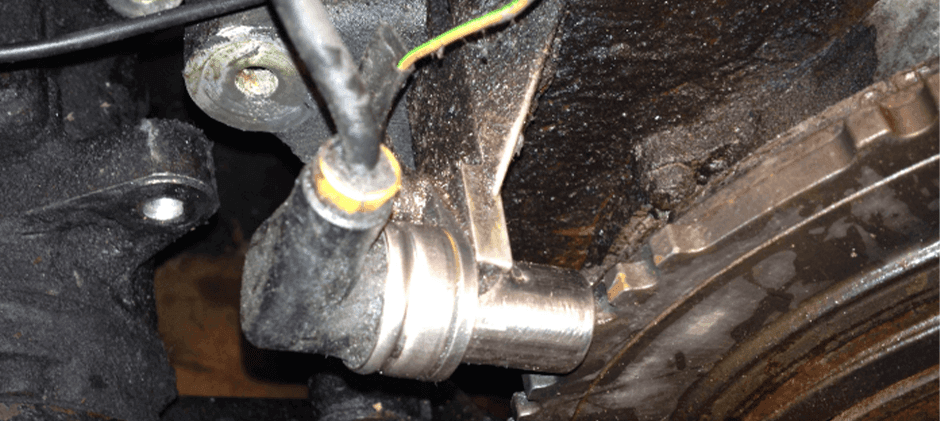
Bad Crankshaft Position Sensor Symptoms
A crankshaft position sensor doesn’t fail all at once. It often starts giving weak or random signals. That’s why the symptoms can come and go.
- Cranks but won’t start: You turn the key, the engine cranks normally, but it just won’t start. This is because the ECU doesn’t get the crank signal, so it won’t allow fuel injection.
- Sudden stalling: The engine is running fine, then suddenly shuts off like someone turned the key off. A failing sensor often acts up when it gets hot. Once it loses the signal, the engine just dies. It may restart after cooling down, but then stall again later.
- Check engine light comes on: When the sensor starts failing, the system usually sets a fault code and turns on the check engine light.
- Rough running or misfires: Bad or unstable signals mess up fuel timing. The engine may shake, run rough, or feel like it’s misfiring. This is usually worse under heavy load.
- Weak power / slow response: The machine feels lazy and underpowered. It doesn’t pick up speed well, struggles on hills, or feels weak during digging or lifting.
- Tachometer acting weird: Since the sensor sends engine speed info, the RPM gauge may jump around or drop to zero—even though the engine is still running fine.
Step-by-Step Crankshaft Position Sensor Replacement
Most equipment owners can replace a crankshaft position sensor by themselves.
Tools and What You’ll Need
- New crankshaft position sensor
- Socket set with ratchet
- Torque wrench
- Clean shop rags
- Work gloves
- Your equipment’s service manual
1. Locate the Sensor
First, check your service manual to see exactly where the sensor sits. On most heavy-duty diesel engines, it’s usually in one of these spots:
- On the flywheel housing, reading teeth off the flywheel
- On the side of the engine block
- On the front timing cover, picking up signal from the reluctor wheel on the crankshaft harmonic balancer
2. Safety First
Turn off the engine and use the master battery disconnect switch to cut all power. Or disconnect the negative battery terminal.
3. Access the Sensor
You need to remove protective guards, panels, or other components to access it. Keep all bolts and hardware organized for reassembly.
4. Remove the Old Sensor
- Unplug the connector: Press the small clip and pull the plug out. Be gentle so you don’t break it. Check the plug for dirt, oil, or rust and clean it if needed.
- Remove the bolt: Use the right socket to take out the mounting bolt. It may be tight, so go slow and don’t strip it.
- Pull out the sensor: The O-ring can make it a bit stuck. Twist it gently and pull it straight out. Don’t pry it with a screwdriver—you could damage the mounting surface.
5. Get Ready to Install
- Compare old and new: Put the new and old sensor side by side. Make sure they match in size, shape, and plug. If it doesn’t match, don’t install it.
- Clean the area: Wipe the mounting hole clean. Make sure there’s no dirt or debris.
- Lubricate the O-ring: Put a little clean engine oil on the O-ring. This helps it slide in easier and seal better.
6. Install the New Sensor and Reassemble
- Put the new sensor in: Slide the new sensor straight into the hole. Push it in gently until it sits all the way in.
- Install the bolt: Start the bolt by hand first. Then tighten it with a torque wrench to the correct spec. Don’t over-tighten—it can crack the plastic body.
- Plug it back in: Push the connector back on until you hear it click.
- Put parts back: Reinstall any covers, guards, or parts you removed.
7. Test Your Work
Reconnect the battery. Start the engine. It should start up quickly and run smooth at idle. If you have a scanner, clear any old codes.
Let it run for a few minutes and operate the machine to make sure everything works normally and the check engine light stays off.
Crankshaft Position Sensor Codes
When the ECM finds a problem with the crankshaft position sensor (CKP) circuit, it stores a trouble code (DTC). Here are some common ones explained in simple terms:
- SPN 636 FMI 8: Sensor signal lost or not stable. This means the ECM can’t see the signal at all, or it keeps cutting in and out.
- SPN 636 FMI 2: Signal is there, but not right. The ECM is getting data, but it doesn’t make sense. This can happen if the reluctor wheel is damaged, the air gap is wrong, or the wiring is loose/intermittent.
- SPN 636 FMI 4: Signal too low. Usually means a short to ground, or the sensor is failing.
- SPN 636 FMI 3: Signal too high. This usually means a short to power somewhere in the wiring harness.
Final Thought
FridayParts carries a full range of high-quality crankshafts and crankshaft position sensors. Browse our in-stock parts that fit your equipment perfectly. Our support team is always here if you need any help. Don’t wait until a bad crankshaft position sensor ruins your engine. Order your replacement part today!
