

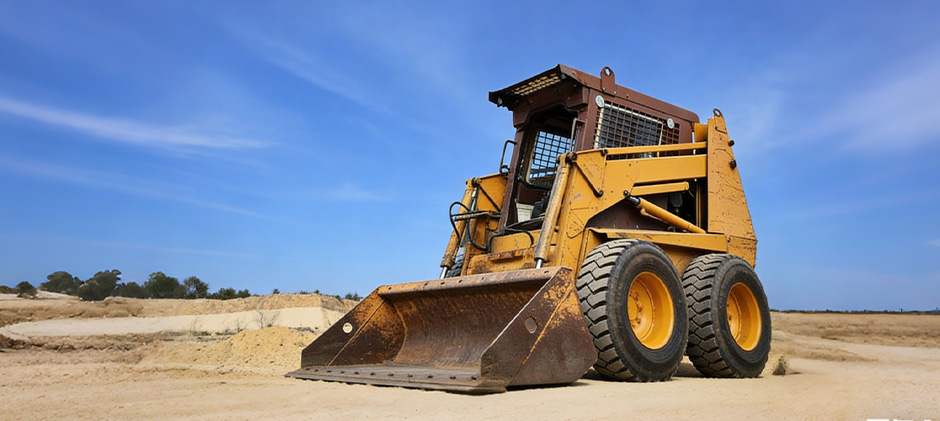
The Case 1845C is a classic, durable skid steer loader built from 1986 to 2000. It’s powered by a 57–60 HP diesel engine (Case 4-390, also known as the Cummins 4B), which is reliable and gets the job done. It’s also pretty comfortable to operate. The cab is about 2 meters (6.7 ft) high, giving you decent space to work without feeling cramped. Wear and tear over time is normal. Know the basic Case 1845C specs when it comes to maintenance. It makes it easier to pick the right parts and avoid compatibility issues.
Key Features
- Proven Case 4-390 diesel engine with excellent torque
- Efficient hydrostatic drive for smooth directional control
- Rugged loader arms and heavy-duty frame for long life
- Simple mechanical controls – easy to service and repair
- Compatible with a wide variety of bucket and hydraulic attachments
Case 1845C Skid Steer Loader Specifications
Dimensions
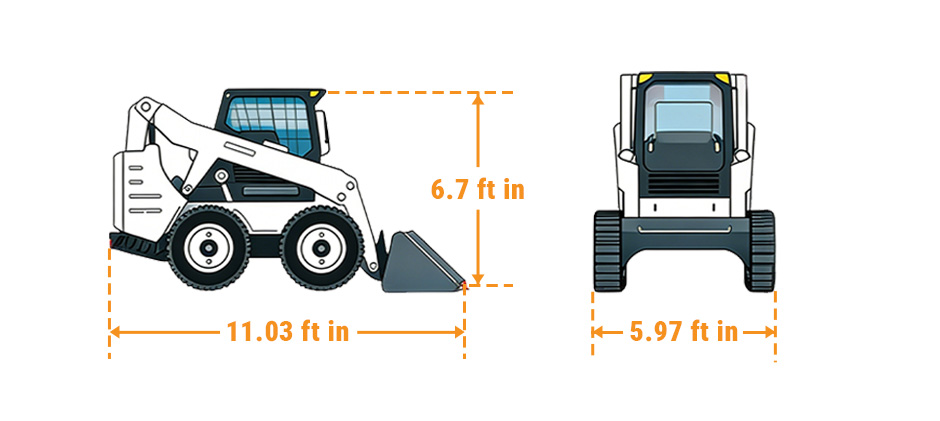
| Length w/ Bucket | 11.03 ft (3.36 m) |
|---|---|
| Length w/o Bucket | 8.44 ft (2.57 m) |
| Width over Tires | 5.97 ft (1.82 m) |
| Height to Top of Cab | 6.7 ft (2.04 m) |
| Wheelbase | 3.38 ft (1.03 m) |
| Ground Clearance | 8 in (20.3 cm) |
| Reach at Max Lift & Dump | 23 in (58.4 cm) |
| Tires | 10×16.5 or 12×16.5 |
Engine
| Engine Make | Case |
|---|---|
| Engine Model | 4-390 |
| Fuel Type | Diesel |
| Number of Cylinders | 4 |
| Gross Power | 60 hp |
| Net Power | 57 hp (at 2200 rpm) |
| Peak Torque | 179 lb-ft (at 1300 rpm) |
| Fuel Injection | Direct |
| Displacement | 239.3 cu in |
| Bore | 4.1 in |
| Stroke | 4.8 in |
Operational
| Operational Weight | 6,186 lbs (2,806 kg) |
|---|---|
| Fuel Capacity | 21.6 gal (81.8 L) |
| Hydraulic System Fluid Capacity | 10.6 gal (40.1 L) |
| Engine Oil Fluid Capacity | 1.7 gal (6.4 L) |
| Cooling System Fluid Capacity | 4.5 gal (17 L) |
| Chain Box Fluid Capacity (Each Side) | 1.3 gal (4.9 L) |
| Max Speed | 6.1 mph (9.8 kph) |
| Operating Voltage | 12V |
| Alternator Supplied Amperage | 65 amps |
Loader
| Operating Load Rating | 1,750 lbs (794 kg) |
|---|---|
| Tipping Load | 3,545 lbs (1,608 kg) |
| Bucket Capacity (approx.) | 0.4 yd³ (0.3 m³) |
Hydraulic
| Pump Flow Capacity | 16.1 gal/min (61 L/min) |
|---|---|
| Relief Valve Pressure | 2300 psi |
| Raise Time | 4.3 sec |
| Dump Time | 2.9 sec |
| Lower Time | 1.4 sec |
Attachments
The Case 1845C comes with a universal skid steer quick-attach system, and that’s a huge advantage. Simply, you can easily switch between different attachments to handle all kinds of jobs. Common attachments like buckets, grapples, pallet forks, augers, trenchers, brush cutters, and dozer blades all fit right on. Because of this, it’s not just for digging — one machine can do a wide variety of work, making it incredibly flexible and practical.
Case 1845 vs 1845C: The Upgrades That Matter
If you’re choosing between the 1845/1845B and the 1845C, most experienced owners will tell you it’s worth paying a bit more for the “C” series. The upgrades really make a difference in performance, versatility, and resale value.
- Engine: This is the biggest difference among the three. The 1845 and 1845B use Case’s own 188 engine, while the 1845C comes with a 3.9L (4-390) Cummins engine. This engine has a strong reputation in the industry for being durable and reliable—it’s known for being very “tough” and long-lasting.
- Quick attach system: The 1845C uses a universal quick attach plate, which allows you to use attachments from various brands. You can buy or rent them easily. In contrast, the older models use a proprietary system, which limits your options.
- Hydraulics and safety: The C series has a stronger hydraulic system, giving it better working power. It also features a more modern lap bar safety system, which improves both operation and safety compared to earlier models.
- Reinforced axles: The 1845C also comes with upgraded axle design, making it better suited for heavy-duty and high-load work, and more stable over long-term use.
What to Check Before Buying a Case 1845C?
The Case 1845C is known for being very durable. Many machines still run well even after 10,000+ hours. So if you see a 1990s unit claiming only around 2,000 hours, be careful— the hour meter may have been replaced. When checking a machine, focus more on its actual condition, not just the hours on the meter. Here are some simple checks shared by experienced owners:
- Hydraulic test: With the engine at idle, use the bucket tilt to lift the rear wheels off the ground. It should do this pretty easily. If it struggles, the hydraulic system may be worn.
- Hydrostatic drive test: Let the machine warm up first. On a hard surface like concrete, at about half throttle, it should be able to spin smoothly in place both left and right without hesitation. If it can’t, there may be a serious (and expensive) issue with the hydrostatic system.
- Check for leaks: Look under the seat and inside the belly pan. Check around the hydro pumps and motors for any oil leaks.
- Check pins and bushings: Inspect the loader arms and bucket linkage. Look for excessive play or looseness. Worn pins and bushings are common on this model.
- Check the wheels: Look at the wheels from the front and rear. They should sit straight and vertical. If the tops tilt inward, the wheel bearings may be wearing out. In worse cases, it could mean the chain case is damaged or out of shape.
Common Issues & Fixes
After using it for a while, many owners have run into a few common issues with the Case 1845C in real-world use. Here are some typical problems and the usual ways to fix them, along with the parts you’ll likely need.
- Abnormal noise or vibration of the drive motor: If the drive motor makes unusual noises or jitters, it may be that the hydrostatic motor is worn inside. You can check whether you need to replace the hydrostatic motor rebuild kit, or replace the motor directly.
- Oil supply system failure: If the engine is running unsteadily (jittering) or lacks power, start with something simple: clean the fuel tank and replace the fuel filter. Blockage of the fuel supply line or failure of the fuel pump (fuel lift pump) are also common causes.
- Lifting arm hydraulic leakage: If there is an oil leak in the boom or bucket cylinder, it is generally caused by aging or wear of the seal. Replacing a new hydraulic cylinder seal overhaul kit usually resolves the problem.
- Bucket movement is slow: If the entire hydraulic action slows down, check the main hydraulic pump for wear or if the control valve group is malfunctioning.
Related Case 1845C Parts
Conclusion
Check out quality parts for the Case 1845C online! Just type your machine model or the part you need into the search bar, and you’ll quickly find compatible Case replacement parts in the full catalog. Whether you’re a dealer or an owner, you can easily find what you need. Start browsing and order your skid steer parts today.
