

A lot of people don’t know brake fluid comes in different grades — and those grades influence machine performance. For example, do you know the difference between DOT 3 and DOT 4 brake fluid?
The U.S. Department of Transportation sets rules for brake fluid to make sure it works safely. They group brake fluids into different “DOT” categories based on their performance. Right now, DOT 3 and DOT 4 are the two most common types you’ll find.
What Is Brake Fluid?
Brake fluid carries brake pressure from the pedal to your brakes. Press down the pedal, and the fluid sends pressure through brake lines to the wheels or track brakes. Liquid can’t be squeezed, so the stopping force travels steadily right where it’s needed.
Brake fluid has to handle high heat without boiling. Heavy equipment gets brakes hot when fully loaded, going downhill, or working all day. If brake fluid boils, air bubbles build up in the system. Liquid transfers pressure perfectly, but air doesn’t. This makes the brake pedal feel soft and laggy, and your braking power drops a lot — this is known as brake fade.
Nearly all brake fluid absorbs moisture from the air over time. Water drops its boiling point, so the fluid boils much faster under high heat. This greatly raises the chance of brake failure.
Boiling Points of Brake Fluid Explained
To tell the difference between brake fluids, just look at their boiling points. The DOT sets basic safety rules for brake fluid, and uses two key measurements:
- Dry boiling point: The boiling temperature of brand-new brake fluid right out of a sealed bottle.
- Wet boiling point: The boiling temperature after the fluid has absorbed about 3.7% water. This one matters more for long-term safety, because it shows how the fluid performs after being used on real machines.
DOT 3 and DOT 4 are the two most common brake fluids made from glycol. Here’s how they compare:
DOT 3
- Min dry boiling point: 401°F (205°C)
- Min wet boiling point: 284°F (140°C)
DOT 4
- Min dry boiling point: 446°F (230°C)
- Min wet boiling point: 311°F (155°C)
It’s clear to see DOT 4 has much higher boiling points — both when it’s brand new, and after it soaks up moisture over time.
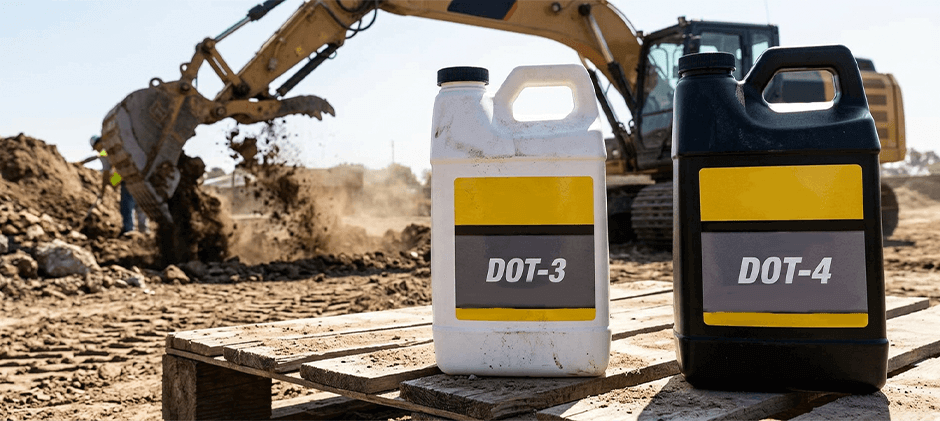
What Are the Differences Between DOT 3 and DOT 4 Brake Fluid?
DOT 3 and DOT 4 brake fluids look almost the same and are both made from glycol-ether, but they don’t perform the same.
- Boiling Point: DOT 4 can handle higher temperatures. That’s mainly because it has extra additives called borate esters mixed into the base fluid. These help it deal with the intense heat created during heavy braking.
- Hygroscopicity, or the rate at which they absorb water. Both types absorb water over time (that’s normal), but DOT 4 is designed to better keep its performance even after it starts picking up moisture. In other words, even when it’s aged and slightly contaminated, DOT 4 usually still keeps a higher boiling point than DOT 3 in the same condition.
But regular brake fluid changes matter more than simply choosing DOT 3 or DOT 4. Fresh fluid is what really keeps the braking system safe and consistent.
Can I Use DOT 4 Instead of DOT 3?
Yes. You can safely switch to DOT 4 in a DOT 3 brake system. They’re both made from the same glycol-ether base, so they’re totally compatible.
But if you want the full high‑heat benefit of DOT 4, you have to fully flush out all the old DOT 3 fluid first. If you just add DOT 4 on top of existing DOT 3, they’ll mix together.
On the other hand, never use DOT 3 in a system that’s factory-spec’d for DOT 4. Those machines are built to rely on DOT 4’s higher heat resistance. Putting lower-grade DOT 3 in there can easily cause brake fade, or even brake failure, under normal heavy workloads.
Can You Mix DOT 3 and DOT 4 Brake Fluid?
It would be best not to do that. Chemically, DOT 3 and DOT 4 are both glycol-based. Mixing them won’t cause serious damage like mixing regular glycol fluid with silicone-based DOT 5 brake fluid. It won’t make the seals swell or break right away.
But even though you can mix them, you definitely shouldn’t. As we said before, mixing the two makes your brake performance unreliable. You’re basically watering down high-quality DOT 4 with lower-grade DOT 3. The blended fluid no longer hits the real DOT 4 standard, and you lose all the extra safety and heat resistance you wanted.
The professional rule is always to fully flush the whole brake system when you switch brake fluid. This way, the new fluid stays up to standard and works predictably. It also removes old moisture-filled fluid and tiny dirt particles from the system.
What Is “DOT 3 & 4” Universal Brake Fluid?
You’ve probably seen brake fluid bottles marked “DOT 3 & 4” or “DOT 3/4” on store shelves. Basically, these are just DOT 4 brake fluid at heart.
They’re made to meet the higher boiling point rules for DOT 4. Since DOT 4 is better than DOT 3 in every way, any fluid that passes DOT 4 standards also works perfectly for DOT 3 systems.
Brands label them this way for easier selling and everyday use. It lets you know the fluid is safe for machines that take either DOT 3 or DOT 4. It makes buying simpler, and you don’t need to stock two different bottles if you have multiple pieces of equipment.
Warming Up
Brake fluid breaks down over time, so it’s super important to change it regularly. If you don’t, your brakes will feel spongy and unsafe. Plus, moisture inside the system will slowly rust and corrode metal parts. FridayParts also has reliable brake system parts like brake pads and more. Shop with us for all your replacement brake components.
