

Sometimes, starting fluid is unavailable, people may wonder whether another product—such as brake cleaner—could be used instead. “It’s flammable, right? Can brake cleaner be used as starting fluid” The answer is no. It can damage the engine, cause injuries, and even release harmful gases that are dangerous to your health.
So what exactly is starting fluid? What is brake cleaner actually designed for? And why should you never use one in place of the other? Let’s look at the serious risks of this common mistake.
TAKEWAYS
- Starter fluid helps engines start quickly by providing an easy-to-ignite fuel-air mix.
- Brake cleaner is designed to clean brakes, not to ignite engines.
- Using Brake Cleaner is Dangerous: It can damage the engine, corrode parts, and release harmful gases.
- Engine Problems Need Proper Diagnosis: Hard-starting usually signals issues with fuel, air, compression, or electrical systems.
- Replace faulty parts and address the real problem for safe and reliable engine starting.
What is Starter Fluid and How Does It Work?
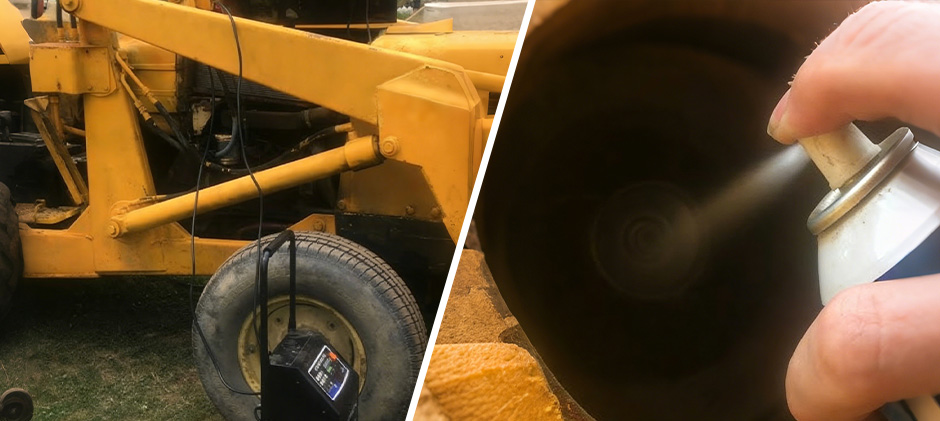
Starter fluid usually has diethyl ether in it. It comes in a spray can, and it only has one job: to help engines start more easily. It works great for two simple reasons:
- It evaporates really fast — even when it’s freezing cold, it turns into a flammable vapor.
- It lights up super easily — way less heat needed than gas or diesel.
When you spray starter fluid into a cold engine’s air intake, it mixes with air right away. This makes a fuel-air mix that’s easy to ignite. When you crank the engine:
- In a diesel engine, the compression heat lights the vapor.
- In a gas engine, the spark plug lights it.
That first little burst of fire gets the engine going, so it can run normally on its regular fuel after that. You can think of starter fluid like kindling for an engine. It’s really useful for big diesel engines on cold mornings — when cold metal, thick oil, and fuel issues make starting hard.
What Is Brake Cleaner and What is It Designed For?
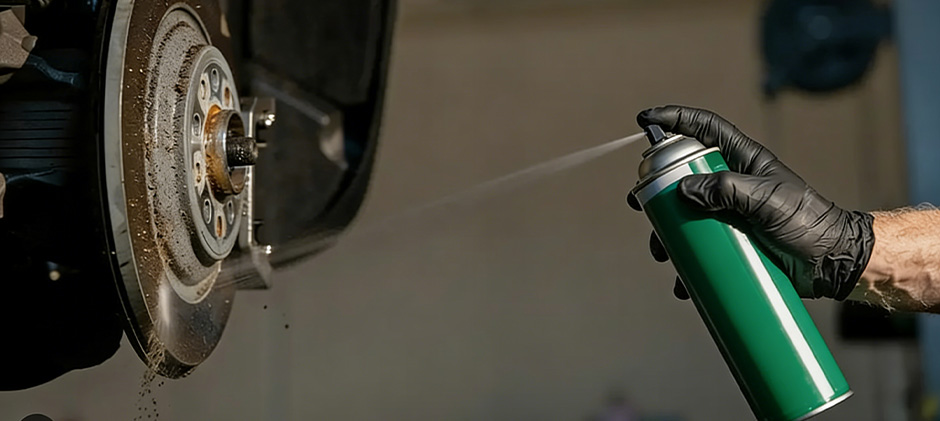
Brake cleaner, as the name suggests, is to clean brake parts. Brake systems are often exposed to mud, water, grease, and dirt. Over time, it can affect braking performance and cause issues such as leaks or worn parts.
Brake cleaner is a strong solvent that removes grease, oil, and dirt quickly. It sprays on and washes these materials away. Simply, brake cleaner is a cleaning product, not a fuel. However, not all brake cleaners have the same contents. It is where the confusion resons.
Flammable vs. Non-Flammable Brake Cleaner
Brake washers are generally divided into two types, depending on the chemical composition used.
- Non-chlorinated (flammable): This is the more common one nowadays. It usually contains solvents such as acetone, heptane, and toluene, which can quickly dissolve oil and dirt, and volatilize. These types are flammable, so some people mistakenly think they can help start an engine.
- Chlorinated (non-flammable): A more old-fashioned formula contains chlorinated solvents such as perchloroethylene or tetrachloroethylene. It does a good job of removing oil stains, but it is not flammable per se. Spraying this washer into the engine does nothing to help with starting. More seriously, it can also introduce harmful chemicals into the combustion chamber.
It is this distinction that causes many people to misunderstand. While some brake washers are flammable, that doesn’t mean they can be safely used as starting fluid.
Can Brake Cleaner Be Used as Starting Fluid? The Quick Answer
No. You should never use brake cleaner as starting fluid.
Some brake cleaners are flammable, but they are not made to burn inside an engine. Using them to start an engine can cause serious engine damage and may even lead to injury.
Brake cleaner does not have the properties of proper starting fluid. It also contains strong chemicals that can harm engine parts. Even if the engine starts for a moment, the risk of damage is very high—and the repair bill can be expensive.
Could You Use Brake Cleaner to Start an Engine in an Emergency?
The answer is still No. Technically, a quick spray of flammable non‑chlorinated brake cleaner might make enough fumes to start an engine. But just because it can ignite doesn’t mean it’s safe. It’s like using a lit match to check how much fuel you have — it might work once, but it’s really dangerous. Even if you’re desperate in an emergency, the risk is just way too high.
Why You Shouldn’t Use Brake Cleaner as a Starting Fluid
Lack of Lubrication Can Directly Damage the Engine
Normal starting fluid usually contains a small amount of lubricant, which can protect the piston and cylinder wall during cold start. But brake cleaner is the exact opposite. It is a powerful oil remover that washes all the oil off the cylinder wall with one spray. In this way, the piston and cylinder will metal-to-metal contact, directly scratch and pull the cylinder, causing permanent damage.
Produces Violent Knock
Starting fluids are designed to burn smoothly, while brake cleaner is not. It may suddenly deflagrate as soon as it encounters high temperature and pressure, rather than burning slowly. This explosion will generate instantaneous and huge pressure in the cylinder, which is the engine knock. Light parts are damaged, while heavy parts directly damage pistons, bent connecting rods, and destroyed bearings.
Health Risk (Phosgene Gas)
If you use a chlorinated brake cleaner (usually the non-flammable type), the high heat can break it down and create phosgene gas. This gas was used as a chemical weapon during World War I. It has no color and almost no smell, so it is very hard to notice. Even a small amount can seriously damage the lungs.
Can Corrode Plastic and Rubber Parts
The solvent in brake cleaner fluid is very corrosive. It will damage the sensors, seals, rubber pads and other plastic and rubber parts in the air intake system.
Find the Real Cause of Starting Problems
Most experienced mechanics and users have stopped looking for quick fixes — they now focus on fixing the real problem. If your engine needs help just to start, it’s telling you something’s wrong deeper down. Common issues include:
- Fuel problems: In cold weather, diesel fuel can thicken or gel, clogging filters and lines. Is your fuel filter blocked? Is there water in your fuel separator?
- Air problems: A totally clogged air filter can starve the engine of air and make it impossible to start.
- Electrical problems: Batteries lose a lot of power in the cold. Are your batteries fully charged? Are the connections clean and tight? For diesel engines, are your glow plugs or grid heater working properly? They’re needed to preheat the combustion chamber.
- Compression issues: Less common, but engines with low compression can’t make enough heat to ignite fuel, especially when cold.
May replace the fuel filter, fuel separator, air filter, glow plugs, and other related parts. Fixing one of these issues is the right, safe, and long-term way to solve your hard-starting problem.
The Bottom Line
Using brake cleaner as starter fluid might seem like a quick worksite hack, but it’s a dangerous practice you must avoid completely. Its chemical makeup is just not meant for this. It can damage your engine and even put your health at risk.
If your hard-starting issue is caused by a faulty part, replace it on time and fix the problem at the root. FridayParts has you covered with high-quality aftermarket parts that fit many heavy‑equipment brands — reliable and affordable.
