

Construction equipment comes in all shapes and sizes, so you need the right trailer for the job. Make sure it can handle the weight, height, and ground clearance, and stay stable on the road. If you don’t match these properly, you could end up overweight or oversized. In the worst case, it can even get out of control during transport. Check out this guide to find the best trailer for hauling heavy equipment and to get rental trailer costs.
Knowing GVWR, Payload, and Weight Distribution
To safely transport the equipment, be sure to carefully read the key parameters of these trailers. Ignoring this data not only breaks federal transportation regulations but also damages trailers and even poses safety risks.
- GVWR (Gross Vehicle Weight Rating): The maximum gross weight a trailer can handle, including the trailer itself + equipment + other cargo.
- Payload Capacity (Payload): The actual weight of the equipment you can fit. The calculation is simple: GVWR − trailer’s empty weight.
- Tongue Weight (TW) / Tow Ball Load (TBL): Generally, it should be controlled at 10%–15% of the total weight. Only when the distribution is reasonable can the tow vehicle be stable and the direction be well controlled.
- Axle Ratings (Axle Load Rating): The weight must be distributed among the axles. Do not overload any one axle, otherwise it is easy to blow out the tire or damage the axle.
“Exceeding the traction tongue weight (TBM) standard is a serious safety failure. It causes the front axle of the towing vehicle to be lifted, directly impairing the driver’s ability to steer and brake effectively.”
Flatbed Trailers for Compact Off-Road Machine
Flatbed trailers are a go-to choice for hauling all kinds of materials and small off-road equipment. They have a flat, open deck—no roof or side walls—making loading and unloading easy from the sides or from above. Standard flatbeds are usually 48–53 feet long and can carry up to 48,000 pounds.
Low-Profile vs Deckover Flatbeds
There are a Low-Profile and a Deckover design. Each type has its advantages depending on what you need to haul.
| Feature | Low-Profile Flatbed | Deckover Flatbed |
|---|---|---|
| Deck Position | Sits between the wheel wells | Sits above the wheels |
| Usable Width | Approx. 6 feet 9 inches between wells | Full 8.5 feet width |
| Ideal Cargo | Mini excavators, small skid steers | Wide-tracked skid loaders, large materials |
| Loading Ease | Lower to ground, easier ramp angle | Higher deck, requires longer ramps |
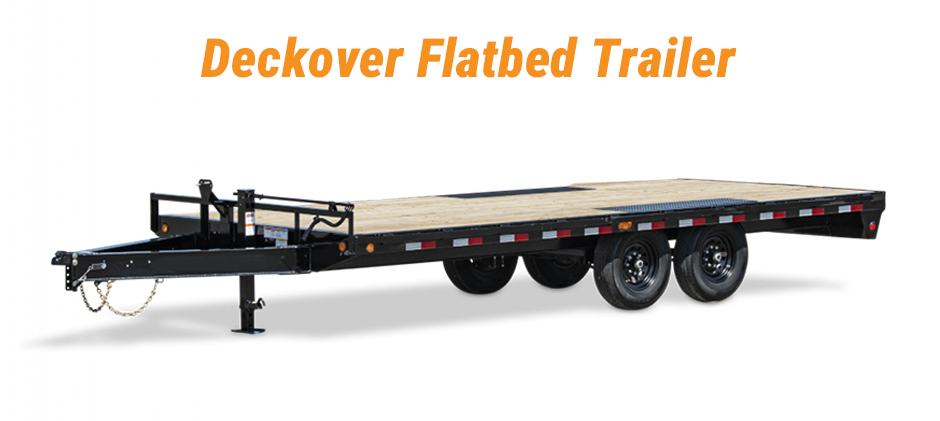
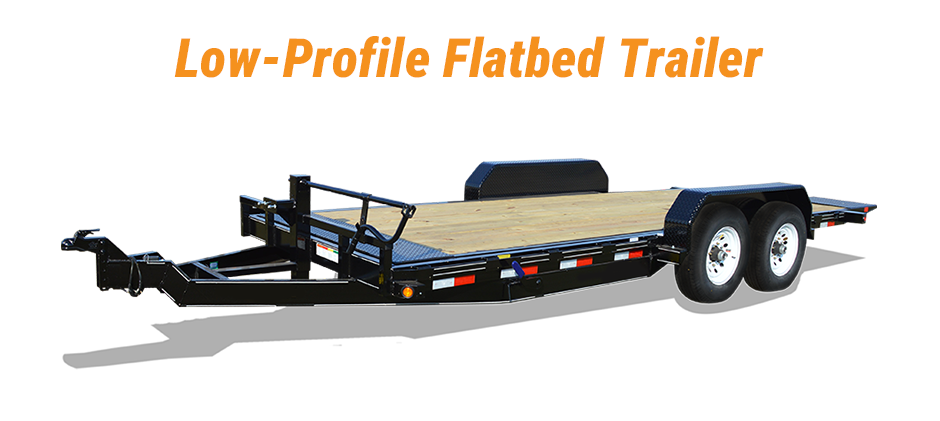
The wheel wells on the low-profile trailer are 6 feet 9 inches wide. Heavy equipment tires or tracks should fit and leave at least 6–12 inches of clearance. This way it will not shift during transportation and will not shake and hit the trailer frame.
Loading Constraints
A regular flatbed trailer deck is about 5 ft (60 in) off the ground. Since it can’t be lowered, most equipment can’t drive on with a short ramp. You usually need a loading dock, forklift, crane, or a professional crew to lift the equipment onto the trailer.
Specific Applications
Flatbed trailers are very suitable for transporting equipment such as skid steer loaders, small excavators, backhoes, forklifts, and trenchers. The open flat-deck design makes it convenient for the construction party to pull machinery, scaffolding, concrete and other materials to the construction site in one trip.
Gooseneck and RGN Trailers for Heavy Equipment
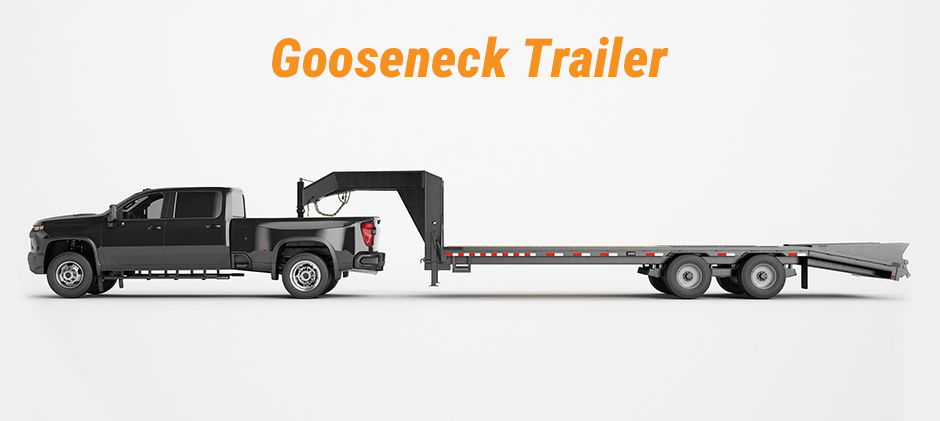
When it comes to heavy off‑road machinery, gooseneck trailers and Removable Gooseneck (RGN) trailers are the industry standard. They deliver the stability, heavy‑duty capacity, and easy loading that large tracked vehicles need.
Gooseneck Trailer Stability
The gooseneck hitch curves over a pickup’s tailgate or sits directly over a semi-truck’s rear axle. By placing the trailer weight right over the truck’s rear axle — not hanging behind the bumper — this setup greatly reduces trailer sway and gives the driver much better control in sharp turns.
Removable Gooseneck (RGN) Trailers & Lowboys
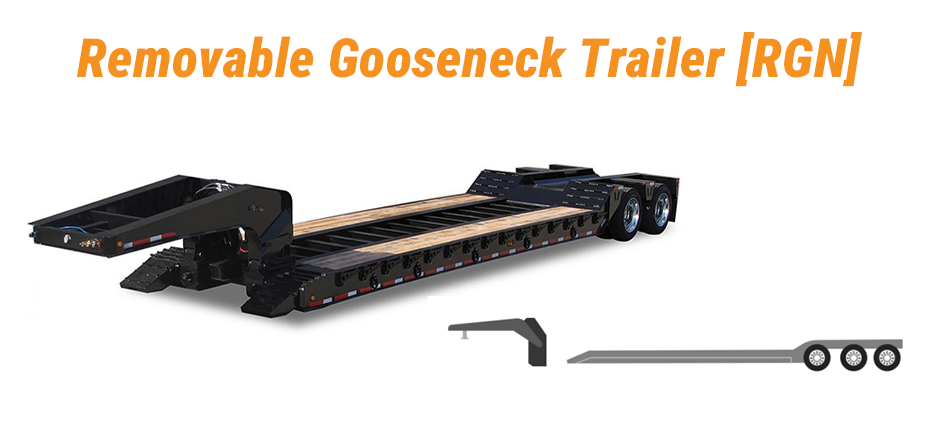
An RGN, also called a Lowboy, is specially designed so the front gooseneck hitch can be fully removed. It has three separate load levels: a front platform over the gooseneck, a main lower well, and a rear platform over the axles.
- Roll-On Capability: Once the gooseneck is detached, the main deck drops to ground level, creating a gentle ramp. This is critical for large bulldozers and excavators that can’t climb steep ramps.
- Weight Capacity & Axle Configurations: A standard RGN can carry around 42,000 lbs. Custom multi‑axle models can have more than 20 axles to spread loads over 150,000 lbs. This setup is required to meet state Bridge Laws, which limit how much weight can be placed on specific road sections.
- Dimensions: The main well of an RGN is typically 29 feet long. Extendable versions can stretch to over 65 feet for extra-long oversized loads.
These trailers are used mainly for heavy equipment such as large bulldozers, articulated trucks, scrapers, and extra-large excavators.
Tilt Trailers for Wheel Loaders and Tractors
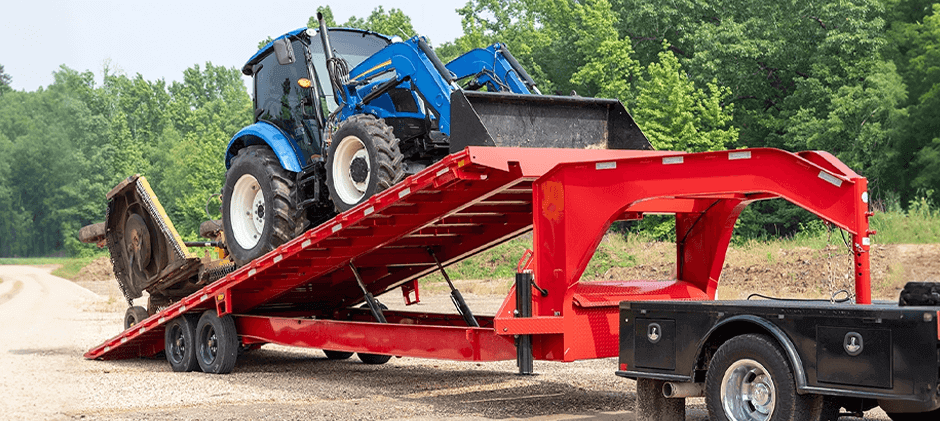
Landoll traveling axle (tilt) trailers come with hydraulically controlled axles that can move forward and backward. When the axles shift forward, the trailer bed tilts down toward the ground, making a gentle loading ramp. This is perfect for wheel loaders, tractors, and similar machines. The shallow approach angle keeps them from bottoming out. These trailers can carry 50,000 to 110,000 lbs and don’t need separate ramps for loading.
Choosing the Right Trailer for Your Machine
When choosing a trailer, you need to give the transporter or dealer these exact details:
- Operating Weight: Include the weight of all attachments, like buckets, blades, or breakers.
- Exact Dimensions: Measure the machine’s maximum height and width, including folded booms and any overhangs. Over-height loads that can’t be broken down usually require extra transport permits.
- Ground Clearance: Indicate if the machine is low-clearance, as this will determine whether you need a lowboy or a tilt-deck trailer.
- Site Access: Check if the pickup or delivery site has restricted hours, soft ground, or tight turns. These conditions might prevent a multi-axle RGN gooseneck trailer from getting in.
Trailer Rental Costs
For many businesses, renting a trailer makes more sense and saves money compared to buying one — especially for short-term projects or special heavy hauls. Rental prices across North America depend on the trailer type, how long you rent it, and where you pick it up. Here’s a simple price guide:
Flatbed Trailers
These are the most common and the cheapest to rent.
- Daily: $150 – $250
- Weekly: $500 – $800
- Monthly: $1,500 – $2,200
Gooseneck & Tilt Trailers
These are more specialized, so they cost more because of their hydraulic systems and higher weight capacity.
- Daily: $250 – $400
- Weekly: $800 – $1,500
- Monthly: $2,200 – $4,000
RGN & Lowboy Trailers
These are the most complex, built for heavy hauling — so they’re the priciest to rent.
- Daily: $350 – $600+
- Weekly: $1,200 – $2,500+
- Monthly: $3,500 – $6,000+
These are just base rental rates. Always check with the rental company what’s included. You may also have extra costs for insurance, mileage, or cleaning.
Conclusion
Flatbed trailers are great for hauling compact machines, while removable gooseneck (RGN) trailers are for heavy equipment. Picking the right trailer keeps you legal on the road and makes transport safer. At FridayParts, we also provide reliable parts to keep your heavy machines running in top shape.
