

A weak belt tensioner can turn a reliable machine into a downtime trap: belts slip, accessories stop working, engine temps rise, and the whole drive system starts eating itself. This article helps you spot the early warning signs of belt tensioner failure on off-road machinery (excavators, skid steers, tractors, forklifts, zero-turn mowers, and more), so you can fix the real cause before a shredded belt or damaged pulley takes the machine out of service.
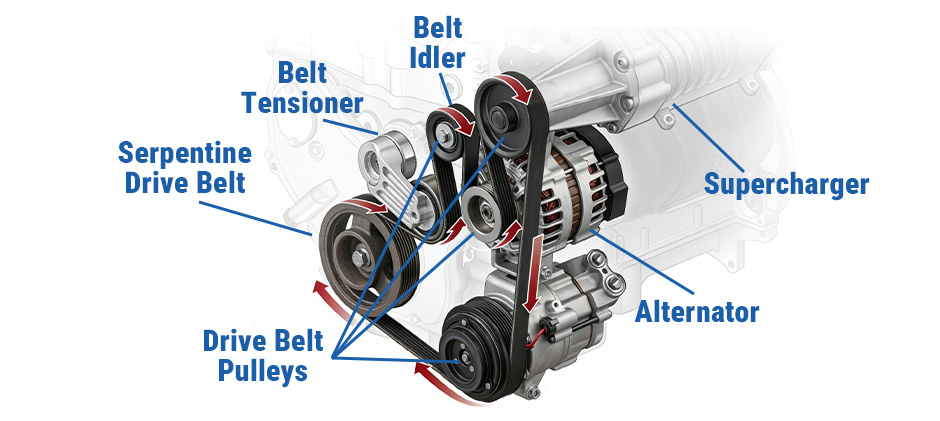
What Does a Belt Tensioner Do?
In most off-road machines, belts transfer engine power to key components. A belt tensioner’s job is simple but critical: keep the belt at the right tension across temperature changes, belt stretch, and load spikes.
A healthy tensioner helps the belt system in three ways:
- Maintains proper tension
Prevents belt slippage (loss of drive) and belt “walk-off” (belt dislocation).
- Controls belt tracking
Keeps the belt running centered on the pulleys instead of drifting to an edge.
- Absorbs vibration
Reduces shock loads that can damage accessories such as alternators, A/C compressors, and water pumps.
Most tensioners you’ll see on off-road equipment are either:
- Spring-loaded automatic tensioners (self-adjust as the belt wears)
- Hydraulic tensioners (use fluid pressure for controlled tension)
- Manual/adjustable designs (set to spec during service; common on some equipment)
And even though the topic is “engine belts,” don’t ignore turf equipment. On mower decks, belt tension and tracking directly affect blade speed—so tensioner problems can show up as poor cutting even when the mower blade itself is sharp.
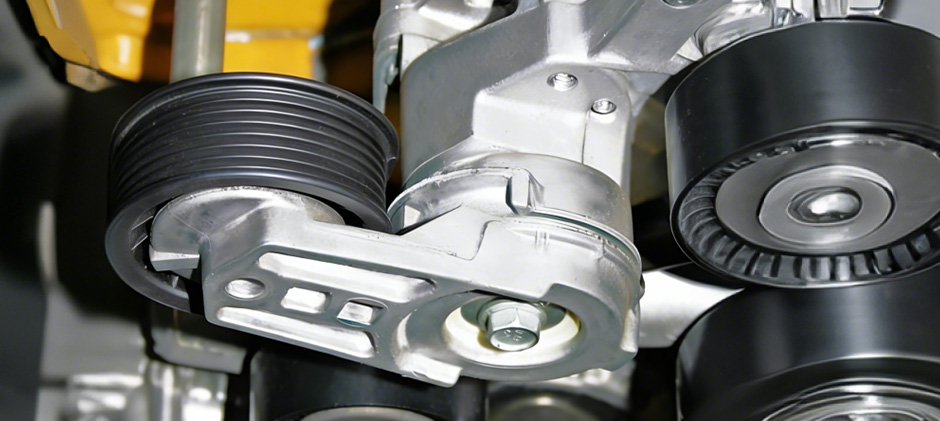
What Causes Belt Tensioner Failures?
A tensioner fails for the same reason most moving parts fail: heat, load, contamination, and time. But off-road machinery tends to accelerate those factors.
1) Bearing wear in the tensioner pulley
The pulley bearing spins constantly. Once lubrication breaks down, it can:
- Get noisy,
- Develop play (wobble),
- Seize and shred the belt.
2) Spring fatigue or weak hydraulic damping
The tensioner may still “move,” but it can’t hold stable tension under load. That leads to belt slip, heat, and glazing.
3) Misalignment and bushing wear
If the tensioner arm pivots off-center or bushings wear, the belt won’t track correctly. This is a common cause of edge fraying and belts that ride the pulley flange.
4) Contamination
Oil or coolant on a belt reduces friction and changes the belt’s behavior. Dirt and grit can damage pulley surfaces and seals. The result is often a belt that squeals and a tensioner that wears faster than expected.
5) Improper installation or incorrect belt spec
Common real-world issues:
- tensioner installed at an incorrect angle,
- mounting bolts not torqued evenly,
- wrong belt width/length,
- The belt is routed incorrectly.
Even a new tensioner can fail early if the belt is wrong for the application.
6) System problems elsewhere
A failing alternator bearing, water pump, idler pulley, or fan hub can overload the belt path. The tensioner is forced to react to abnormal drag and vibration until it gives up.
Transition worth remembering: when a tensioner goes bad, it rarely fails alone—belts and pulleys usually show clues first.
8 Common Symptoms of Bad Belt Tensioner
Below are eight high-signal symptoms that consistently point to tensioner trouble on off-road machines. Some overlap with general belt issues, so each symptom includes what to check next to confirm the tensioner is the root cause.
1) Squealing, chirping, or whining from the belt area
This is the classic symptom—especially on cold starts or when a load kicks in (hydraulics, cooling fan engagement, electrical load, A/C).
Why it happens: the tensioner can’t keep a stable pressure, so the belt slips and makes noise.
Confirm it:
- Look for belt glazing (shiny surface) and dust around pulleys.
- Observe whether noise changes when loads turn on/off.
2) Grinding or rough pulley noise
A grinding sound often points to a worn pulley bearing. On some machines, it may sound like a dry metallic growl near the front of the engine.
Why it happens: the tensioner pulley bearing loses lubrication or becomes contaminated.
Confirm it (safe inspection):
- With the machine secured and powered down, check pulley spin/feel if service procedures allow.
- Any roughness, notchiness, or wobble is a bad sign.
3) Belt tracks off-center or “walks” toward the pulley edge
If the belt rides near the edge, flips, or tries to climb a flange, treat it as urgent.
Why it happens: tensioner arm misalignment, worn pivot bushings, or a pulley that’s no longer square.
What it causes next: edge fray → cords exposed → belt failure.
4) Visible belt wear that doesn’t match service hours
Examples of abnormal wear:
- frayed edges,
- cracks that show up too early,
- missing ribs on multi-rib belts,
- rubber dust buildup.
Why it happens: the belt is being dragged, twisted, or slipped due to unstable tension or misalignment.
Important note: replacing the belt alone often gives short-term relief, then the new belt fails the same way.
5) Belt slap, flutter, or excessive tensioner arm movement
A healthy tensioner arm moves slightly to absorb changes. A failing one may:
- bounce,
- oscillate rapidly,
- “hunt” back and forth.
Why it happens: weak spring force, failed damping, or belt path vibration from a pulley issue.
What to check next:
- idler pulleys and accessory bearings,
- belt condition and correct routing,
- tensioner stop points (cracks or damage).
6) Belt-driven accessories act up
On off-road machinery, belt drive problems show up as system performance problems, such as:
- weak alternator output (battery not charging well),
- Higher engine temps if a water pump or cooling fan is belt-driven,
- A/C performance drops if the compressor speed is unstable.
Why it happens: a slip reduces accessory speed. A tensioner that can’t hold tension allows slip under load.
7) Burning rubber smell or heat around the belt path
If a belt is slipping badly, it converts power into heat. That heat can:
- harden and glaze the belt,
- damage pulley surfaces,
- Accelerate tensioner bearing failure.
What to do: don’t keep running it to “get through the job.” Heat damage compounds fast, and a belt failure can take out nearby wiring or hoses.
8) Deck performance issues on mowing equipment
For off-road turf equipment, tensioner issues can look like a cutting problem:
- Uneven cut,
- Clumping,
- Poor discharge,
- Bogging in grass that used to be easy.
If the deck belt tension is unstable, the blade tip speed drops. That can make a good mower blade feel “dull” because it’s not spinning at the speed the deck was designed for.
Fast sanity check:
- If the mower blade is sharp but the cut quality is still inconsistent, inspect the deck belt path and tensioner function next.
Where to Source Belts and Tensioners
Once symptoms point to the tensioner, it’s smart to treat the belt path as a system: belt + tensioner + pulleys. Replacing only one part can leave the real problem in place.
- If the belt is glazed, cracked, or frayed, start with a correct replacement belt that matches the equipment model and belt type (drive belt, V-belt, serpentine, fan belt, deck belt, etc.).
- If the tensioner pulley is noisy, the arm is unstable, or the belt won’t track correctly, replace the belt tensioner rather than gambling on “it might be fine.”
- If you’re troubleshooting repeated belt failures, step back and review the full belt drive systems approach—belts, tensioners, idlers, and driven accessories all influence each other.
Buying tip: match by equipment model and part number whenever possible. Off-road machines often have multiple belt layouts within the same series, depending on engine and accessory options.
Conclusion
A failing belt tensioner usually gives warnings—noise, belt tracking problems, fast belt wear, heat, and accessory issues. Catching these early helps prevent shredded belts and downtime, and on turf equipment, it can even prevent “false” mower blade complaints caused by low blade speed. As an aftermarket parts supplier, FridayParts supports off-road machinery owners with high-quality parts at affordable prices, a vast inventory, and wide compatibility across many heavy equipment brands—so you can repair fast and get back to work.
